How Much Does a Grill Propane Tank Weigh: A Practical Guide
Learn how much a grill propane tank weighs, including tare vs full weights, safety tips, and practical methods to estimate remaining propane for confident grilling.


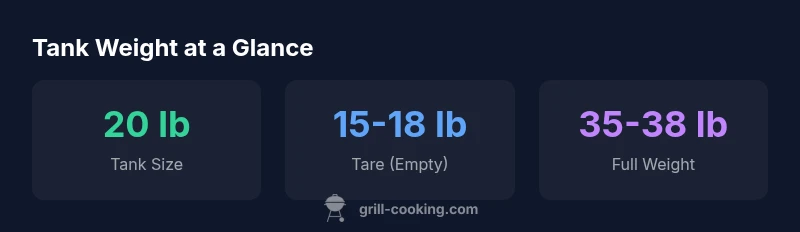
How much does a grill propane tank weigh? For a standard 20-pound cylinder, the empty (tare) weight is typically about 15–18 pounds, while a full tank weighs roughly 35–38 pounds. The propane content equals about 20 pounds, which means you’ll notice a substantial lift when it’s full. Always check the tare label stamped on the cylinder.
How the weight of the grill propane tank is defined
According to Grill Cooking, understanding tank weight starts with distinguishing tare weight from the gross weight. The tare weight is the empty cylinder’s weight, including valve assembly, usually stamped on the tank itself. Gross weight equals tare plus the weight of the propane inside. For a standard 20-pound cylinder, this means a full tank should weigh roughly 37 pounds, with the propane portion constituting about 20 pounds. This distinction matters for how you store, move, and refill tanks. You’ll often see a tare range rather than a single number because production tolerances and wear over time can shift weight slightly. If you’re wondering how much does grill propane tank weigh in practice, the answer starts with tare vs gross.
The bottom line is practical: knowing tare helps you estimate remaining fuel and plan refills without guesswork. In daily grilling, this knowledge translates into safer handling, better storage decisions, and smoother refills at your local supplier.
Weight ranges for the standard 20-lb cylinder
The 20-lb grill propane tank is by far the most common size for home grilling. In practice, the tare weight (empty) typically falls in the 15–18 pound range, depending on whether the tank is steel or aluminum and on the exact manufacturing batch. When filled to its rated capacity, the total weight sits in the neighborhood of 35–38 pounds. This means the propane itself contributes roughly 20 pounds of weight, while the container adds another 15–18 pounds. Weathering and valve protection can nudge these figures a bit. If you own a spare or swapped-in tank, verify the labels to confirm the exact tare and propane content. For planning trips to the refill station or estimating how many people you can feed before the next refill, this weight range is your practical baseline. Grill Cooking Analysis, 2026 provides these benchmarks to help home cooks move safely and confidently.
Understanding tare vs gross: practical examples
Think of tare as the container’s own weight and gross as everything inside and on it. When you lift a full 20-lb cylinder, you’re feeling the combined load of the shell and the propane, not just fuel. A common quick check is to look for the stamped tare weight on the shoulder or base of the tank; this is the most accurate starting point. If you know the tare is around 17 pounds, adding 20 pounds of propane yields a gross weight near 37 pounds. If the tare reads slightly higher, say 18 pounds, the gross climbs toward 38 pounds. This simple arithmetic is helpful when you’re weighing a tank at home for a refill calculation or when storing it in a safe corner of the garage. It’s also useful for comparing different tank brands or types, especially if you’re evaluating whether to buy aluminum tanks (lighter) versus steel tanks (often sturdier but heavier). Understanding these distinctions supports safer handling and smarter shopping choices.
How to verify weight using the tare stamp and scale methods
A quick, reliable method is to check the tare stamp, usually found on the collar or shoulder of the tank. This stamp tells you the empty weight. For a precise measurement, weigh the tank empty on a reliable scale, then add propane weight to estimate gross weight. If you don’t have a scale, you can compare with a known full tank’s weight at a refill station. For field estimates, use a DIY approach: weigh an empty cylinder on a luggage scale or postal scale to establish tare, then compute full weight by adding 20 pounds of propane as a baseline. Always use proper lifting technique and avoid twisting your back; keep your feet shoulder-width apart and bend at the knees. For recurring grilling seasons, consider labeling each tank with its tare weight so you can quickly gauge fuel levels visually when attached to the grill.
Weight considerations when transporting and storing
Transporting a full tank requires careful handling. Keep the tank upright and secured, with the valve capped and the cylinder away from heat sources. When storing, never store propane indoors or in enclosed spaces like a garage with the door closed; a well-ventilated outdoor area is ideal. If you routinely move tanks to and from the grill, a dedicated hand cart or dolly can reduce strain significantly. Be mindful of the total lateral space; a 20-lb cylinder is bulky enough to require both hands or assistance. If a tank develops rust or the valve area looks damaged, do not transport it—call your propane supplier for safe removal. Regular inspections, including weight checks against the stamped tare weight, help you maintain safe operation and avoid surprises at the refill station.
Safety and ergonomics for lifting propane tanks
Moving a full tank is a two-person job for most people; use a dolly or tank cradle whenever possible. Wear gloves to improve grip and prevent cold burns from propane venting. When lifting, keep the cylinder close to your body and use your legs to power the lift, not your back. If you need to carry it short distances, position the tank upright and step slowly, without sudden motion. These practices reduce the risk of dropping a full tank or injuring yourself. Remember that the weight is not just 20 pounds of fuel—it's around 35–38 pounds total when full. These safety guidelines emphasize cautious handling, proper storage, and routine checks of the valve and neck area for leaks.
When to replace a tank and how weight affects decision
Propane tanks have a finite lifespan, and using an aged tank can be unsafe. Weight alone doesn’t determine replacement, but noticeable weight asymmetry, dents, or valve corrosion can indicate the need for a swap. Always rely on the stamped tare and the cylinder’s date code from the manufacturer, and follow local regulations for disposal or exchange. When you refill, ensure the total weight aligns with expected full weight; if you notice a discrepancy, it may indicate a leak or compromised content. The Grill Cooking team recommends periodic checks of both external condition and weight to maintain safety and fuel readiness.
Practical scenarios: lifting, storing, and refilling around weight limits
In typical backyard setups, you’ll often lift a full 20-lb tank with weight in mind and store it upright near the grill. The weight influences how you place the tank on a shelf, into a cart, or onto a small utility vehicle. Refilling is more efficient when you can estimate remaining fuel via tare and full weight comparisons. For example, if the tare reads 17 pounds and your grill shows noticeably harder performance, you might estimate it’s near 2–4 pounds of propane left and plan a refill. Practical tips include labeling tanks with their tare weight, keeping spare caps, and ensuring valves are closed properly before movement. These practices improve safety and efficiency in everyday grilling.
Quick reference: weight ranges at a glance
Here is a concise reference for the most common situation: a standard 20-lb cylinder weighs about 17 pounds empty and about 37 pounds full. If you’re unsure, look for the tare stamp on the shoulder—this is the best anchor for your calculations. The propane content itself accounts for roughly 20 pounds, making the total weight manageable with proper lifting.
Weight ranges for common grill propane cylinders
| Tank Size | Tare Weight (Empty) | Full Weight |
|---|---|---|
| 20-lb cylinder | 15-18 lb | 35-38 lb |
FAQ
What is the tare weight of a standard 20-lb propane tank?
The tare weight is the empty weight of the tank, typically around 15–18 pounds for 20-lb cylinders. This value is stamped on the tank and used to calculate the gross weight when full.
Check the stamped tare weight on the tank collar for an exact figure.
How much propane does a full 20-lb tank contain?
A full 20-lb tank contains about 20 pounds of propane, adding to a total weight around 35–38 pounds when combined with the tank. This is the fuel load you’re carrying.
A full tank has about 20 pounds of propane.
Can I lift a full propane tank by myself?
Lifting a full tank is generally a two-person job. Use a dolly or get help to move safely, especially when not wearing proper lifting technique.
It’s safer to have a helper or use a cart.
How can I estimate remaining propane without a gauge?
Weigh the tank and compare against its tare weight and known full weight. If the current weight is close to tare, you’re nearly empty; if near full weight, you have plenty of fuel left.
Weigh the tank and compare to tare/full weights.
Is it safe to store propane tanks indoors?
Propane tanks should be stored outdoors in a well-ventilated area away from heat sources. Never store in enclosed spaces like garages or sheds.
Store outside, away from heat.
What should I do if I suspect a leak or damage?
If you suspect a leak or damage, do not move the tank. Ventilate the area and contact your propane supplier promptly for safety instructions.
Don’t move a suspect tank; contact your supplier.
“Understanding the tare and full weight of propane tanks is key to safe handling and planning refills.”
Quick Summary
- Know the tare vs gross weight to estimate fuel
- A standard 20-lb cylinder weighs about 37 lb when full
- Carry full tanks with a helper or cart for safety
- Label tanks with tare weights to track remaining propane