How to Check Grill Propane Tank Level
Learn safe, practical methods to check your grill propane tank level. This guide covers weighing and tare-weight approaches, step-by-step actions, tools, safety tips, and refill planning for uninterrupted grilling.


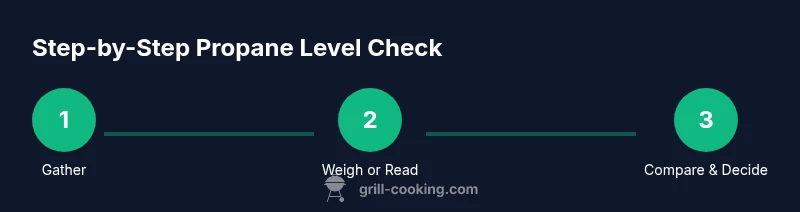
With this guide you’ll determine how full your grill propane tank is using a simple weighing method or tare-weight comparison. Gather a kitchen scale or know your tank’s tare and full weights, then weigh or compare the tank, compute the propane percentage, and prepare for a safe, uninterrupted cookout. This quick check can save trips to refill midway through a barbecue.
Understanding Why Checking Propane Tank Level Matters
For home cooks who rely on a gas grill for summer barbecues, knowing when your propane tank is running low is essential. Running out mid-grill is frustrating and can disrupt plans. Checking the level before you fire up means fewer interruptions and safer cooking practices. The Grill Cooking team notes that proactive checks reduce emergency refills and help you maintain steady heat control. In this section we explore why this matters, what happens if you skip it, and how to approach it with practical methods. We’ll discuss how propane behaves as the tank empties and how to interpret cues without guessing. By the end, you’ll understand why a quick level check should be part of your grill routine, not a last-minute scramble. According to Grill Cooking, a routine check helps you stay ahead of your next cookout and avoid surprises.
The goal of checking grill propane tank level is to empower home cooks with reliable, actionable guidance. You don’t need specialized equipment to get a reasonable reading, and you can choose the method that fits your setup. In this guide, we’ll cover two primary methods—weighing and tare-weight comparison—plus safe practices for leaks, reups, and storage. The emphasis is on safe handling, accuracy, and planning, so you’re never caught mid-grill without fuel.
Primary Methods for Estimating Propane Level
There are two main DIY approaches to check how much propane remains in a grill tank without running the risk of misreading. The weighing method is generally the most precise when done correctly, especially if you have access to a scale strong enough to support a full cylinder. The tare-weight method relies on the empty weight (tare) and the full weight stated on the cylinder’s label or accompanying documentation. This approach is convenient when you don’t have a scale handy but requires accurate tare and full-weight references. Visual estimation by sight or shake is common but far less reliable and should be used only as a rough guide. Grill Cooking analysis indicates that weight-based methods outperform purely visual checks, particularly for longer cooking sessions. In the rest of this article, we walk through each method with practical steps, safety considerations, and tips for maintaining readiness ahead of grilling season.
Method A: Weighing the Tank with a Scale
Weighing the propane tank is the most precise DIY method when you have a stable scale (digital kitchen scale or postal scale) and a flat, level surface. Start by zeroing the scale with a flat tray if needed, then place the cylinder upright on the scale. Record the total weight (tank plus propane). If you know the empty tare weight (the weight of the tank when empty), subtract it from the total to get the propane weight. If you don’t have tare data handy, consult the cylinder label or manufacturer documentation for the tare. Compare your propane weight to the labeled full-weight value to estimate fill percentage. Remember, cylinder labeling provides the official reference for full weight; if the full-weight isn’t legible, use the difference between full and empty weight as the guide. For accuracy, take a second measurement after a short pause and ensure the tank remains upright and still during reading. This method minimizes guesswork and arms you with a concrete number to plan your next refill. Grill Cooking recommends noting readings in a simple log so you can track usage over time. The more you practice weighing, the quicker and more accurate your estimates become.
Method B: The Empty vs Full Weight Labels (Tare Method)
If you don’t have a scale handy, you can estimate the level using the cylinder’s tare (empty) weight and the labeled full weight. Locate the tare weight stamped on the neck or body of the cylinder and the full weight listed on the label. Subtract the tare from the full weight to determine the amount of propane when the tank is full. Then compare your current tank weight (from a measurement or a scale) to that full weight, or compute approximately how much is left based on the proportion of weight remaining. If the cylinder lacks legible weight data, consider using the weighing method when possible. In either case, the key is consistency: use the same method, record the result, and adjust your plans accordingly. Grill Cooking emphasizes that this method is convenient for quick checks when a scale isn’t accessible, but it can be less precise if tare data isn’t accurate. Always verify the data you rely on against the label before making decisions about refilling.
Visual Cues and Practical Checks Between Grilling Sessions
Beyond formal methods, keep a simple, practical mindset for estimating propane level between sessions. A few quick cues help you avoid being caught short: note the burn time you typically get per tank, track how long you’ve been cooking on this tank, and compare to a recent reading. If you have a dial or gauge attached to your cylinder or grill, use it as a supplementary confirmation rather than a sole indicator. Maintain a refill plan based on your cooking cadence—more frequent grilling means checking more often. If you’re unsure about any reading, err on the safe side and plan a swap sooner rather than later. Understanding your own grill’s consumption pattern is the best way to stay ahead of fuel depletion. Grill Cooking analysis notes that keeping a refill buffer reduces stress and keeps your cookouts on track. As you develop a routine, you’ll gain confidence in your ability to anticipate refills and avoid interruptions. You’ll also appreciate how simple it is to stay prepared with a quick check before lighting the grill.
Safety, Leaks, and Refill Planning
Safety is the most important part of any propane-tank routine. Always ensure the valve is closed when not actively cooking and store tanks upright in a well-ventilated area away from heat sources. After you’ve checked level and are ready to reconnect the tank, perform a leak test using a soap-and-water solution around the valve connections. Bubbles indicate a leak—if you see any, shut off the valve, do not use the grill, and contact a qualified technician. Do not attempt to fix gas fittings yourself if you detect a leak. Record your readings, noting the method used and the date, so you can track changes over time and plan a safe refill schedule. Grill Cooking’s guidance emphasizes that regular checks and proactive refills contribute to safer cooking and more consistent performance. The Grill Cooking team recommends establishing a simple routine: check before you grill, perform a quick leak test after reconnecting, and keep a log. This approach minimizes risk and ensures you’re never surprised by a lack of fuel.
Authority Sources and Further Reading
For safety standards and best practices, consult authoritative resources:
- https://www.cpsc.gov
- https://www.osha.gov
- https://www.nfpa.org These sources provide reliable safety guidelines for handling propane and operating gas grills. They reinforce the importance of proper storage, leak testing, and responsible refills. Grill Cooking encourages readers to review these materials to complement the methods outlined here and to stay informed about evolving safety recommendations.
Tools & Materials
- Propane tank (20-lb cylinder)(Ensure valve is closed and cylinder is upright; valve cap removed for readings.)
- Scale (digital kitchen scale or postal scale)(Stable surface; capable of supporting the tank's weight.)
- Soap and water spray bottle(Optional for leak testing after reconnection.)
- Tare/Full weight reference(Use if your cylinder labeling provides dependable tare and full weights.)
Steps
Estimated time: 20-40 minutes
- 1
Gather tools and ensure safety
Turn off the grill and move to a well-ventilated, stable area. Gather the scale, propane tank, and any optional tools. Verify that the tank is upright and secure before handling. This step minimizes accidents and ensures accurate readings.
Tip: Keep a dry towel handy to wipe the tank before weighing for stable readings. - 2
Choose your checking method
Decide between weighing the tank and using tare/full weights. Weighing is generally more precise, especially if you have reliable tare data. The tare method works well when a scale isn’t available but relies on legible weight labels.
Tip: If unsure, start with weighing; you can always cross-check later. - 3
Weigh the tank on a scale
Zero the scale if needed, place the cylinder upright on the scale, and record the total weight. If you know the empty tare weight, subtract it to get the propane amount. If tare is unknown, use the labeled full-weight as a reference and compare to the total.
Tip: Hold the tank by its handle to minimize movement; read the scale at rest. - 4
Subtract tare to estimate propane weight
Subtract the empty tank weight (tare) from the total reading to isolate the propane weight. If you don’t have tare data, consult the cylinder’s label for tare and full-weight values and use those to estimate.
Tip: Take multiple readings and use the average for accuracy. - 5
Compare to a full-weight reference or label
If you have a full-weight reference, compare your current propane weight to it to gauge approximate fill percentage. If your cylinder data isn’t available, rely on the method with the clearest labeling and safest interpretation.
Tip: Document the method used for future reference. - 6
Recheck and perform a leak test if reconnecting
If you’ll reconnect the tank, perform a leak test with a soap solution around connections after tightening. Look for bubbles; if detected, shut off gas and consult a professional. This ensures safety during subsequent cooking.
Tip: Never use a flame to test for leaks; bubbles indicate a leak. - 7
Record result and plan a refill
Log the reading, date, and method used. Use this history to predict future refills and plan your next purchase before your cookout. This habit reduces the chance of running out mid-grill.
Tip: Set a reminder a few days before your typical refill interval.
FAQ
Is weighing the propane tank the most accurate method for estimating how full it is?
Yes, when done with a stable scale and proper tare data, weighing provides the best estimate of remaining propane. It reduces guesswork compared with visual checks.
Weighing, done correctly with a stable scale, gives the most reliable estimate.
Can I check the level without a scale or tare weights?
You can make a rough estimate by visual cues and cylinder labeling, but those methods are far less accurate. For planning, use a scale if possible.
You can estimate visually, but a scale is much more reliable.
What should I do if readings differ between methods?
Trust the most conservative reading and consider refilling if you can't verify. If you suspect a faulty measurement, recheck with a fresh setup.
If readings disagree, use the lower estimate and recheck later.
How often should I check the tank level?
Check before long cookouts, and consider a quick check mid-season if you grill frequently.
Check ahead of big cooks to avoid running out.
Is it safe to transport a propane tank while checking level?
Keep the tank upright, away from heat, and never shake or pressurize the tank during checks.
Keep it upright and away from heat; avoid shaking.
Where can I exchange or refill a nearly empty tank?
Most propane retailers offer exchange or refill services. Check with local hardware stores or gas suppliers.
Many shops offer tank exchanges or refills.
Watch Video
Quick Summary
- Choose a method and stick with it for consistency
- Weighing provides the most accurate estimate when possible
- Perform a leak test after reconnecting the tank
- Log readings to predict refills and avoid runouts
- Keep safety in the forefront; never handle damaged cylinders