How to Tell When Your Grill Propane Tank Is Low
Learn practical, safe methods to tell when your grill propane tank is low, including gauge readings, weight checks, and the hot-water trick to avoid runouts during cooking in 2026.


By the end, you’ll be able to tell when your grill propane tank is low using reliable methods that require minimal tools. Start with the built-in gauge if present, then verify with a tank weight check or a hot-water test for non-gauged tanks. Finally, plan a refill or exchange before your next cookout to avoid an unexpected runout.
Signs Your Grill Propane Tank Is Low
According to Grill Cooking, you’ll notice a drop in heat stability and cooking pace as the tank approaches empty. A flame that seems to struggle to hold temperature, more frequent flame adjustments, or a need to turn the knob higher to maintain the same heat can signal lower fuel. If you use a grill with a built-in gauge, a reading near the low mark is a practical cue to prepare a swap or refill. In 2026, home cooks rely on these cues alongside routine checks for a stress-free grilling season. The key is to view clues in combination rather than relying on a single indicator.
Other telltale signs include shorter burner preheats, longer grill times to reach the same temperature, and a perceived drop in overall heat even when your gas supply seems connected. Remember that outdoor conditions and grill size can affect performance, so use multiple signals to confirm fuel status before you light the grill.
Gauge Readings and Weight Checks
When your grill or tank has a gauge, read it with the grill off and the tank cool to avoid expansion-related errors. If you don’t trust the gauge or if your tank lacks one, the weight-check method is a robust alternative. Weigh the tank when it’s full and compare it against a known full-weight value (from the tank labeling or the manufacturer’s chart). If the current weight is noticeably less, you’re likely low. Grill Cooking emphasizes the weight method as a dependable way to estimate remaining propane before a cookout. As a practical rule of thumb in 2026, weight comparison often yields a clearer picture than feel alone.
To perform a weight check safely, place the tank on a scale, note the weight, and compare to a reference full-weight value. If you lack a precise full-weight number, consult the tank label or vendor guidance. Do not rely on smell or taste to determine fuel level.
The Water-Weight Trick: Using Hot Water
A quick-read trick many cooks rely on is the hot-water method. Lightly dampen the tank with warm water along the body from top to bottom, then feel for a subtle temperature band. The cool band typically marks the liquid propane level inside. While this method doesn’t provide an exact percentage, it’s a fast visual cue that helps decide whether you should refill or swap the tank before your next cook. It’s especially useful when gauges are absent or unclear. Practice this safely, away from open flames and never use boiling water on a hot tank.
Note that the water method is most reliable on standard cylindrical tanks and works best when paired with gauge readings or weight checks. It’s a supportive check, not a standalone diagnostic.
Step-by-Step Diagnostic Workflow (When to Refill)
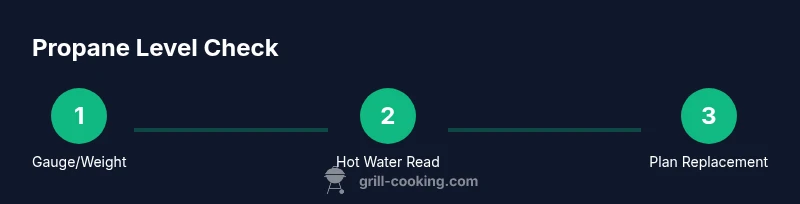
A robust approach blends all three methods for the most reliable read.
- Start with the gauge (if present). Note the reading and compare to the tank’s low-mark specification.
- Then perform a weight check. If possible, weigh the tank against a known full weight to estimate remaining fuel.
- Finally, use the hot-water trick to verify where the liquid level sits on the tank. If two or more methods indicate low fuel, schedule a refill or exchange before your next cookout.
Maintaining a simple log of readings helps you forecast refill timing for future events. This proactive habit reduces the risk of an empty tank during a busy weekend cookout.
Safety Considerations and Leak Checks
Before any level assessment, inspect hoses and connections for cracks or wear. Tighten fittings only if you’re confident they’re clean and properly aligned; cross-threaded connections can lead to leaks. After reconnecting, run a soap-bubble leak test around all connections. If bubbles appear, immediately turn off the gas and reseat the fittings before trying again. If you smell propane or hear a hissing sound, move away and call emergency services if the odor persists. Propane is heavier than air and can pool near the ground, so ventilate the area and avoid any ignition sources while investigating.
Refilling vs. Replacing: What to Do Next
When a tank tests near empty, you’ll generally decide between a refill and a swap. Refilling is often cheaper but must be done by a certified vendor. Inspect the tank for dents, rust, or damaged valves; a compromised tank should be retired and replaced. Reputable retailers frequently perform safety checks during refilling or swapping, including valve integrity and date stamping. In 2026, professional refilling and exchange services remain the safest options for ensuring fuel reliability on busy grilling days.
Maintaining Readiness: Quick Monthly Checks
Make a habit of quick fuel-checks before any outdoor cookout. Confirm gauge accuracy, perform a weight check when feasible, and test for leaks after reconnecting hoses. Keep a simple log of the last refill date and the readings you observed. This routine makes it easier to plan future refills and avoids mid-session interruptions, especially for weekend gatherings or family barbecues. Grill Cooking stresses consistent pre-season checks and monthly spot checks as the best practice for reliable fuel planning in 2026.
Tools & Materials
- Propane tank scale or kitchen scale(Used to weigh the tank to estimate remaining propane)
- Water container or bucket(For the hot-water level check and safe submersion of the tank as needed)
- Dish soap and spray bottle(Bubble test for leaks around fittings and connections)
- Marker and notebook(Record readings and dates for future reference)
- Rags or towels(Clean and dry tank surfaces and connections)
- Gloves(Hand protection during handling)
Steps
Estimated time: 20-40 minutes
- 1
Gather tools and prep a safe workspace
Set up a clear, well-ventilated area away from open flame sources. Gather your scale, water container, soap, and rags, and ensure the grill is off and cool before you begin. This reduces risk and makes reading gauges or weighing more accurate.
Tip: Keep children and pets away from the testing area to avoid accidents. - 2
Inspect hoses and connections for safety
Before testing, visually inspect hoses and regulators for cracks, wear, or corrosion. Tighten any loose fittings slowly and avoid forcing threads. A compromised connection can cause leaks even if the tank has fuel.
Tip: If you see damage, do not continue—contact a professional. - 3
Check the gauge (if available)
Read the gauge with the tank cold and the grill off. Compare the reading to the manufacturer’s low-fuel indicator. If the gauge shows low, plan a refill or exchange.
Tip: Do not rely on a single gauge—use multiple methods for confirmation. - 4
Weigh the tank to estimate remaining propane
Place the tank on a scale and note the current weight. If you know the full weight from the label or manufacturer, compare to estimate how much fuel remains. A noticeably lighter tank usually means you’re nearing empty.
Tip: If you don’t know full weight, use a manufacturer chart or vendor reference. - 5
Apply the hot-water trick to locate the liquid level
Run warm water along the tank body from top to bottom. The cooler band indicates where liquid propane sits inside. This gives a quick visual cue to decide if you should refill or swap.
Tip: Use warm water, not boiling water, and do this away from any flames. - 6
Decide on refill or replacement and document
If two methods suggest low fuel, schedule a refill or tank swap before your next cookout. Note the readings and date for future planning.
Tip: Keeping a simple log helps forecast future fuel needs. - 7
Recheck and store safely
After the refill or swap, recheck connections for leaks and wipe down the tank. Store the tank upright and in a ventilated area away from heat sources.
Tip: Always verify there are no leaks before re-lighting the grill.
FAQ
What is the most reliable way to tell if a propane tank is low?
Weighing the tank against its known full weight is often the most reliable method, especially when a gauge isn’t available or is unclear. Use a gauge as a quick check, then confirm with a weight test.
Weigh the tank and compare to the full-weight reference to confirm low fuel, and use the gauge if you have one for a quick read.
Can a propane tank run out mid-grilling?
Yes, it can happen if fuel runs low unexpectedly. Always check before you start and have a back-up plan for refills or swaps to avoid interruptions.
Yes—plan ahead and check your tank before you grill to avoid running out mid-cook.
Is it safe to refill a tank myself?
Propane tanks should be refilled only by certified vendors. DIY refilling is dangerous and can lead to leaks or explosions.
Don’t refill tanks yourself; use a certified service for safety.
How often should I check my tank before a big cookout?
Check the gauge and, if possible, weigh the tank the day before a big cookout. For frequent events, a monthly check helps keep you prepared.
Check the gauge and weigh the tank ahead of big cooks to stay prepared.
What should I do if I smell propane around the tank?
If you smell propane, move away from the tank, turn off the gas at the source, and call emergency services if the odor persists or worsens.
If you smell gas, leave the area and call for help right away.
Watch Video
Quick Summary
- Check gauges and weight as primary signals
- Use the hot-water trick for quick visuals
- Plan refills before big cookouts
- Document fuel readings to forecast needs