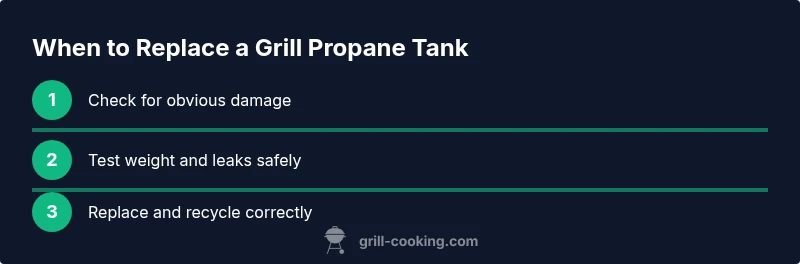
When to Replace a Grill Propane Tank: A Practical Guide
Learn when to replace a grill propane tank, signs of depletion, safe handling steps, and disposal options to grill confidently and avoid gas leaks.


To know when to replace your grill propane tank, start by weighing the tank or estimating its weight when full. If it feels unusually light, or you observe a hissing sound, corrosion, bulges, or rust, treat it as a replacement candidate. Never refill a damaged tank; replace it and have it inspected by a certified dealer.
Why propane tank safety matters
Grilling is a beloved weekend ritual, but it becomes risky if you ignore the propane cylinder’s condition. Knowing when to replace a grill propane tank is foundational to safe backyard cooking. According to Grill Cooking, safety starts with recognizing signs of wear and choosing replacement over risky refills. Cylinders are built for decades of service, but punctures, corrosion, or heat exposure reduce their ability to contain gas. A compromised tank can leak under your grill, creating a dangerous situation. Before you start any cookout, take a quick scan of the tank’s exterior, check the collar for rust, and listen for unfamiliar sounds. If you notice bulges, dents, or a sour gas odor nearby, step away and replace the cylinder. Always store cylinders upright in a dry, ventilated area away from direct sunlight, and never connect a damaged tank to a grill. This simple habit saves lives and prevents gas-related incidents.
Signs your tank needs replacement
Gas tanks exhibit several warning signs when they near the end of their safe life. A tank may feel notably lighter than expected relative to its weight information. If you detect a constant hissing sound near the valve even when the grill is off, remove the tank and replace it. Visible rust, pitting, bulges, or any deformation on the cylinder body are red flags. The protective valve cap missing or damaged threads at the connection point are another indicator that the cylinder needs professional attention. Punctures or dents from a previous drop can compromise the cylinder’s ability to withstand internal pressure. If you smell rotten eggs near the grill or a propane odor after turning on the gas, treat it as a leak signal and replace the tank. Do not attempt to refill a tank that shows any of these signs, and do not continue to use it past your local safety guidelines. When in doubt, consult a propane supplier or a certified service for evaluation.
How to test propane tank weight and pressure safely
Testing fullness by weight is a safe, non-destructive method that many home cooks use. You can estimate fullness by weighing the tank against its printed tare weight, which is the weight of an empty cylinder published on the cylinder collar. If the current weight is not close to the expected full or empty range, you should consider replacement rather than guessing. Always perform tests in a well-ventilated area away from ignition sources. To check for leaks after reattaching a regulator or hose, apply a soap solution to connections; if bubbles form, there is a leak and the tank should be replaced and the system inspected. Never use a flame to test leaks or connections. If you’re unsure about testing methods, contact a certified propane supplier. After testing, reseal the valve and store the tank in a safe location.
Safe handling and disposal options
Safe handling begins with calm, methodical steps. Move the tank to a ventilated outdoor area away from the grill and heat sources. If a leak is suspected, turn off all sources of ignition and leave the area. Do not attempt to repair damaged cylinders; instead contact a qualified propane professional or your local recycling facility. Many communities require returning spent cylinders to a propane supplier or a designated hazardous waste facility. Ensure the tank is completely empty before disposal in accordance with local rules. Do not place a spent cylinder in regular household trash. Keep a paper trail of where you disposed of the tank for future reference.
Choosing a replacement tank
Grills usually use standard 20-pound cylinders, but always verify your grill’s connector size, valve type, and the tank's date stamp before purchasing. Look for DOT/TC approval and an OPD (overfill protection device) valve when selecting a new cylinder. Try to buy from reputable suppliers who offer a return policy or exchange program in case a tank fails inspection. Checking the tank for heavy rust, dents, or signs of tampering before purchase saves headaches later. Ensure the outlet regulator and hose on your grill match the tank’s connection—mismatches can cause gas leaks or poor performance.
How to store propane tanks safely at home
Store tanks upright in a cool, ventilated area away from direct sun, heat, and flames. Keep tanks in a dedicated area separate from the grill and away from living spaces. Do not store tanks in heat-trapping places like cars or garages during hot days. Keep the cylinder valve closed when not in use and check periodically for any corrosion or leaks. When transporting a tank, keep it upright and don't jostle it; use a suitable container or strap to prevent rolling. Always follow local regulations on storage and periodic inspection.
Tools & Materials
- Propane tank (20 lb or smaller)(Ensure the tank is not damaged; check for bulges and rust.)
- Calibrated scale or weight-check method(Weigh the tank against its tare weight printed on the collar.)
- Leak-detection soap solution(Use to test leaks at connections; bubbles indicate a leak.)
- Work gloves(Protect hands during handling and inspections.)
- Rags or paper towels(Clean spills and wipe connections during testing.)
- Ventilated outdoor area(Perform inspections away from ignition sources.)
- Local recycling/disposal information(Know where to drop spent cylinders per local rules.)
Steps
Estimated time: 15-30 minutes
- 1
Check tank for visible damage
Inspect the exterior for bulges, dents, corrosion, or heat damage. Do not approach if you see obvious damage. A damaged tank should be taken out of service and replaced.
Tip: If in doubt about damage, treat it as unsafe and replace. - 2
Move to a safe outdoor area
Relocate the tank to a well-ventilated outdoor space away from the grill and any ignition sources. Keep it on a non-flammable surface.
Tip: Never perform checks indoors or in a confined space. - 3
Weigh or estimate fullness
Compare the tank's current weight with its tare weight printed on the collar. If it seems unusually light, plan for replacement rather than attempting a refill.
Tip: When using tare weight, ensure you’re reading the correct stamp on the cylinder. - 4
Test for leaks at connections
With the grill disconnected, apply a soap solution to the valve and regulator connections. Look for bubbles indicating a leak. If bubbles appear, replace and inspect the system.
Tip: Never use a flame to test for leaks. - 5
Decide on replacement
If you detect any damage, hissing that persists, or a leak, replace the tank. If unsure, err on the side of safety and exchange it.
Tip: Keep the old tank in a safe location until you obtain a replacement. - 6
Recycle or dispose properly
Take the spent cylinder to an approved recycling center or your propane supplier. Do not throw it in the trash.
Tip: Ask the supplier about any required paperwork for disposal.
FAQ
How do I know if my propane tank is empty?
An empty tank will feel significantly lighter than a full one. You can also compare its weight to the tare weight printed on the collar. If in doubt, exchange it for a full tank at an authorized retailer.
An empty tank usually feels lighter; weigh it against the tare weight or swap it at an authorized retailer.
Can I refill a propane tank myself?
Refilling a propane tank should only be done at certified facilities. Attempting to refill a damaged or questionable tank is dangerous and illegal in many areas.
Refill a tank only at certified facilities; do not refill damaged tanks.
What should I do if I smell gas near the grill?
If you smell gas, move away from the grill and ignition sources, turn off the gas supply, and contact emergency services if the odor persists. Do not operate switches or flames near the area.
If you smell gas, move away, turn off the gas, and call for help if it continues.
How do I safely dispose of an old propane tank?
Do not throw away a propane tank. Take it to a certified recycling center or return it to a propane supplier that offers cylinder recycling. Follow local rules for disposal.
Never trash a propane tank—recycle at an approved facility following local rules.
Is it safe to replace the tank during cooking?
No. Replace the tank only when the grill is off and the area is safe and ventilated. Replacing while hot or lit can cause ignition risks.
Don’t replace a tank while cooking; wait until the grill is off and safe.
Where can I recycle spent tanks?
Ask your propane supplier or local waste management about approved recycling options. Most areas have designated centers or programs for spent cylinders.
Ask your supplier or local waste program about recycling options.
Watch Video
Quick Summary
- Inspect tanks before every cookout.
- Check weight and damage to decide replacement.
- Test for leaks using soap solution.
- Recycle spent tanks through approved facilities.
- Store upright away from heat and flames.