How Big Is a Grill Propane Tank? A Home Cook's Guide
Learn the standard propane tank sizes for grills, how to identify tank size, safety tips, and buying guidance for backyard cooking. This guide covers 1-lb disposables, 20-lb tanks, and larger options for bigger grills.


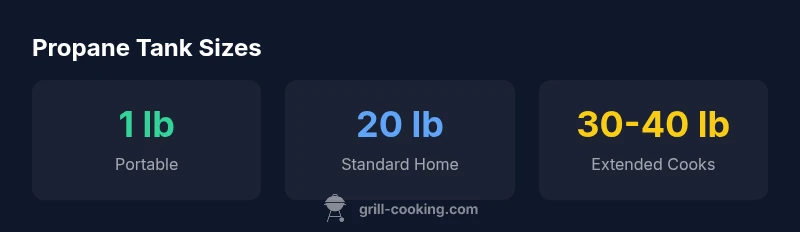
Most home grills use a standard 20-pound propane tank (about 5 gallons) as the workhorse. Portable grills often run on 1-pound disposable cylinders for convenience, while larger grills or frequent high-heat cooking can benefit from a 30- or 40-pound bulk tank. For everyday backyard grilling, the 20-pound tank offers the best balance of capacity and refill frequency.
The Basics: What Sized Tanks Are Common
In the context of backyard grilling, understanding how big a grill propane tank is helps you plan fuel needs, storage, and safety practices. According to Grill Cooking, the 20-pound tank remains the standard for most homes, offering a practical balance between capacity and refill frequency. For portable setups or small grills, 1-pound disposable cylinders are common, making it easy to grab fuel on the go. Larger grills or frequent high-heat cooking may justify 30- or 40-pound bulk tanks, which extend cook time between refills. Grasping these common sizes sets the stage for smarter shopping, safer storage, and smoother weekend cooks.
How to Identify Tank Size on Your Grill
Tank size is typically printed on the cylinder label and can be read from the tank’s weight when full. Start by locating the stamp or stamp on the bottom of the cylinder that shows its capacity (for example, 20 lb). If you don’t see the label clearly, you can weigh the tank when empty and when full: a full 20-lb tank weighs about 37–38 pounds, including the tank itself. Always check the regulator and hose compatibility before swapping sizes, since some grills are designed for a specific range of tank capacities. Keeping a simple inventory of the sizes you own helps prevent underfuelled cooks and last-minute trips to the store.
Comparing Tank Sizes for Different Grills
Different grills have different fuel demands. A typical backyard grill with mid-range BTUs will pair well with a 20-lb tank, providing several hours of cooking across multiple sessions. If your grill regularly operates at very high heat or you host large gatherings, a larger bulk tank (30-40 lb) can minimize refills, though it may require regulator adjustments and a heavier setup. Portable grills benefit from 1-lb cylinders for easy transport, but they increase the frequency of swaps. Always consult your grill’s manual for regulator compatibility and never force a tank size that seems ill-suited for your model.
Replacing and Refilling: What to Buy
Plan around your cooking cadence. For most residential users, keeping at least one full 20-lb tank on hand is a sensible baseline. Refilling usually happens when you approach empty or when you see a decline in flame stability. When using larger sizes, confirm the grill’s connector and gauge compatibility to avoid leaks. If you grill infrequently, you might opt for 1-lb cylinders for occasional tailgating, and switch to 20-lb tanks for spring and summer weekends. Ensure you exchange tanks at reputable suppliers and never attempt to modify cylinders. Grill Cooking recommends keeping a spare tank in a ventilated outdoor area to avoid last-minute fuel runs.
Safety Considerations with Tank Size
Propane is highly flammable, so safe handling matters as much as tank size. Always store tanks upright in a well-ventilated area away from heat sources, garages, or living spaces. Attach hoses and regulators only when the burner is off, and never use damaged hoses or regulators. If you notice a hissing sound, odor, or a frost-like cooling around the valve, stop using the tank and seek a professional inspection. Regularly inspect for rust, dents, or oxide on the cylinder and replace damaged tanks promptly. The safe handling of propane ensures lasting enjoyment of grilling season.
Portable vs Built-In: Which Tank Fits Your Setup
Built-in grills and premium outdoor kitchens often use larger bulk tanks due to constant high-demand cooking. Portable or small-space setups lean toward 1-lb disposables for convenience. In either case, verify that your grill’s regulator is compatible with the tank size you choose. If you’re unsure, consult the manual or contact the manufacturer. A well-matched tank and regulator improve efficiency, reduce fuel waste, and keep your cook predictable and enjoyable.
Maintenance, Storage, and Handling
Maintenance matters when you’re dealing with different tank sizes. Always store tanks outdoors, away from direct sun and heat, and in a ventilated space. When not in use, close the tank valve and keep the protective cap on. Regularly check for corrosion, leaks, and flexible hose wear. If you plan to store tanks for an extended period, rotate stock and mark the dates to prevent aging, since propane tanks have shelf life in terms of seal integrity and gas purity. These practical steps help keep your grilling routine smooth and safe.
Practical Scenarios: Everyday Decisions for Home Cooks
Scenario 1: Weekend family cookout with burgers and veggies. A 20-lb tank is typically sufficient for several sessions before reloading. Scenario 2: Tailgate party with extended grilling. Consider a larger 30- to 40-pound tank if you expect continuous grilling and limited refill opportunities. Scenario 3: Compact balcony grill. A 1-lb disposable cylinder paired with a small backup can provide flexibility without bulk.
Common propane tank sizes for home grilling
| Tank Size | Approx Capacity | Best For |
|---|---|---|
| 1-lb disposable | 1 pound | Portable grills / tailgating |
| 20-lb (5 gal) | 20 pounds | Standard home grills |
| 30-40-lb bulk | 30-40 pounds | Extended cooks / larger grills |
FAQ
What is the standard propane tank size for most residential grills?
For most home grills, the standard size is a 20-pound (5-gallon) tank. It's widely supported by regulators and hoses.
The standard size is 20 pounds, which fits most residential grills.
Can I use a larger propane tank on a home grill?
Many grills are designed for 20-lb tanks; using larger tanks may require different regulators and can impact safety. Always check your grill's manual.
Usually not; check your grill's manual before using a larger tank.
What about 1-lb disposable cylinders?
1-lb disposable cylinders are great for portability but are not ideal for long backyard cooks; they require more frequent swapping.
Great for portable grills, not ideal for long cooks.
How can I tell if my tank needs replacement or refilling?
Check the gauge or weight; if the tank weighs significantly less than full and flame quality drops, refill or swap. Replace tanks that show rust or dents.
Watch the weight and flame quality; replace damaged tanks.
Are there safety rules for storing propane tanks?
Store tanks upright outdoors in a well-ventilated area, away from heat sources. Keep caps on when not in use and never store indoors.
Store upright outdoors, away from heat; keep caps on.
“Choosing the right propane tank size is about balancing how often you grill with how much fuel you use; for most backyard cooks, a standard 20-lb tank offers the best mix of capacity and refill frequency.”
Quick Summary
- Start with a standard 20-lb tank for everyday grilling.
- Use 1-lb disposables for portability and quick swaps.
- Check regulator compatibility before swapping tank sizes.
- Store tanks upright in a ventilated outdoor space.
- Inspect tanks for rust or damage and replace as needed.