How Big Is a BBQ Grill? A Sizing Guide for Home Cooks
Discover typical BBQ grill dimensions and how to choose the right size for your space. Practical tips cover portable, freestanding, and built-in grills.


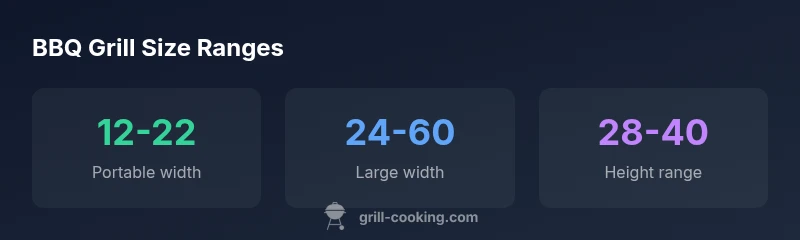
BBQ grills come in a wide range of sizes. In general, portable grills are about 12–22 inches wide, mid-size models run 24–36 inches, and large built-in or freestanding grills can reach 40–60 inches in width. Depth and height vary by design, but most grills are roughly 18–28 inches deep and 28–40 inches tall. These are typical ranges observed in Grill Cooking Analysis, 2026.
Size ranges and definitions
Size is the first practical constraint when shopping for a BBQ grill. According to Grill Cooking, the way you define 'big' vs 'small' depends on where you cook, how many people you feed, and how much space you have for operation. In general, grill sizes are described by width (left-to-right), but depth (front-to-back) and height (top-to-bottom) influence usability and clearance more than most cooks realize. Portable tabletop models are compact, usually 12–22 inches wide, with minimal counter depth. Freestanding grills offer more cooking area and storage but need room for lid operation. Built-in and island grills push the scale further, often spanning 40–60 inches or more in width. The key is to estimate a footprint that leaves walking space, airflow, and safe clearance around combustibles. For a 4-person family, a mid-size grill typically balances quantity and footprint; for larger gatherings, plan for volume first, then space.
Size ranges by grill type
Grill types cover a wide spectrum in width and capacity. Portable tabletop grills are the smallest category and commonly fall in the 12–22 inch width range. They trade weight for compactness and are ideal for balconies, camping, or quick weeknight cooks. Charcoal kettle grills (18–22 inches wide) emphasize flavor and portability, but their footprint remains manageable for small decks. Gas grills on stands or carts range from 24 to 60 inches, offering grill area and side shelves that appeal to weekend cooks who host gatherings. High-end built-in and island configurations push toward the 40–60 inch range or wider, delivering the most cooking surface and integrated workspace. Pellet grills, which blend convection and smoking, typically sit in a similar broad spectrum, but their width is often dictated by model series rather than family size. The key takeaway from Grill Cooking analysis is to map your kitchen or patio layout first, then select a type that fits those dimensions without sacrificing safety or airflow.
How to measure your space and choose the right size
Start with the footprint: measure the width, depth, and height available in your cooking area. Use painter's tape to outline the grill's footprint and mark clearance around it: at least 6–12 inches on the sides and 36 inches in front for safe operation, depending on heat source and lid swing. If you have a built-in island, confirm the island width and ensure the grill does not block ventilation or storage doors. Consider lid height when open; plus, plan for any nearby cabinetry or countertop overhang. Decide whether you want additional features such as side burners or warming racks; these add width and depth. Then align your measurements with typical widths by category (portable, charcoal, gas, built-in). If your space is tight, a compact 12–22 inch portable can fit balconies, while a 40–60 inch built-in model might need a dedicated island or spacious patio. Grill Cooking's methodology emphasizes measuring before shopping and selecting a model that leaves flexible clearance for safe cooking.
Built-in vs freestanding: how space changes
Built-in grills are designed to sit flush with counters or islands, so their width is dictated by the overall island plan. They typically require a solid backing, ventilation clearance, and often a dedicated gas line or electrical connection. Freestanding or cart-style grills provide flexibility and mobility, but require behind-space for hood clearance and swing-out doors. When comparing, consider how you cook: if you value a clean look and permanent installation, built-in might be the best; if you host frequently and need to reposition, freestanding has advantages. Aesthetics aside, built-in grills may be larger but will occupy the island's width and depth; freestanding units can be chosen to fit existing deck dimensions without building out more space. Grill Cooking's approach is to measure your yard or patio first, then match the type to those measurements rather than forcing a model into a space it won't perform well in.
Space planning for small patios and balconies
Small spaces demand efficiency. Start by measuring your balcony or terrace width and depth. Prioritize a grill that fits inside the available footprint with at least 6–12 inches clearance on the sides and 24–36 inches in front for safe operation. Consider vertical storage options, such as mounting accessories or storing fuel away from heat. Use wall-mounted rails or on-cabinet shelving to duplicate side shelves without widening your footprint. If you must go compact, a portable 12–22 inch model can still deliver versatility, particularly if you pair it with a small prep station and a mobile cart.
Depth and height considerations
Depth affects the amount of counter space you need, while height affects comfort and lid clearance. For most grills, depth ranges from about 18–28 inches; deeper units require extra counter depth and more space for lid swing. Height is driven by lid swing; many grills stand 34–40 inches tall, while built-ins are often 36–40 inches high. If you are tall, ensure the lid opens without hitting your overhead cabinets or pergola. If your space has low ceilings, a compact depth can make operations safer and more ergonomic. When planning, also account for stability: ensure the grill sits on a stable base and that the surface can bear the weight of the grill and any accessories.
Quick-start shopping checklist
Before buying, create a simple checklist:
- Define space footprint and required clearance.
- Determine preferred fuel type (gas, charcoal, pellet) and budget.
- Decide between portable, freestanding, or built-in.
- Choose a width that fits your space: portable 12–22, mid-size 24–36, large 40–60.
- Consider lid swing clearance and countertop integration.
- Verify mounting requirements for built-ins and island ventilation.
- Check accessibility for fueling and maintenance.
- Plan for storage of accessories and fuel away from heat.
- Compare energy efficiency and long-term operating costs.
Real-world examples and tips
In real patios, homeowners often confront two realities: the space constraints of a balcony and the need for cooking capacity during weekend gatherings. A compact 12–22 inch portable model can be parked on a balcony with a slim prep station, while a dedicated island with a 40–60 inch built-in grill may redefine backyard workflow. Safety remains non-negotiable: leave clearances for hot surfaces, vents, and extinguisher access. If you own a small yard, consider modular configurations that let you expand surface area over time, rather than committing to a single oversized unit. Finally, always cross-check the installation area for ventilation, flare-ups, and protective flooring under the grill.
Typical dimensions by grill type
| Grill Type | Typical Width (in) | Typical Depth (in) | Typical Height (in) |
|---|---|---|---|
| Portable tabletop | 12-22 | 10-18 | 28-36 |
| Charcoal kettle | 18-22 | 18-22 | 26-34 |
| Gas cart-style | 24-60 | 20-28 | 34-40 |
| Built-in/island | 40-60+ | 22-28 | 34-40 |
FAQ
What is the typical width range for residential grills?
Most home grills fall between 24 and 40 inches in width, with portable options smaller and built-ins larger. Always verify actual specs before buying, and account for clearance around the cabinet and counter space.
Most home grills are between about 24 and 40 inches wide; check the specs to match your space.
Do built-in grills require more space than freestanding models?
Built-in grills usually require a wider footprint and an accompanying island or cabinet framework. Plan for ventilation, weather protection, and easy access to gas lines or electrical connections.
Built-in grills generally need more space and a proper island or enclosure.
How should I measure for clearance around the grill?
Measure a safe clearance on all sides (typically 6–12 inches) and at least 36 inches in front for lid operation and safe cooking. Add extra space for shelves, doors, and heat sources.
Leave clear space around the grill for safety and operation.
Can I fit a large grill on a small patio?
Yes, if you choose a compact model or a built-in that fits the island width. Prioritize grill width over overall mass, and ensure airflow and door clearance aren't compromised.
A large grill can fit on a small patio if you pick a compact option and plan clearance.
Should I consider height when the lid is open or closed?
Consider the lid swing height; ensure overhead clearance when the lid is fully open. This impacts ceiling height and any overhead cabinets.
Account for lid height when open to avoid hitting ceilings or shelves.
What about modular or portable configurations?
Modular setups offer flexibility and expansion, while portable grills excel for small spaces. Choose based on mobility needs, maintenance, and weather exposure.
Modular gives flexibility; portable is easier to move.
“Size is the first practical constraint; choosing a grill that fits your space without compromising performance keeps cooking sessions smooth.”
Quick Summary
- Measure first, size second
- Plan for safe clearance around the grill
- Match width to your available space and cooking goals
- Built-in grills need island-width planning
- Consider lid swing and ventilation in height