How Big Is a Charcoal Grill: A Practical Size Guide for Home Cooks
Explore common charcoal grill sizes, how to choose the right footprint for your space, and tips to optimize cooking area and heat retention for backyard grilling.


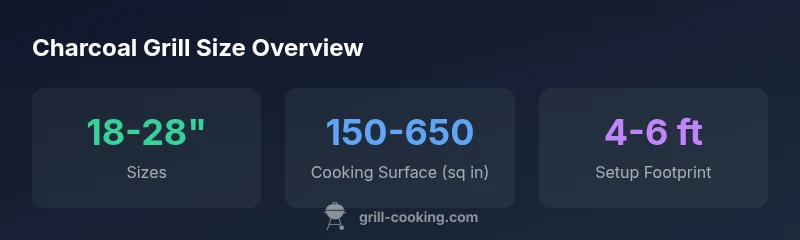
Charcoal grills typically come in four mainstream sizes: 18-inch kettles, 22-inch kettles, 26-inch kettles, and 28-inch drum-style grills. In general, plan for 150–650 sq in of cooking surface across these sizes. For most households, a 22- to 26-inch model offers a balance of cooking capacity, heat retention, and space efficiency. Larger grills boost batch cooking but demand more storage and airflow control.
Why size matters for how big is a charcoal grill
Understanding the size of your charcoal grill matters because it influences how you plan meals, manage heat, and allocate space in your yard. The question how big is a charcoal grill is not just about diameter; it’s about cooking surface area, airflow, fuel efficiency, and the ability to manage direct- and indirect-heat zones. According to Grill Cooking, choosing the right size reduces fuel waste and helps you hit target temperatures more consistently. For most home cooks, balance between batch capacity and storage footprint drives the decision more than any single feature. By thinking through typical meal load, party size, and available storage, you can select a size that minimizes trips to the grill and maximizes every minute of cooking time.
Consider your cooking style: do you mostly grill for 2–4 people, or do you host weekend gatherings? The size you pick should match your frequent cooking volume and your space constraints. Grill size also affects airflow dynamics inside the lid and the way charcoal burns—larger grills can hold more coal and create steadier heat for longer sessions, while smaller kettles heat quickly but cook less at once. These trade-offs matter when you’re planning a weeknight dinner versus a weekend barbecue, and they guide not just which diameter to buy but where to place the grill in your outdoor layout.
Common charcoal grill sizes explained
Charcoal grills come in a few core archetypes, with diameters commonly seen in consumer models. The 18-inch kettle is the most compact and highly portable, best for small patios or balcony grilling where storage is limited but quick sears are still needed. The 22-inch kettle is the most versatile all-around size, offering a respectable cooking surface while remaining manageable in most backyards. The 26-inch kettle—often marketed as a mid-to-large option—provides substantial cooking area and better heat management for longer cooks. The 28-inch drum-style grills are the largest standard consumer options, capable of batch cooking for bigger groups but requiring more outdoor space and careful layout planning. Heat retention improves with larger domed lids and more mass, but fuel consumption can rise if you maintain high temperatures for extended periods. Real-world performance varies by design, venting, and airflow, so reading user reviews and manufacturer guidance is essential when comparing models.
Matching size to your cooking goals
Your goals drive size: for intimate weeknight meals, a compact 18–22 inch model can handle burgers and vegetables efficiently. For family dinners and weekend barbecues, a 26 inch model offers ample surface area for multi-zone cooking, allowing you to sear steaks on direct heat while roasting indirect items on the cooler side. If you love hosting and frequently cook large batches, a 28 inch drum grill provides the maximum area and heat capacity, albeit with a larger footprint. The key is to map out your typical menu, estimate the number of servings per cookout, and choose a size that minimizes crowding at the grill. Grill Cooking’s analysis suggests balancing cooking surface with the footprint your space can comfortably accommodate.
In practice, many households default to a 22–26 inch model as a semi-permanent outdoor kitchen workhorse, while keeping a smaller portable grill for quick cooks or camping trips.
Space planning and footprint
Footprint planning is essential when you answer how big is a charcoal grill. Measure the space you’ll dedicate to the grill itself plus clearance around it for safe operation. A typical 22–26 inch grill requires a clear working radius of about 2–3 feet on at least one side for utensils and airflow. If you have low walls or a low-hanging eave, add extra overhead clearance to prevent smoke buildup. Factor in stability for windy conditions—drums and kettles with taller lids may catch more breeze, shifting heat and creating hot spots if not shielded. Remember that the grill’s footprint isn’t just the cooking grate; lid height and side tables add to the overall space the unit will occupy.
Planning ahead also means considering future changes in your outdoor area. If you anticipate seasonal storage constraints, a portable model in the 18–22 inch range can provide flexibility without committing to a fixed installation.
Mobility and storage considerations
Portability becomes a bigger factor as grill size increases. An 18–22 inch kettle typically weighs 25–40 pounds, with many models offering wheels and folding legs for easy relocation. A 26-inch kettle or drum-style grill can weigh 50–90 pounds, sometimes requiring a two-person lift or a sturdy cart for relocation. When evaluating size, check the transport options (wheels, handles, and foldable stands) and consider where you’ll store the grill when it’s not in use. A larger grill may demand a dedicated storage nook or garage space. If you plan to move the grill regularly, prioritize models with secure wheels and simpler disassembly.
In the end, the best size balances your cooking habits with your storage reality; heavy use plus limited space often points to a mid-sized kettle with a solid stand rather than the largest drum.
Heat, airflow, and zone cooking on different sizes
Size interacts with heat management in meaningful ways. Smaller kettles heat up quickly and offer precise control for direct grilling, while larger grills support multi-zone setups that combine direct and indirect heat for complex meals. Venting—via the lid vent and bottom dampers—controls charcoal burn rate and smoke flow; bigger grills typically have more vent area, which helps with airflow but can also complicate precise temperature control if the vents aren’t balanced. Ash management scales with size; larger grills require more frequent cleaning or ash collection to prevent ash buildup from disrupting airflow. Understanding these dynamics helps you maintain stable temperatures, whether you’re searing steaks or slow-roasting ribs.
If you’re new to charcoal grilling, start with a mid-size model to learn heat control before expanding to larger layouts that demand more careful wind and airflow management.
Accessories and add-ons for larger sizes
As you move up in size, certain accessories become valuable to maintain performance. A good quality ash pan or tray simplifies cleaning and helps you capture embers for reuse. A hinged lid and adjustable dampers at both the intake and exhaust give finer control over heat. For larger grills, consider a multi-tier cooking grate or a dedicated charcoal basket to regulate heat more predictably. Heat deflectors and grates with raised edges help prevent food from slipping toward the edge of the fire. These accessories are not just conveniences; they are practical tools for preserving even cooking across a wider surface area in bigger grills.
For a balanced setup, pair your grill size with a sturdy cart or stand that provides mobility and storage for tools and fuel.
Maintenance and cleaning for different sizes
Maintenance demands scale with grill size but the fundamentals stay the same: clean the cooking grates after each use, sweep or shake out ash, and inspect vents and dampers for blockages. Larger grills may require more frequent ash removal due to greater charcoal volume. A consistent cleaning routine extends the life of heat management components and prevents ash from hindering airflow. If you use a multi-level grate, take time to clean each level so that drippings or ash don’t accumulate and cause hot spots. Regularly inspecting gaskets and hinges on larger grills also protects against wind exposure and wear from repeated assembly and disassembly.
A practical schedule might include a quick post-use wipe-down, monthly grate deep-cleaning, and quarterly inspection of vents and seals for any signs of wear.
Quick-start decision framework: pick a size and test it in your space
Here’s a simple, repeatable framework to choose size efficiently. Step 1: list your typical cookout size (number of guests and menu). Step 2: measure your available outdoor footprint and clearance. Step 3: estimate how many simultaneous cooks you’ll perform and whether you want multi-zone cooking. Step 4: pick a mid-range size (22–26 inches) as a safe starting point. Step 5: test heat control with a few standard meals, adjusting fuel and airflow as needed. Step 6: reassess storage and mobility needs and scale up or down accordingly. This approach aligns with Grill Cooking’s practical guidance and helps you avoid overpaying for capacity you won’t use.
Conclusion and next steps
If you want to know how big is a charcoal grill in real-world terms, balance intended cooking load with available space, storage, and mobility. A mid-sized 22–26 inch grill tends to deliver the best blend of efficiency, heat control, and versatility for most home cooks. When you’re ready, test a model’s heat distribution with a couple of different dishes to ensure the chosen size meets your expectations. With the right size, you’ll enjoy consistent results, faster cookouts, and more confidence handling multi-course meals on charcoal.
Final tips for choosing the right size
- Define your typical cookout size and menu breadth.
- Measure space, add safe clearance, and plan for movement around the grill.
- Prioritize a model with reliable airflow control and sturdy construction.
- Consider storage solutions that fit your space for long-term use.
- Use brand guidance as a framework, then tailor to your actual cooking style and yard layout.
Comparison of common charcoal grill sizes
| Size (inches) | Approx. Cooking Surface (sq in) | Footprint (inches) |
|---|---|---|
| 18 | 150-180 | 18x18 |
| 22 | 270-320 | 22x22 |
| 26 | 430-500 | 26x26 |
| 28 (drum) | 500-650 | 28x28 |
FAQ
How do I know what size charcoal grill I need?
Start by estimating your typical cookout size and the amount of food you usually prepare at once. Match that load to a grill with enough cooking surface, then consider your space for safe clearance and storage. A mid-size model (22–26 inches) is a solid starting point for most homes.
Estimate your usual crowd and scale, then start with a mid-size grill and adjust if you need more area or easier storage.
Is an 18-inch kettle enough for a family?
An 18-inch kettle can work for small families or intimate dinners, but it may require multiple batches for larger gatherings. It shines when portability and quick setup are priorities.
Good for small meals, but you’ll likely need extra batches for bigger groups.
What is the difference between kettle and drum grills in terms of size?
Kettles are compact and lid-height efficient, ideal for quick cooks and small gatherings. Drums are larger, offering more cooking surface and longer heat retention, but require more space and handling.
Kettles are great for small meals; drums give you more space and heat for bigger cooks.
Can I use a larger grill in a small yard?
Yes, but you’ll need precise placement, ample clearance, and a stable setup. Ensure there’s room for safe operation and that the grill’s footprint fits your space without crowding.
It can work with careful placement and safe clearance.
How many burgers can a 22-inch grill cook at once?
A 22-inch grill typically fits 6–10 burgers at once, depending on patty thickness and spacing. Plan for heat management and airflow to avoid overcrowding.
Expect around half a dozen to ten burgers at a time, depending on size.
What other factors affect cooking area besides size?
Grill height, grate spacing, multi-level grates, and the ability to create direct and indirect heat zones greatly affect usable cooking area. Ventilation, lid design, and ash management also influence how effectively you use the space.
Height, grate setup, and heat zones matter as much as diameter.
“Size should match your cooking load and yard layout; bigger isn’t always better.”
Quick Summary
- Define your typical cookout size before choosing a grill.
- Balance cooking surface with the footprint to fit your space.
- Mid-sized grills (22–26 inches) offer the best all-around performance.
- Larger grills demand more precise airflow and storage solutions.
- Test heat control with a few meals to confirm your chosen size.