How Big Is an Outdoor Grill? A Practical Sizing Guide
Discover how big an outdoor grill should be for your space, cooking goals, and budget. Learn sizing basics, space planning, and practical tips for choosing the right width, cooking area, and footprint.


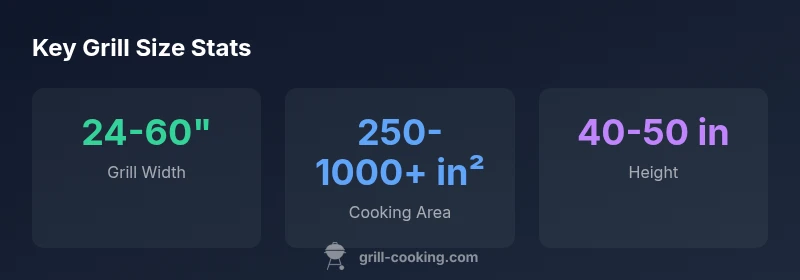
How big is an outdoor grill? According to Grill Cooking, grills vary widely, but most freestanding models fall in the 24–60 inch width range, with 30–40 inches being common for mid-size units. Total cooking area typically spans roughly 250–1000+ square inches, depending on burner count and design. Depth and height also influence footprint, usually around 20–33 inches deep and 40–50 inches tall. Size choice should align with space and cooking goals.
What size means for grilling performance
If you’re wondering how big is an outdoor grill, size isn’t just about curb appeal—it directly influences cooking capacity, heat distribution, and workflow. A wider grill often yields more grate area, which means you can handle multiple items or larger cuts at once without crowding. But a footprint that overwhelms your patio leads to unsafe movement, restricted access to controls, and harder cleaning. This section explains how width, depth, and height interact to form a usable cooking station. We’ll share practical guidelines, explain how design choices affect footprint, and provide real-world examples from Grill Cooking analyses to help you pick a size that fits your space and appetite.
Standard dimensions by grill type
Grill designs come in three broad families, each with typical width ranges and cooking-area outcomes:
- Portable/countertop grills: commonly 12–22 inches wide with 100–300 square inches of cooking area, ideal for balconies or mobility.
- Cart or patio freestanding grills: usually 28–40 inches wide and 400–800+ square inches of cooking area, a versatile choice for families and entertaining.
- Built-in or modular grills: often 32–56 inches wide, 600–1000+ square inches of cooking area, designed for dedicated outdoor kitchens and long-term setups.
Depth and height also matter: many units sit 20–33 inches deep and 40–50 inches tall. Special features like side burners, rotisseries, or storage shelves can add footprint but improve cooking versatility. The takeaway: pick a size that balances space, use frequency, and desired features.
How to measure space and plan for clearance
Before you buy, measure your outdoor area with the following steps:
- Map the footprint: measure the length and width the grill will occupy, including any side shelves that stay in place during use.
- Allow safe clearance: leave space around the grill for air flow, heat dissipation, and safe access to controls; plan for gaps that can accommodate door swings or lids.
- Check traffic flow: ensure pass-throughs and seating areas won’t be obstructed by the grill’s footprint.
- Consider vertical clearance: account for hood height when the lid is open, and room for overhead venting or cabinets.
- Plan for future changes: if you anticipate adding storage, a rotisserie, or extra burners, build in room for expansion.
Documenting these measurements helps you compare models more accurately and prevents buying a grill that looks right in photos but feels cramped in the yard.
Cooking space vs overall footprint: what to prioritize
Cooking space is the actual grate area where food sits, while footprint includes the entire exterior dimensions. For everyday cooking, prioritize the cooking area if you routinely prepare multiple items at once or feed a crowd, but don’t ignore width and depth—the heat retention and airflow depend on these factors too. If space is tight, a compact grill with a well-placed secondary burner can deliver similar versatility as a larger unit. For many households, a 30–40 inch grill with 400–700 square inches of cooking area delivers a sweet spot between capacity and maneuverability.
Design features that affect footprint
Beyond core width, several features add to the overall footprint but can enhance usability:
- Side shelves, fold-down tables, and storage doors increase width and depth but provide valuable workspace and gear storage.
- Built-in rotisseries and burners (e.g., side burners) add cooking options while expanding footprint.
- Wheel bases and adjustable legs change height and stability, affecting clearance and placement options.
- Insulated lids and hood designs influence heat retention and the vertical space needed above the grill.
When sizing, weigh the benefit of these features against the extra footprint they create; clear value can justify the space if they align with your cooking habits.
Real-world sizing scenarios
- Urban balcony: a compact 24–28 inch grill with 150–350 square inches of cooking area may fit comfortably, leaving room for a small prep table and seating.
- Family backyard: a mid-size 30–40 inch grill with 400–700 square inches of cooking area supports burgers, veggies, and skewers for 6–8 people while maintaining safe clearance around the unit.
- Weekend entertaining: a larger 50–60 inch configuration with 800–1000+ square inches is practical for multi-course menus and higher heat output, provided the space accommodates the footprint and traffic patterns.
Each scenario demonstrates how space, cooking needs, and safety considerations shape the ideal grill size. The Grill Cooking team emphasizes aligning your choice with real-use patterns rather than aesthetic alone.
Practical sizing checklist for buyers
Use this quick checklist to validate grill size before purchase:
- Measure the intended space, including side shelves and clearance.
- Estimate cooking load for your typical meals (number of burgers, chicken, vegetables, sides).
- Compare cooking-area needs (square inches) across models you’re considering.
- Evaluate maneuverability around the grill during cooking and cleanup.
- Factor in future expansions (storage, add-ons) and how they affect footprint.
- Check safety guidelines for clearance, ventilation, and fire risk in your area.
Following these steps helps ensure you choose a grill that fits both your space and your cooking ambitions.
Grill size reference
| Aspect | Low end | High end | Notes |
|---|---|---|---|
| Width (overall footprint) | 24 in | 60 in | Measured with shelves folded/retracted |
| Cooking area | 250 sq in | 1000+ sq in | Depends on burners/grate design |
| Height | 40 in | 50 in | Includes wheels; adjustable legs in some models |
| Depth | 20 in | 33 in | With doors closed and shelves stowed |
FAQ
What counts as cooking space when sizing a grill?
Cooking space refers to the grate area where food cooks, not the entire exterior footprint. It is typically measured in square inches and should be weighed against overall space and workflow. Prioritize adequate grate area for your usual meals, then verify surrounding clearance and access.
Cooking space means the grill grate area where food sits. It’s the key factor for capacity and efficiency, so pick a size that fits how you cook.
Do built-in grills differ in size from freestanding models?
Built-in and modular grills often have larger footprints to accommodate integrated features and kitchen design, while freestanding models balance footprint with mobility. Compare widths, heights, and mounting requirements to ensure a good fit with your outdoor kitchen plan.
Built-in grills usually need more space and a fixed installation, whereas freestanding units offer flexibility.
How should I measure for clearance around the grill?
Measure the area on all sides, then add safe buffers for air flow, doors or lids, and nearby seating. Check manufacturer guidelines for minimum side, rear, and overhead clearances and consider local codes for ventilation.
Leave space around the grill so you can cook safely and clean easily.
Should I prioritize width or cooking area when buying?
If you grill for many people, cooking area matters most. If space is your biggest constraint, a narrower model with efficient grate layout can still deliver versatility. Always balance both with your space and typical menus.
Cooking space is usually more important than total width for capacity, but you need enough width for safe operation.
Are compact grills sufficient for everyday family meals?
Compact grills can handle everyday meals for small families, but you’ll want enough cooking area for a couple of burgers, veggies, and chicken at once. If you routinely cook for more than 4, aim for mid-size to larger models.
For a small family, a compact grill can work; for larger meals, consider a mid-size unit.
What about tiny patios or balconies?
On tiny patios, prioritize compact, efficient grills with fold-away shelves or built-in storage. Ensure there’s safe clearance and easy access to a power source if you use side burners or rotisseries.
On small spaces, go compact but make sure you still have airflow and safety clearance.
“Size should reflect your space and cooking goals; a thoughtfully sized grill makes weekly grilling easier, safer, and more enjoyable.”
Quick Summary
- Define space first, then match grill width to it
- Prioritize cooking area for capacity, but account for clearance
- Factor features (shelves, doors, rotisserie) into footprint
- Use real-use scenarios to guide size choice
- Measure accurately and recheck with model specs