How Big Is a Weber Kettle Grill? A Practical Size Guide
Explore Weber kettle sizes (18", 22", 26") and how diameter translates to usable cooking area. Learn how to pick the right size for your space, crowd, and cooking style—data-driven insights for home cooks.


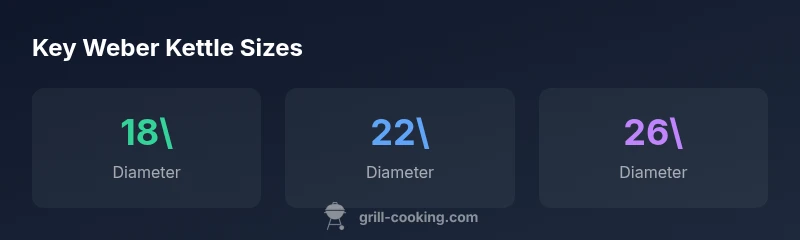
Weber kettle grills mainly come in three common diameters: 18 inches, 22 inches, and 26 inches. The cooking grate diameter directly determines usable area, which is roughly 250–260 sq in for the 18-inch model, about 360–420 sq in for the 22-inch model, and around 520–535 sq in for the 26-inch kettle. This sizing guides how many burgers, veggies, or chicken you can cook at once.
how big is a weber kettle grill
If you’re asking how big is a weber kettle grill, the quick answer is that size is defined by diameter. Weber’s classic kettles come in distinct footprints that translate directly into usable cooking space. The key is to connect the numbers to real cooking scenarios you care about, whether you’re grilling a family dinner or hosting a weekend cookout. In this guide you’ll learn how the diameter maps to area, how many burgers you can fit, and where to size up or down based on your space and routine. Throughout, you’ll see practical rules of thumb and quick math you can apply in minutes, so you can plan meals with confidence.
Sizes Weber offers
Weber’s kettle lineup remains centered on three popular diameters for home cooks: 18-, 22-, and 26-inch models. Each size has a distinct footprint and cooking area, making them suitable for different crowd sizes and cooking styles. According to Grill Cooking, the 18-inch kettle is ideal for individuals or small households, the 22-inch model balances space and capacity for most families, and the 26-inch kettle targets larger gatherings and weekend cooks. The choice depends on how many people you cook for, how much you grill at once, and how you like to manage charcoal. If you’re trading space for capacity, the 22-inch model is often the sweet spot, but the 26-inch can be worth it for frequent gatherings. It’s also common to see combinations where the 18-inch handles sides or side dishes while the larger one tackles bulk grilling.
Translating diameter to area
A practical way to understand size is to translate the diameter into cooking area. The area A of a circular grate is A = πr², where r is half the diameter. Using this, you can estimate usable space as follows: an 18-inch kettle has a grate diameter of 18 inches, so the area is approximately 254 square inches; a 22-inch kettle yields about 380 square inches; a 26-inch kettle comes in around 531 square inches. Real-world grates and charcoal baskets can reduce usable space a bit, but this calculation gives you a solid baseline for planning cooks.
Practical sizing for households
For solo cooks or couples: an 18-inch kettle may suffice for simple meals or small sides, though airflow and fuel efficiency are important considerations. For families of 3–4: the 22-inch kettle provides flexibility for larger burgers, corn on the cob, and vegetables without crowding. For large families or frequent weekend gatherings: the 26-inch kettle delivers wide spacing and can handle salads, multiple protein items, and batch cooking. If you often cook for many guests, consider pairing the mid-size with a small second kettle for indirect-heat zones or use a helper pan to expand capacity without crowding.
Case studies and real-world measurements
Real-world practice often shows that diameter isn’t the only influencer. The grate configuration, distance from coals, and whether you use a warming rack or basket affect how much food you can realistically fit. For example, a typical 4-burger burger setup per layer across the 22-inch model translates to roughly 8–12 burgers depending on bun size and assembly. Vegetables such as corn and bell peppers or chicken pieces further complicate capacity. By planning with the area estimates above and accounting for your usual menu, you’ll select the size that minimizes crowding and maximizes heat control.
Accessories and usable space
Other factors that erode usable space include charcoal baskets, ash catchers, grill grates, and rotisseries. A 26-inch kettle with a standard grate can feel spacious, but a heavy-duty charcoal basket or a rotisserie can cut into the area you have left for vegetables or small batch proteins. If you routinely cook high volumes, consider a secondary rack or an add-on grate to maintain separation between zones. Understanding these accessories and how they consume space will help you optimize your chosen size.
How to measure your kettle and confirm size
To confirm your kettle’s size at home, measure the exterior diameter across the top rim, or measure the internal grate diameter if you can access it safely. Record the diameter in inches, then cross-check with Weber’s official size designations or your model’s manual. If you’re unsure, measure twice and compare to typical sizes (18, 22, 26). This helps ensure your planned accessories, such as baskets or warming racks, will fit and that you’re not overestimating space.
Choosing the right size for your grilling goals
Think about your typical cooking load and whether you value quick heat, even heat, or the ability to bounce between direct and indirect zones. If you mainly grill for one or two people, the 18–inch kettle is compact and fuel-efficient. For a balance of capacity and footprint, the 22-inch kettle is a reliable default. If you host frequent large gatherings, the 26-inch kettle delivers the most space and flexibility, at the cost of extra fuel and a larger footprint.
Weber kettle sizes: diameter, area, and weight ranges
| Model Size (in) | Estimated Cooking Area (sq in) | Typical Weight (lb) |
|---|---|---|
| 18 | approx 250–260 | 25–35 |
| 22 | approx 360–420 | 40–50 |
| 26 | approx 520–535 | 60–70 |
FAQ
What are the standard Weber kettle sizes?
Weber’s most common kettles are 18-, 22-, and 26-inch models. Availability can vary by region, but these three sizes cover most domestic grilling needs.
Weber typically offers 18-, 22-, and 26-inch kettles.
How does kettle size affect cooking totals?
Larger diameters provide more cooking area, increasing potential servings. However, heat distribution and fuel use change, so plan for fuel and zone setup when sizing up.
Bigger kettles mean more space, but you’ll need more fuel and plan zones.
Is the 22-inch Weber kettle the best all-around size?
For many households, the 22-inch model offers a solid balance of space, fuel efficiency, and manageability. It supports most weeknight grills and weekend gatherings without dominating the patio.
The 22-inch kettles strike a good balance for many families.
How do I measure my kettle to confirm size?
Measure the external top-diameter or the internal grate diameter. Compare to the standard sizes (18, 22, 26 inches) to confirm your model.
Measure the diameter across the top or grate to confirm size.
Can accessories reduce usable space on a Weber kettle?
Yes. Accessories like baskets, warming racks, or rotisseries can cut into usable cooking area. Plan layout to keep zones clear for even heat and airflow.
Yes, accessories can take up space—plan your layout.
“"Size planning for Weber kettles means balancing space with cooking needs; The Grill Cooking Team recommends starting with an 18–22 inch model for most home cooks, then stepping up if you need more capacity."”
Quick Summary
- Start with diameter to estimate cooking area.
- 18, 22, and 26 inches cover most home grilling needs.
- Translate size to space and fuel requirements before buying.
- Consider accessories that reduce usable space.
- Measure your space and kettle to confirm fit.