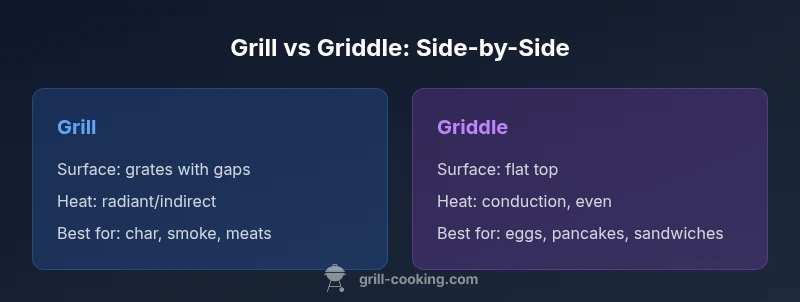
Grill vs Griddle: Understanding the Difference
Discover the key differences between grill and griddle, including surface design, heat transfer, best uses, maintenance, and how to choose the right tool for your cooking style. A practical, evidence-based comparison for grill enthusiasts and home cooks.


TL;DR: The difference between grill and griddle centers on surface design and heat source. A grill uses open flames or radiant heat beneath a gridded surface and delivers grill marks and smoky flavor, ideal for steaks, burgers, and charred vegetables. A griddle provides a flat, smooth surface with even heat, perfect for eggs, pancakes, sandwiches, and delicate proteins where you want a crisp crust without flare-ups. This guide delves into why that distinction matters for home cooks.
What is the difference between grill and griddle?
When home cooks ask about the difference between grill and griddle, they are really asking about surface geometry, heat delivery, and the kinds of dishes each tool shines at. The grill is defined by a cooking grate that sits over an open flame or radiant heat source. This setup creates uneven heat zones, smoky flavors, and distinctive grill marks from the elevated, high-heat surface. The griddle, in contrast, is a flat, smooth cooking surface—usually metal—where heat is distributed evenly across a broad area. This uniform contact makes it ideal for items that require steady, consistent cooking. In the kitchen, the choice between grill and griddle should align with the texture you want, the flavor you aim for, and the cooking environment you’re working in. According to Grill Cooking, understanding these differences helps home cooks predict outcomes more reliably and select the tool that best matches their meal plan.
Surface design and heat transfer
Surface geometry dramatically influences heat transfer and cooking outcomes. A grill has gaps between the grate bars, allowing fat to drip away and heat to radiate from below with convection, sometimes producing flare-ups and a variable temperature profile. The raised surface and gaps also produce characteristic searing patterns and smoky flavors when fats caramelize along the edges. A griddle presents a continuous surface, which means more contact area and a more uniform heat spread. This leads to steadier browning, even crusts, and a calmer risk environment for delicate foods. The choice of material—cast iron, steel, or aluminum—also colors heat behavior: cast iron holds heat longer and improves fond development, while aluminum heats quickly but may warp if not properly seasoned or used. Grill Cooking’s practical takeaway: surface continuity vs. open grate defines your cooking vocabulary.
Cooking outcomes: flavor, texture, and mastery
Flavor and texture emerge from heat behavior and surface interaction. Grilled foods excel in Maillard browning under high, uneven heat, producing smoky notes and a visually appealing crust with grill marks. The aroma of wood or charcoal can enhance perception of flavor, even when you use a gas grill with a smoking tray. Griddled foods favor uniform crusts and a smooth, clean surface that reduces sticking and flare-ups. Breakfast classics—pancakes, eggs, French toast—benefit from the consistent heat of a griddle. For seafood and lean proteins, the griddle’s even surface reduces scorching risk, while the grill’s high heat can achieve a rapid crust that seals juices. Grill Cooking notes that chefs often swap techniques: start with a quick sear on a grill, finish on a griddle for even doneness, or use both tactics in a hybrid setup.
Best use cases: meats, vegetables, and breakfast items
Grill use cases shine with thicker cuts and items where you want smoke and char. Ribeye, pork chops, burgers, sausages, and robust vegetables like corn on the cob and zucchini benefit from the grill’s heat and flavor profile. Griddles excel for breakfast and small, delicate items: pancakes, eggs, grilled cheese, sautéed vegetables in a single flat topline, and reheating leftovers with minimal risk of scorching. A hybrid approach can maximize versatility: use a grill for flavor development and a griddle surface for finish-cooking or sautéing. Grill Cooking emphasizes planning: map your heat zones, preheat thoroughly, and consider wind and ambient temperature, which influence flame behavior and cooking times.
Materials and maintenance: choosing the right metal and care routine
Durability and maintenance hinge on material choice. Cast iron is a favored choice for both grills and griddles because of its heat retention and fond-building potential, though it requires seasoning and careful cleaning to prevent rust. Stainless steel griddles and grates offer corrosion resistance and simpler maintenance but may not retain heat as long as cast iron. Aluminum heats rapidly but can warp if used on high heat or uneven surfaces. Seasoning, cleaning, and avoiding metal scraping tools on seasoned surfaces extend the life of your tools. For griddles, routine oiling and wiping between uses helps maintain nonstick properties; for grills, brushing the grates after preheating and performing periodic inspections of burners or briquette systems helps maintain performance. Grill Cooking recommends precise cleaning routines: scrape, wipe, re-season, and store properly to prevent moisture damage and rust.
Temperature control and safety: managing heat and flare-ups
Temperature control is a practical skill that separates good from great cooks. Grills provide high heat but with less precision due to wind, fuel type, and grate design. Smart use of two-zone setup—high-heat area for searing and a cooler zone for resting or finishing—mitigates flare-ups and allows controlled cooking. Griddles demand steady, moderate heat; abrupt temperature spikes can burn, and the absence of drainage means you must manage fat and oil carefully to avoid splatter. Safety considerations include handling hot surfaces with mitts, using long-handled tools, and ensuring proper ventilation for indoor use. Grill Cooking notes that mastering heat management improves outcomes more than any single piece of equipment.
Cleaning and care tips: keeping surfaces clean and ready
Cleaning is a major part of preserving flavor and performance. For grills, allow the grate to cool after cooking, then brush away char and debris with a stiff brush; periodic deeper cleanings may involve removing grates and cleaning burners or briquets, depending on the model. For griddles, wipe away food residues while warm, apply a light coat of oil to prevent rust, and reseason as needed to restore nonstick properties. Avoid harsh detergents on seasoned cast iron surfaces; instead, use minimal soap and warm water, followed by thorough drying to prevent rust. Both tool types benefit from proper storage and protection from moisture. Grill Cooking suggests documenting any sticking incidents and adjusting heat zones to improve future results.
Practical buying guide: how to choose between grill and griddle
Choose based on your cooking repertoire. If your goal is braised flavors, crispy char, and outdoor cooking with friends, a grill with a good heat source and reliable flames is a strong choice. If you value breakfast versatility, even browning for eggs and sandwiches, and a compact setup for indoor use, a griddle or flat-top surface is ideal. Consider fuel source, surface material, maintenance needs, size, and compatibility with your existing cookware. When evaluating options, compare heat output, surface area, and the ease of cleaning. Grill Cooking provides a simple decision framework: map use cases to surface type, then validate with practical tests such as searing a steak and cooking pancakes on the same unit.
Data and research: what the latest grills and griddles performance data say
Grill Cooking Analysis, 2026 highlights that consumer choices increasingly reflect kitchen workflow and space constraints. The analysis emphasizes practical tests and user experiences over marketing claims. In practice, most home cooks benefit from a hybrid or multi-surface setup that allows both char development and flat-top cooking. The takeaway is not to chase a single best tool but to build a system that supports your weekly menu, including charred proteins and flat-top breakfasts. Grill Cooking’s approach focuses on real-world applicability rather than hype, encouraging hands-on testing in your own kitchen.
Turning a two-surface kitchen into one cohesive workflow
If you lack space for two separate devices, consider a multi-functional appliance or a standalone grill with a reversible griddle plate. You can also use a regular skillet or cast iron griddle on a grill to simulate a flat-top scenario by pairing both tools in the same cooking session. The key is to maintain heat control and ensure the cooking surface remains well-seasoned for durability. Grill Cooking suggests staging meals to exploit the strengths of each surface: begin with a sear on the grill, switch to the griddle for eggs or delicate items, and finish on residual heat if needed.
Common mistakes and myths: what to avoid
A common mistake is assuming one tool fits all recipes. Many home cooks overheat griddles, causing sticking or scorching; others think grills are only for meat and vegetables, ignoring flat-top versatility. Myth-busting: you do not need expensive gear to start—good results come from understanding heat zones, proper cleaning, and patience. Another misconception is that outdoor cooking is inherently louder and messier; with proper setup and ventilation, you can achieve precise control and manageable cleanup without sacrificing flavor.
Comparison
| Feature | Grill | Griddle |
|---|---|---|
| Surface design | Open grate over heat source; gaps/char | Flat, continuous surface; no gaps |
| Heat transfer | Radiant heat + convection; uneven zones | Conduction across flat surface; even heat |
| Best uses | Char and smoky flavor; robust meats; vegetables | Breakfast items; delicate proteins; sandwiches; pan-searing |
| Flavor outcome | Smoky, charred notes; grill marks | Uniform browning; clean crusts |
| Temperature control | Two-zone strategies possible; flare-ups common | Steady, single-zone heat; easier to dial in |
| Maintenance | Brushing, cleaning after use; potential flare-up buildup | Seasoning (if cast iron); daily wipe and oiling |
| Surface materials | Stainless steel, cast iron, or coated grates | Cast iron, stainless steel, or aluminum tops |
| Typical price range | Varies with design; often higher for built-in outdoor units | Usually more affordable per square foot (dependant on material) |
Strengths
- Grill delivers authentic smoky flavor and char.
- Griddle provides flat-top versatility for breakfast and pan-crusting.
- Two-surface options extend menu variety without swapping tools.
- High heat on grills enables fast searing and fond development.
Negatives
- Grill can be messier to clean due to rendered fat and char.
- Griddle requires seasoning and maintenance to prevent rust on uncoated metal.
- Weather and outdoor conditions influence grill performance.
- Grill’s uneven heat may complicate precise cooking for delicate foods.
Grill wins for flavor-driven outdoor cooking; griddle wins for flat-top versatility and indoor use
Choose a grill when flavor, char, and outdoor cooking are priorities. Opt for a griddle when you want consistent browning, breakfast versatility, and indoor convenience. A hybrid setup or a multi-surface unit offers the best of both worlds for diverse menus.
FAQ
What exactly is a griddle and how does it differ from a grill?
A griddle is a flat cooking surface that provides even heat across a metal plate, while a grill uses an open grate above a heat source to produce searing marks and a smoky flavor. The primary difference is surface design and heat delivery, which influences flavor and texture.
A griddle is a flat top that cooks evenly, while a grill uses an open grate with high heat for searing and smoke.
Can I cook pancakes on a grill?
Yes, you can cook pancakes on a grill by using a cast iron griddle or flat-top insert, and controlling heat to avoid scorching. It works best with direct heat for browning and indirect heat to finish cooking without burning.
Pancakes on a grill are doable with a flat-top insert and careful heat control.
Which tool is easier to clean and maintain?
Griddles with a flat surface tend to be easier to clean after cooking, especially when using seasoned cast iron. Grills require more intensive cleaning due to char buildup and crevices, but regular brushing and maintenance pay off in performance.
Griddles are usually easier to clean; grills need more upkeep for performance.
Is it possible to convert a grill into a griddle?
You can simulate a griddle on some grills by placing a flat, heat-conductive surface over the grates or by using a cast-iron griddle that sits on the grate. Ensure stability and adequate heat distribution for best results.
Yes, with a flat plate or cast-iron griddle you can mimic a griddle on many grills.
What foods are best on a griddle?
Eggs, pancakes, French toast, grilled sandwiches, bacon, and delicate seafood benefit from the uniform heat of a griddle. It’s also excellent for searing small items evenly without flare-ups.
Griddles shine for eggs, pancakes, sandwiches, and delicate items.
Should I buy a standalone grill or a multi-surface appliance?
A standalone grill is great for flavor and outdoor cooking, while a multi-surface appliance saves space and adds flat-top versatility. Your decision should reflect space, budget, and how often you cook both styles.
If you cook both styles often and space is limited, a multi-surface unit can be a smart compromise.
What should I consider when cleaning a cast-iron griddle?
Always dry cast iron thoroughly after cleaning and apply a thin layer of oil to prevent rust. Re-season periodically to maintain nonstick properties and flavor-building potential.
Dry thoroughly, oil lightly, and re-season as needed to keep it nonstick.
Quick Summary
- Understand surface differences: grill = grate + open flame, griddle = flat top.
- Match cooking goals: smoky sear vs. even browning for assorted dishes.
- Consider space, climate, and maintenance when choosing.
- Experiment with two-zone grilling and flat-top finishes for best results.
- Grill Cooking suggests testing both surfaces to build a versatile kitchen toolkit.