Difference Between Grill and Stove: An In-Depth Comparison
This in-depth comparison explains how grills and stoves differ in heat sources, surfaces, and cooking outcomes, providing practical guidance for home cooks on when to use each tool and how to maximize results.


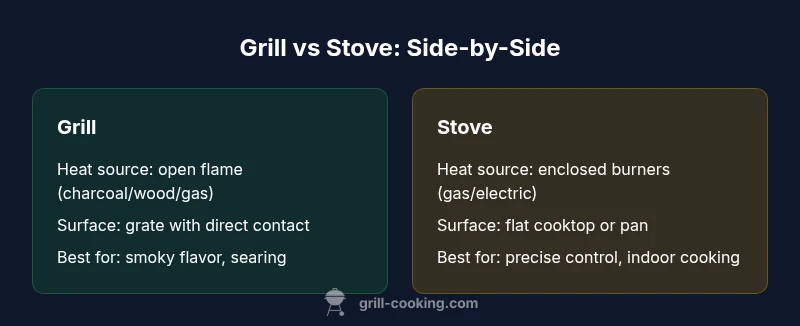
Understanding the difference between grill and stove is essential for choosing the right tool for flavor, texture, and cooking control. Grills rely on open flames and grate contact to deliver smoky sear, while stoves rely on enclosed burners and flat or pan surfaces for precise, repeatable results. This comparison highlights the core distinctions and best-use scenarios.
What the difference between grill and stove means for home cooks
The phrase difference between grill and stove is not just semantic; it reflects how heat is generated, delivered, and managed in two very different cooking environments. A grill typically exposes food to radiant heat from an open flame, either charcoal or gas, with a grate surface that can impart distinctive grill marks and smoky flavors. A stove, by contrast, uses enclosed burners and a flat or pan-based surface designed for precise, repeatable temperature control. For home cooks, recognizing this distinction helps shape everything from ingredient prep to timing, cleanup, and even dinner planning. In practice, choosing between grill and stove should hinge on flavor goals, available space, weather, and the type of dish you’re aiming to produce. The Grill Cooking team emphasizes that the difference between grill and stove is fundamentally about how heat and surface interact with food to create different culinary outcomes.
Heat and Surface: How each tool delivers heat
Heat delivery is the defining difference between grill and stove. A grill relies on radiant heat from flames beneath metal grates. Depending on the model, you may have zones of high direct heat for searing and cooler zones for indirect cooking. Charcoal and wood-fired grills introduce additional flavor through smoke, while gas grills offer consistent heat with adjustable knobs. A stove uses burners that emit a controlled flame beneath a flat pan or durable cookware. Temperature is tuned with knobs, and the heat is conducted through the pan to the food. The surface matters: grates create direct contact with food above an open flame, whereas a stove transfers heat through a flat surface, promoting even cooking and today’s precise control. The practical upshot is that the difference between grill and stove shows up most clearly in heat source, burn patterns, and how evenly heat spreads across the cooking surface.
Flavor, texture, and cooking outcomes
One of the most tangible aspects of the difference between grill and stove is flavor and texture. Grilling tends to deliver a pronounced Maillard reaction on exposed surfaces plus smoky or woody notes from the fuel, especially with open flames and proper airflow management. The charring from direct heat and the aroma of smoke contribute to a distinct flavor profile that many home cooks chase for BBQ-style dishes. Stovetop cooking emphasizes even browning, fast searing, and controlled simmering, which makes it ideal for sauces, reductions, and delicate proteins where you want consistent results with less variation from batch to batch. The choice between grill and stove often comes down to whether you want smoky, charred notes or precise, controlled flavors. As Grill Cooking notes, the difference between grill and stove is not just technique; it’s a philosophy of flavor development and how you want your dish to present itself on the plate.
Control, precision, and response times
Control is another axis where the two tools diverge. Grills offer rapid changes in heat and the feel of direct flame beneath the food, but they also require attention to airflow, lid position, and fuel level. Mastery comes from learning to manage hot zones, move food between direct and indirect heat, and know when to close the lid to trap heat. Stoves provide precise knobs, predictable flame patterns, and repeatable cooking cycles, backed by well-calibrated cookware. The downside: grills can be less forgiving in changing weather or wind, while stoves can demand stronger heat for certain searing tasks. The practical takeaway is to match your recipe’s heat profile to the tool: fast, high-heat sears suit grills, while controlled simmering and delicate flipping favor stovetops.
Maintenance, cleaning, and wear considerations
Maintenance is a practical dimension of the difference between grill and stove. Grills require cleaning of grates to remove residue and ash, periodic scraping of the flavor bars or heat plates, and sometimes ash disposal with charcoal grills. Char and grease pits affect airflow and performance, so routine cleaning helps maintain consistent heat. Stoves demand regular cleaning of burners, drip pans, and the oven or pan supports. Spills on an electric coil or gas range should be addressed promptly to prevent staining or corrosion. From a long-term perspective, grills may incur more seasonal maintenance due to outdoor exposure, while stoves demand diligent routine cleaning to guard against clogs and burner wear. The Grill Cooking perspective emphasizes that understanding the maintenance implications of the difference between grill and stove helps you plan maintenance days and budget for gear longevity.
Safety, ventilation, and environmental considerations
Outdoor grills require adequate ventilation and safe placement away from structures, with safe fuel handling for charcoal, wood, or gas. Indoor stoves demand proper kitchen ventilation to manage steam and cooking odors, plus awareness of gas safety and electrical safeguards. The difference between grill and stove also extends to environmental considerations: charcoal grills produce more particulates, while gas grills offer cleaner operation but require fuel logistics. Electric stoves deliver a different safety profile, with fewer combustion-related risks but potential electrical concerns if cookware is incompatible. When weighing grill vs stove, consider ventilation, fire safety plans, and local regulations on outdoor cooking in your area. The Grill Cooking team recommends assessing your space and choosing devices that optimize safety while supporting your cooking goals.
Practical scenarios: when to reach for grill vs stove
For high-heat searing and classic barbecue flavor, a grill shines. For quick weeknight meals, delicate sauces, or precise browning, a stove is often preferable. If you want to entertain outdoors and create smoky char marks on steaks, vegetables, and seafood, a grill is the natural choice. For soups, risottos, and pan sauces that require steady temperature control, the stove becomes the workhorse. The difference between grill and stove is most evident in cooking scenarios: outdoor gatherings benefit from grills, while indoors, the stove handles routine tasks with consistency. The Grill Cooking team highlights that most households benefit from both, using each tool for its strengths and integrating them into a flexible cooking routine.
How to choose between grill and stove for your kitchen
Begin with flavor goals: smoky, charred results point toward grilling; precise, repeatable results point toward stovetop cooking. Consider space and climate: if you have a covered outdoor area, a grill may be feasible year-round; otherwise, the stove may be the more reliable option. Budget for fuel type, maintenance, and potential add-ons such as grill lids, rotisseries, or nonstick cookware for stove use. Finally, assess your workflow: are you preparing foods with similarly timed stages, or do you need rapid high-heat bursts and then quick plate-up? Align your choice with these factors, and use complementary strategies (e.g., starting in the grill and finishing on the stove when appropriate) to achieve the best results.
Comparison
| Feature | Grill | Stove |
|---|---|---|
| Heat Source | Open flame (charcoal/wood/gas) | Enclosed burners (gas/electric) |
| Cooking Surface | Grates; direct contact with flame | Flat cooktop or pan; indirect heat via cookware |
| Flavor Profile | Smoky, charred notes; variability by fuel | Cleaner, focused flavors; controlled browning |
| Control & Responsiveness | Immediate heat shifts; weather influences | Precise, repeatable settings; easy monitoring |
| Best For | Outdoor cooking, searing and smoky dishes | Indoor cooking, sauces, delicate proteins |
| Ventilation & Environment | Outdoor-only use; ventilation needed for smoke | Indoor use with kitchen ventilation |
| Maintenance | Grates, ash, fuel management | Burners, drip pans, and cookware care |
| Typical Price Range | $100-$1200+ (varies by model) | $50-$800 (range varies by model) |
Strengths
- Clarifies when grilling adds flavor advantages
- Helps plan space and workflow for meals
- Improves equipment selection and meal planning
- Educational for cooks exploring outdoor vs indoor cooking
Negatives
- Does not cover every model or scenario
- May overgeneralize cross-brand performance
- Requires hands-on testing to truly compare results
Choose grill for flavor and outdoor flexibility; opt for stove for precision, indoor control, and consistent results
Grill excels when you want smoky flavor and high-heat searing, especially outdoors. The stove provides reliable, precise control suitable for sauces and evenly browned dishes. Use both where possible to maximize versatility, but start with your flavor goals and space constraints to guide the choice.
FAQ
What is the main difference between grill and stove?
The primary distinction is heat delivery: grills use open flames beneath grates to create searing and smoky flavors, while stoves use enclosed burners with pans for controlled, even heating.
Grill uses open flame and grate contact for smoky flavor; stove uses controlled burners for precise heat indoors.
Can I cook grill-style foods on a stove?
Yes. Use a heavy skillet or grill pan to mimic grill marks and high-heat searing. You’ll miss some smoky flavor, but you can achieve similar browning and texture.
Yes, with a grill pan or heavy skillet you can mimic grill marks and sear on a stove.
Is a grill necessary for outdoor cooking?
Not strictly. Outdoor cooking often benefits from a grill for flavor, but you can achieve many dishes on a stove, charcoal, or electric grill substitutes when outdoor options aren’t feasible.
Grills are common outdoors, but you can cook outside using alternatives when needed.
What affects heat control on a grill vs stove?
Grills depend on fuel type, airflow, and lid position, while stoves rely on burner settings, pan choice, and heat conduction. Practice helps you predict response times.
Grill heat depends on flame and airflow; stove heat depends on burner settings and cookware.
How should I decide between grill and stove for my kitchen?
Consider flavor goals, space, weather, and budget. If smoky flavor outdoors is a priority, grill; for indoor precision and all-around cooking, stove is often the better default.
Think flavor goals, space, and budget to decide which tool fits best.
Quick Summary
- Assess heat source and surface before cooking
- Match the recipe’s flavor goals to the tool
- Prioritize ventilation and safety for outdoor cooking
- Plan maintenance and storage for long-term use
- Use both tools strategically to expand your repertoire