Grill Fire Troubleshooting: Urgent Safety Guide
Learn rapid, practical steps to handle a grill fire safely, prevent damage, and restart cooking with confidence. This urgent safety guide covers triage, extinguishing options, and prevention for home cooks.


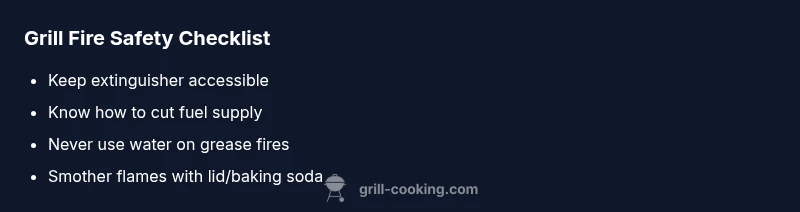
If you notice flames on your grill, act fast: shut off the fuel at the source, close the lid and vents to starve the fire, and keep a safe distance while guiding others away. If the flame persists, use an extinguisher or baking soda, and call for help if needed. Do not use water on grease fires.
Immediate actions when the grill is on fire
When the grill is on fire, safety must come first. Clear the area of people and pets, grab a fire extinguisher if available, and prepare to cut off the fuel supply. Do not panic, but act decisively: close the lid to smother the flames and reduce oxygen, then close the vents on the grill if possible. Remember, never pour water on a grease fire or flare-up. The Grill Cooking team emphasizes immediate triage to prevent spread and minimize damage. If the fire is growing toward structures or you cannot control it quickly, evacuate and call emergency services. Always have a plan before you grill, including where your extinguisher is stored and how to reach it quickly.
Understanding the flames: grease fires, propane, and charcoal
Grease fires are the most common cause of grill fires, often flaring up from fat and oil that drip onto hot surfaces. Propane grills can flare if the regulator or hose is damaged or if a gas leak occurs, creating sudden, dangerous flames. Charcoal grills can also erupt when hot coals ignite nearby flammable materials or wind drives embers. Each scenario requires a distinct approach: smother grease fires with a lid and baking soda, shut off the gas for propane, and wait for the coals to cool before handling. According to Grill Cooking, grease buildup and improper venting are major contributors to flare-ups, so preventive cleaning matters as much as the fix.
Step-by-step triage to stay safe
- Stop cooking, step back, and ensure everyone is clear. 2) If safe, close the lid and vents to cut oxygen. 3) Turn off the gas at the tank or valve and shut the grill's main valve. 4) If flames persist and a safe extinguisher is available, use it following the label instructions. 5) If you must approach, wear heat-resistant gloves and keep a safe distance. 6) After the fire is out, allow the grill to cool completely before inspecting for damage and cleaning.
Controlling the fire: vents, lids, and fuel shut-off
Ventilation is a critical control point. Closing the lid and vents reduces airflow and starves the fire, while turning off the fuel source stops new flames from feeding the fire. For gas grills, always kill the fuel at the tank valve first, then the regulator if you can do so safely. For charcoal, close the vents to reduce oxygen flow and wait for embers to burn out. Do not move a hot grill during active flames unless you can do so without risking burns or structural damage.
Safe extinguishing options and when to use them
Water should never be used on a grease fire or an oil flare-up, as it can cause the fire to spread. Use a Class ABC dry chemical extinguisher or a baking soda box (not baking powder) to smother flames. If flames are small and contained, closing the lid and vents can suffocate the fire. For larger fires or if you are unsure, evacuate and call emergency services. After the flames are out, ventilate the area and inspect the grill for damaged hoses, regulators, or wiring before reuse.
Post-fire safety and cleanup to prevent recurrence
Once the flames are out, do a thorough inspection: check hoses, regulators, and connections for leaks, tears, or scorch marks. Clean grease buildup from the tray, burners, and grates to reduce future flare-ups. Store the grill safely away from structures and combustibles. Grill Cooking recommends documenting the incident to refine your safety plan: note what caused the flare-up and adjust your cleaning and lighting practices for the next cookout.
Steps
Estimated time: 15-30 minutes
- 1
Assess safety and call for help if needed
As flames appear, remove people and pets from the area and shout a warning. If the fire is spreading or you feel unsure, call emergency services immediately. Do not attempt risky maneuvers that could cause injuries.
Tip: Always know your escape route and have a charged extinguisher nearby. - 2
Shut off the fuel supply
If safe to do so, turn off the gas at the tank valve or the main shut-off. This stops new fuel from feeding the flames. If you use a charcoal grill, close the vents to limit oxygen supply.
Tip: Only touch controls you can reach without getting close to the flames. - 3
Smother with lid/vent reduction
Close the grill lid and reduce or close intake vents to deprive the fire of oxygen. Do not move the grill while flames are active unless you can do so safely and without risk of burns.
Tip: Do not prop the lid open to peek; smothering is safer. - 4
Use extinguisher or baking soda
If flames persist, use a Class ABC extinguisher or a box of baking soda to smother the fire. Never use water on grease or oil fires. Follow extinguisher instructions and stand back when discharging.
Tip: Aim at the base of the flames, sweep side to side. - 5
Evacuate and call authorities if needed
If the fire cannot be controlled quickly, evacuate everyone and call emergency services. Do not take risks trying to salvage the grill or cooking area.
Tip: Have a family plan and designate an assembly point. - 6
Cool and inspect before reuse
After the fire is out, allow the grill to cool completely before inspecting hoses, regulators, burners, and electrical components for damage. Clean residues and re-check gas connections before next use.
Tip: Replace damaged parts and test for leaks before lighting again.
Diagnosis: Grill fire during cooking with visible flames or smoke
Possible Causes
- highGrease buildup igniting from drippings onto hot surfaces
- mediumGas leak or regulator/fittings issue causing sudden flame surge
- lowWind-driven embers or improper venting allowing air to feed flames
Fixes
- easyClose lid and vents to starve the fire and reduce oxygen
- easyTurn off fuel at the tank valve or main gas line
- easyUse an extinguisher (Class ABC) or baking soda to smother flames
- easyMove grill away from flammables only if safe to do so
- mediumInspect and clean grease buildup after cooling; replace damaged parts if needed
FAQ
What should I do first if the grill catches fire?
Prioritize safety: move people away, shut off the fuel source if possible, then smother the flames with the lid or an extinguisher. Do not use water on a grease fire.
First, make sure everyone is safe, then cut off the fuel and smother the flames—do not use water on a grease fire.
Can I continue cooking after flames stop?
Only after the grill has fully cooled and you’ve inspected for damage. If you see signs of hose, regulator, or wiring damage, do not relight until repaired.
Wait for a full cool-down and inspect for damage before relighting.
Is water ever safe to use on a grill fire?
Water is never recommended for grease or oil fires on a grill. It can cause steam and spread the fire. Only use a fire extinguisher or baking soda for helper smothering.
No—water can make grease fires worse; use an extinguisher or baking soda.
What about a gas grill flare-up inside the hood?
Close the lid and vents immediately, turn off the gas at the tank, and move away if needed. If flames persist, use an extinguisher and call for help if necessary.
Close the lid, shut off the gas, and call for help if flames continue.
How can I prevent grill fires in the future?
Clean grease and fat from trays and burners regularly, inspect hoses and connections for wear, and keep the grill away from structures. Practice a safety drill before cooking.
Keep it clean, inspect regularly, and keep flammable items far away.
Watch Video
Quick Summary
- Act quickly and prioritize safety when flames appear.
- Smother flames with the lid and cut oxygen, then shut off fuel if safe.
- Never use water on grease or oil fires; employ extinguishers or baking soda.
- Inspect and clean after an incident to prevent future flare-ups.