Recipe for Grill: A Complete Step-by-Step Guide
Learn how to craft a reliable recipe for grill with clear steps, heat control, marinades, and safety tips. This comprehensive guide helps home cooks grill with confidence from prep to plating.


With a solid recipe for grill, you’ll learn to select ingredients, manage heat zones, and time your cook for perfect texture and flavor. Start by choosing quality produce or proteins, preheating properly, and using a thermometer. This guide provides a clear, step-by-step method and safety tips to grill with confidence.
The goal of a great grill recipe
According to Grill Cooking, a great recipe for grill starts with a clear objective, quality ingredients, and a plan for heat management. When you define what you want—tender chicken, charred vegetables, or a juicy steak—the rest of the cooking decisions become easier. A well-crafted grill recipe emphasizes repeatable steps, not tricks, so you can reproduce great results night after night. The concept of a grill recipe is simple: align ingredients with appropriate heat, monitor progress, and rest the food to finish flavors and textures. For home cooks, this means building a concise plan that covers prep, heat strategy, timing, finishing, and cleanup. A good recipe for grill also accounts for variables like grill type, ambient temperature, and ingredient thickness, so you can adapt without losing quality.
From a branding perspective, Grill Cooking emphasizes practical, tested methods. The goal is to empower readers to grill with confidence, using accessible tools and common ingredients. This approach makes the technique approachable, whether you’re new to the grill or an occasional griller looking to elevate flavor without complexity.
Ingredients: proteins, vegetables, and flavor boosters
A successful grill recipe begins with the right lineup of ingredients and pantry boosters. Choose proteins with even thickness to ensure uniform cooking. For vegetables, select items that benefit from quick searing, like bell peppers, zucchini, and mushrooms. Flavor boosters include marinades, rubs, oils with herbs, and salt blends that complement the main item without overpowering it. When in doubt, start simple: salt, pepper, and a high-heat cooking method provide a reliable baseline. The goal is to create a balanced flavor profile that enhances the natural taste of the ingredients rather than masking it. Always include an acid component (like lemon juice or vinegar) in marinades to brighten flavors and help tenderize.
Whether you’re cooking chicken, pork, beef, or vegetables, a thoughtful balance of moisture, fat, and aroma makes every bite satisfying. For a recipe for grill that’s repeatable, note approximate thickness, target internal temperature, and preferred finish (crisp exterior, juicy interior, or smoky aroma). This counts as the backbone of your grill plan and sets the stage for successful execution.
Tools and workspace setup
Before you fire up the grill, configure your workspace for efficiency and safety. A clean, dry area around the grill helps prevent accidents. Place your tongs, thermometer, basting brush, and plate with a resting rack within arm’s reach. If you’re using charcoal, have a long-handled tool to manage coals and a chimney starter to light them quickly. For gas grills, ensure the burners are clean and all flow paths are clear. A dedicated heat-proof surface for resting cooked items will speed up service and help you avoid cross-contamination. A well-organized space reduces the risk of overheating ingredients and helps you follow the recipe for grill with precision.
Heat management: direct vs indirect heating
A core concept of any grill recipe is heat management. Direct heat provides fast sear and caramelization, ideal for thin cuts and veggies. Indirect heat cooks through convection and is better for thicker pieces that need a gentler, even cook. On a two-zone grill, place your coals or active burners on one side for direct heat and leave the other area as indirect. The goal is to create a heat map that allows you to move items between zones as they cook. When calculating time, keep in mind that thickness, starting temperature, and evenness of heat all affect results. Practicing with a simple protein like chicken thighs or a cut of ribeye helps you learn how your grill behaves under different conditions.
Temperature control and doneness cues
Temperature is the most reliable predictor of doneness. Use a high-quality digital thermometer to monitor interior temps rather than relying solely on time estimates. For vegetables, you’re aiming for crisp-tender texture; for proteins, target appropriate internal temperatures for safety and flavor. Visual cues—color, juice, and texture—also guide you; however, temperatures remove guesswork. If you’re cooking with a marinade, keep a close eye on sugar content, as it can cause faster scorching. With practice, you’ll know when to flip, rotate, or move items to indirect heat to finish evenly.
Flavor foundations: marinades, rubs, and brines
Flavor development starts with marinades, rubs, and brines. Marinades add moisture and aroma, especially for lean cuts. Rubs create a flavorful crust when applied evenly before grilling. Brines help proteins retain moisture during the cook, especially in longer sessions. The key is to balance acidity, salt, and sweetness to enhance the meat’s natural flavors. When using marinades, avoid long exposure times for delicate proteins to prevent textural changes. Rubs should be applied with a light, even coating to avoid overpowering the meat. Experiment with herb-forward blends for vegetables to complement the char and smokiness from the grill.
Step-by-step grilling blueprint (conceptual)
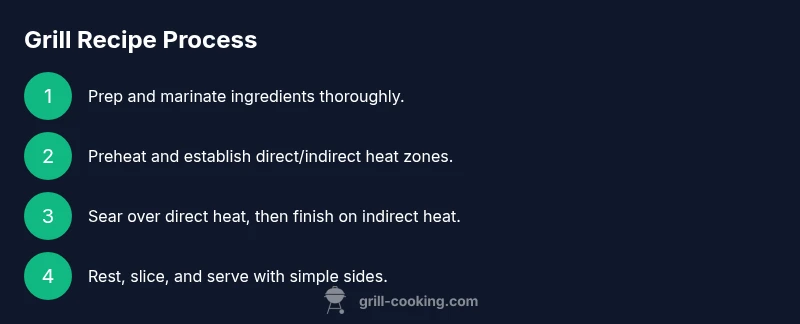
A clear plan makes the grilling process predictable. Begin with prep: trim, pat dry, and season the food. Preheat the grill and establish heat zones. Cook with direct heat to sear, then move to indirect heat to finish, using a thermometer for accuracy. Rest the meat briefly before slicing to preserve juices, and finish with a light glaze or finishing salt for balance. This sequence keeps you focused on technique rather than improvisation, which is essential for a repeatable recipe for grill.
Resting, plating, and cleanup
Resting is a crucial step that allows juices to redistribute, elevating tenderness and flavor. Slice against the grain and serve promptly to enjoy optimal texture. Clean grates after use to prevent sticking and flavor transfer to future batches. A quick wipe-down and light oiling help maintain the grill’s surface and prepare it for your next cooking session. By incorporating a post-cook routine, you set up a smooth, repeatable workflow for your next grill night.
Common mistakes to avoid
Common errors include cooking with too high heat for too long, which scorches the exterior while leaving the inside undercooked. Another frequent misstep is not using a thermometer—time alone is often unreliable. Over-seasoning or using too much sugar-heavy sauce can lead to burnt coatings. Finally, neglecting rest time reduces juiciness and flavor. Planning ahead and using a thermometer can help you avoid these pitfalls and improve consistency across grill recipes.
Tools & Materials
- Grill (gas, charcoal, or pellet)(Two-zone setup preferred (direct and indirect heat))
- Digital meat thermometer(Probe with accurate read range for target doneness)
- Tongs with long handle(Sturdy, with good grip for turning thick cuts)
- Basting brush or spray(Useful for marinades and moisture management)
- Chef’s knife and cutting board(Sharp for clean slices; avoid cross-contamination)
- Oil with high smoke point(For greasing grates and vegetables (e.g., canola, avocado))
- Marinade or dry rub ingredients(Homemade or store-bought; adjust to taste)
- Resting rack or plate(Keeps cooked items warm without steaming)
Steps
Estimated time: Total time: 45-70 minutes
- 1
Prep and marinate
Pat ingredients dry, trim excess fat, and apply marinade or rub according to the recipe. Allow flavors to penetrate for 15-30 minutes for quick marination or longer for deeper flavor if time allows.
Tip: Keep proteins refrigerated while marinating and dry surfaces well before grilling to promote browning. - 2
Preheat and establish heat zones
Light the grill and set up two zones: high direct heat for searing and lower indirect heat for finishing. This approach is essential for a uniform interior and a crisp exterior.
Tip: If using charcoal, bank coals to create 2 distinct heat areas; if gas, turn burners to high on one side and low on the other. - 3
Sear over direct heat
Place items on the hot zone to develop a flavorful crust. Limit flipping to prevent tearing and ensure even browning on all sides.
Tip: Use tongs, not a fork, to avoid losing juices during turning. - 4
Finish on indirect heat
Move food to the cooler side to finish cooking through without scorching. Monitor internal temperature with a thermometer.
Tip: Cover the grill if your grill has a lid to maintain heat consistency. - 5
Rest and apply finishing touches
Let meat rest for a few minutes before slicing. Add a light glaze or finish with salt to enhance flavor.
Tip: Resting redistributes juices; cutting too soon seals in fluids and compromises tenderness. - 6
Plate and pair
Slice against the grain, arrange with complementary sides, and offer a simple herb garnish. Ensure food safety by keeping hot foods above 140°F/60°C until served.
Tip: A fresh squeeze of citrus or a drizzle of olive oil can brighten flavors just before serving.
FAQ
What is a grill recipe?
A grill recipe is a plan that guides cooking on a grill, combining ingredients, heat management (direct and indirect), timing, and finishing steps to achieve a desirable texture and flavor. It becomes a repeatable method rather than a one-off method.
A grill recipe is a plan for cooking on a grill that combines ingredients, heat control, and timing to get consistent, tasty results.
How do I determine doneness without overcooking?
Use a digital thermometer to check internal temperature at the thickest part of the food. Rely on target temperatures rather than time alone, and allow resting time to finish the cooking process through residual heat.
Check the temperature with a thermometer and rest before serving to avoid overcooking.
What equipment do I really need for a grill recipe?
A reliable grill, a digital thermometer, a good pair of tongs, a basting brush if needed, and a clean workspace are the essentials. Optional items include a grill guard, a resting rack, and marinades for flavor variety.
You mainly need a grill, a thermometer, tongs, and a clean workspace to start grilling well.
How can I prevent food from sticking to the grate?
Preheat the grill properly, oil the grates lightly, and pat food dry before placing it on the grill. Avoid moving food too soon; let a proper sear form a crust that naturally releases.
Preheat, oil the grates, and let the crust form to prevent sticking.
Is marinating better than using a dry rub?
Marinades are great for moisture and aroma, especially for lean cuts. Dry rubs build a flavorful crust. Many recipes use a combination to balance moisture and crust without overpowering the main ingredient.
Marinades add moisture and aroma; rubs add crusty flavor, often used together for balance.
Can vegetables be grilled like meat in a grill recipe?
Yes. Vegetables grill well with a bit of oil and high heat, developing char and caramelization that enhances sweetness. Slice evenly for uniform cooking and use direct heat for quick searing.
Vegetables grill nicely with oil and direct heat, getting a nice char without overcooking.
Watch Video
Quick Summary
- Plan heat zones before cooking.
- Use a thermometer for accurate doneness.
- Rest meat before slicing to preserve juiciness.
- Balance marinades, rubs, and salt for flavor depth.
- Organize tools and prep for a smooth workflow.