Why Is My Grill Smoking So Much? A Troubleshooting Guide
Learn how to diagnose and fix excessive grill smoke with practical steps, safety tips, maintenance routines, and airflow tweaks from Grill Cooking for cooks.


Top cause: grease flare-ups and improper venting causing intense smoke. Quick fix: shut the grill, move food aside, safely shut vents to control oxygen, clean the fire pot and grates, and preheat with clean fuel. If charcoal, remove excess ash; if gas, inspect burner tubes for blockages. Always prioritize safety and avoid closing vents too much.
Why smoke happens in the first place
If you’re asking, "why is my grill smoking so much?" the root causes usually come down to grease buildup, flare-ups, insufficient airflow, and improper fuel management. When fat and marinades drip onto hot surfaces, they ignite and create bursts of white or blue smoke. Excess ash or spent charcoal can smother or starve the fire of oxygen, causing heavier, lingering smoke. Weather conditions, wind direction, and grill design (charcoal vs. gas) also influence smoke levels. Understanding these dynamics helps you tailor fixes rather than just guessing. Grill Cooking’s analysis shows that regular cleaning and proper vent use drastically reduce excessive smoke over time, especially for weekend warriors who fire up weekly and forget routine maintenance. Practically, start by cleaning visible grease and ensuring you’re heating with a clean fuel source, then reevaluate smoke after a single cook.
Quick safety checks before you light again
Safety should be your first concern when smoke spikes. Ensure the grill is on a stable surface, with the propane bottle secured and hoses free of leaks. If you smell gas or hear hissing, turn off the fuel and move a safe distance away before addressing the issue. Wear heat-resistant gloves and keep a metal lid or fire extinguisher within reach. Open the lid only after you verify there’s no flare-up risk. If you’re cooking near structures, ensure adequate clearance. Once safe, inspect for obvious obstructions, then move toward airflow adjustments and thorough cleaning. Grill Cooking emphasizes that most incident-causing smoke is preventable with routine maintenance and careful flame control.
Airflow dynamics: vent settings and why they matter
Airflow governs how flames burn and how smoke escapes. Intake vents pull fresh air, while exhaust vents let hot gases escape. If vents are too open, flames burn hotter and flare-ups intensify, causing more smoke. If vents are too closed, you’ll suffocate the burn and create a dense, sooty haze. The goal is a steady, manageable flame with a clean burn. For most grills, a mid-range vent setting during preheat works best, then adjust as you cook to maintain a clean burn. Different designs—gas burners, charcoal baskets, and indirect/ direct-heat zones—have unique airflow patterns. Your aim is consistent oxygen delivery and efficient combustion, which reduces unwanted smoke while preserving flavor. Grill Cooking’s guidance: tune vents in small increments and document what worked for future cooks.
Grease management: cleaning that reduces flare-ups
Grease is a primary trigger for smoke. A clogged grease tray, blocked drip pan, or dirty grates invites flare-ups that spray fire and smoke. Start each session with a clean grates surface, remove spent charcoal and ash, and empty the grease tray. After cooling, wipe down surfaces with warm soapy water or a grill-safe cleaner. Consider using a cast-iron seasoning approach to create a seasoned, non-stick surface that minimizes grease buildup. Consistency matters: a quick wipe-down after each cook, plus a deeper clean weekly if you grill often, dramatically lowers smoke levels. Grill Cooking recommends a dedicated grill brush, foil shield for hard-to-reach crevices, and routine checks for signs of excessive buildup.
Fuel type and heat management: sizing for your grill
Charcoal and gas grills behave differently under the same conditions. With charcoal, avoid dumping too many briquettes at once—start with a controlled mound and use a two-zone setup to manage direct vs indirect heat, which helps curb flare-ups. For gas grills, ensure burners are clean and aligned, and replace clogged or damaged tubes. Preheating is essential, but excessive preheat time with a full grill can exacerbate smoke if greases ignite. Keep fuel in a safe range relative to the grate size, and adjust the air intake to keep a steady flame. Grill Cooking notes that proper heat management is often the easiest fix for persistent smoke.
Environmental factors: wind, weather, and setup
Wind can drive smoke back toward you or blow it away, altering how much you see. A breezy setup may cause more smokey plumes, especially if the grill isn’t shielded. Place grills in open spaces with some shelter from gusts that push smoke toward doors or windows. Temperature and humidity also affect how quickly greases burn and smoke forms. When conditions are right for smoke, rely on indirect heat to relax flare-ups rather than opening vents widely to accelerate burning. Grill Cooking’s research shows that adjusting the grill’s orientation and wind protection can noticeably reduce smoke in outdoor setups.
Diagnostic flow overview: symptom-to-fix mapping
This section introduces a simple flow to map your smoking symptoms to likely causes and fixes. Start with the most common, least invasive steps: cleaning and vent adjustments. If smoke persists, inspect for mechanical issues like clogged burners or damaged seals. If you’re ever in doubt, consult a pro. The diagnostic framework below guides you through a logical sequence—from noticing a symptom to applying a solution related to airflow, grease, fuel, and weather.
How to identify the most common cause and fix (practical mapping)
To pinpoint the root cause, track when smoke spikes: during lighting, while cooking, or during high-heat searing. Common culprits include grease flare-ups (high likelihood), ash blocking airflow (medium), ventilations misadjusted (low), and burner issues (low). Solutions range from quick-clean fixes to burner inspection. Always start with the simplest action—cleaning and vent adjustment—before moving to more involved tasks like burner cleaning or professional service. Recording what works helps you tune your setup for future cooks and keeps smoke under control.
Prevention: best practices to keep smoke low over time
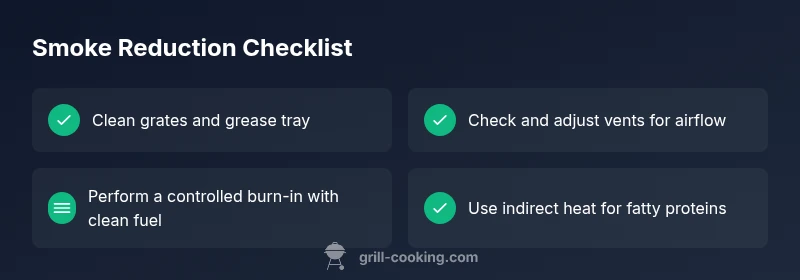
Long-term prevention comes from routine maintenance and disciplined cooking practices. Clean after every session, preheat with a light load of fuel, and establish a habit of charcoal ash removal plus grease tray cleaning. Practice proper heat management with two-zone cooking, especially when grilling fatty proteins like ribs or pork shoulder. Keep vent openings consistent and moderate, never go to extremes. Consider installing a grill cover to protect from wind gusts when not in use. Grill Cooking’s verdict: preventive maintenance is your best defense against unexpected smoke spikes.
Safety and when to call a pro
If you notice gas leaks, hissing noises that aren’t typical, or any burning odor that seems off, stop using the grill and call a professional. Do not attempt to diagnose dangerous gas issues yourself. For stubborn smoke coming from mechanical issues like clogged burner tubes or cracked seals that you cannot safely address, professional maintenance is recommended. Protect yourself and those nearby by following proper shutdown procedures before scheduling service.
Steps
Estimated time: 25-40 minutes
- 1
Prioritize safety and shut down
Power off the grill and disconnect gas if applicable. Move people and pets away from the area. Allow the grill to cool before any cleaning. Have a fire extinguisher or baking soda handy for flare-ups.
Tip: Keep metal lid open safely and never dump water on hot grease. - 2
Inspect visible flare-ups and grease buildup
Check grates, grease tray, and drip pan for heavy grease. Remove large chunks with a scraper, then wipe down surfaces with warm soapy water or grill cleaner. Empty and rinse the grease tray to prevent re-flare-ups.
Tip: A clean surface reduces ignition sources significantly. - 3
Clean burners, venturi tubes, and interior components
If you have a gas grill, remove burner protectors and inspect for clogs. Use a brush or pipe cleaner to remove debris from tubes. Reassemble carefully and check gas connections for leaks with soapy water.
Tip: Always perform a leak test after any gas-line work. - 4
Reconfigure airflow and heat zones
Set vents to a mid-range position for a preheat, then fine-tune during cooking. For charcoal grills, create a two-zone setup to manage flare-ups with indirect heat away from direct flames.
Tip: Small vent adjustments yield big changes in flame behavior. - 5
Rebuild burn and test with a small cook
Light the grill and monitor how it behaves. Add a small amount of fuel and observe smoke levels. If flare-ups occur, shift to indirect heat and adjust vents accordingly. Do a short test cook before resuming full cooking.
Tip: Do not overload the grill with fuel during a test. - 6
Document outcomes and schedule maintenance
Note what fixes worked and which did not. Schedule a deeper cleaning if needed, and set a routine to check grates, trays, and burners after several uses.
Tip: Consistency lowers future smoking incidents.
Diagnosis: Excess smoke during lighting or cooking
Possible Causes
- highGrease and fat buildup causing flare-ups
- mediumExcess ash or charcoal blocking airflow
- lowVent settings misadjusted, allowing too much oxygen
- lowCracked burner or blocked burner tubes (gas)
Fixes
- easyClean grates, grease tray, and fire pot to remove flare-up sources
- easyRemove excess ash, replenish fuel, and reestablish proper airflow by adjusting vents
- mediumInspect and clean burner tubes; check gas connections for leaks
- easyRe-seal and re-season surfaces; perform a controlled burn-in with a clean fuel source
FAQ
What should I do first when my grill is smoking heavily?
Turn off the grill, move away from the grill, and safe-check for gas leaks or flare-ups. Open the lid only after ensuring no immediate danger, then start with cleaning and vent adjustments.
First, turn off the grill and move away. Check for leaks, then clean and adjust vents to regain control.
Is smoke from a grill always a maintenance issue?
Not always. Some smoke is normal, but persistent, dense smoke often signals grease flare-ups or blocked airflow. Regular cleaning and vent control usually fix it.
Persistent smoke usually points to flare-ups or airflow problems; clean and adjust vents to fix it.
Can I cook with a smoky grill while I troubleshoot?
It’s better to fix the smoke issue before heavy-cooking. If you must cook, monitor flames closely and keep the lid open enough to control flare-ups.
Scratch cooking with heavy smoke isn’t ideal; fix the issue first and cook with care.
How often should I clean my grill to prevent smoke?
Clean grates, grease tray, and interior after every use. Do a deeper clean weekly if you grill often. Routine maintenance dramatically lowers smoke over time.
Clean after every use; deeper cleans weekly keep smoke down.
When should I call a professional?
If you smell gas, hear unusual hissing, or can't locate the cause after basic troubleshooting, halt use and contact a pro for safe repair.
Call a pro if you detect gas issues or unresolved mechanical problems.
Can wind direction change how much smoke I see?
Yes, wind can push smoke toward you or away, changing how smoky your grill looks. Shelter the grill from gusts and adjust venting accordingly.
Wind can make smoke worse; shelter the grill and tweak vents.
Watch Video
Quick Summary
- Clean grease and ash regularly
- Balance vent settings for stable flames
- Two-zone cooking minimizes flare-ups
- Safety first: call a pro if gas issues arise
- Document fixes for future cooks