Grill Is Smoking A Lot? A Troubleshooting Guide for Cooks
Don’t panic when your grill is smoking a lot. This urgent, step-by-step troubleshooting guide identifies common causes, safety cautions, and practical fixes to restore airflow and reduce smoke for tasty, evenly cooked meals.


When the grill is smoking a lot, the most likely causes are fuel buildup or incorrect venting. Excess charcoal, fat drippings, or marinades can flare, while closed vents starve oxygen and cause heavy smoke. Start by safely shutting down, then inspect fuel level, vent settings, and grease buildup before reigniting with proper airflow.
Why the Grill Is Smoking A Lot
According to Grill Cooking, excessive smoke on a grill is almost always a symptom, not a mystery. It signals an imbalance between fuel and air, or a buildup that needs clearing. When we see the grill is smoking a lot, the top culprits are an overpacked fuel bed, stubborn grease, or vents that are too restrictive for efficient combustion. A well-managed fire relies on steady airflow, clean cooking surfaces, and predictable heat. By understanding the common sources of excess smoke, you can prevent flare-ups and protect the flavor of your food. In this section we outline the primary causes and how to verify them with simple checks that you can perform in minutes.
Immediate Safety Steps When You See Heavy Smoke
Smoke isn’t just unsightly it can pose a safety risk. If the grill is smoking a lot, first prioritize safety: move away any flammable objects, wear heat-resistant gloves, and keep a fire extinguisher within reach. If you’re using a gas grill, shut off the gas and close the lid to limit oxygen. For charcoal, let the fire burn down slightly and keep children and pets at a safe distance. Do not use water on a grease flare-up. Once you’ve secured the area, allow the grill to cool before inspecting components. These precautions protect you and your family while you diagnose the issue.
Common Causes and How to Diagnose
There are several consistent reasons a grill might smoke heavily. Look for fuel overload: too much charcoal or briquettes can produce more smoke than you expect. Grease and fat drippings in the tray or on the flame zone also flare, generating a dense, acrid plume. Vent configuration matters: if vents are closed or partially closed, airflow decreases and smoke lingers. Wind can push smoke toward you or bring in cooler air that prolongs the burn. Finally, improper lighting methods or using sweet sauces with high sugar content can create caramelized flare-ups. Check each area quickly: fuel amount, grease buildup, vent position, and outdoor conditions.
Quick Checks You Can Do Right Now
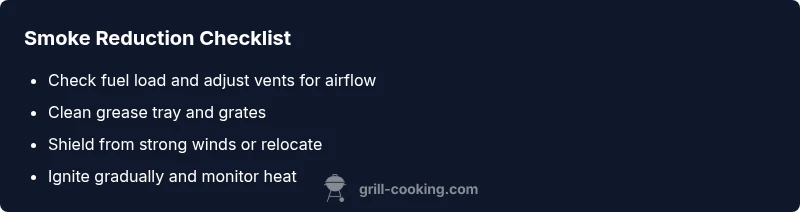
Before you light again, run through a fast checklist: ensure there’s no spilled oil pooling in the tray; open vents fully to promote airflow; remove excess lit coals if you suspect fuel overage; wipe down grates and trays to remove crusted grease; and clear any ashes that could restrict airflow. If you notice a vivid flare-up after lighting, temporarily close vents to starve the flame and then reopen gradually to regain stable heat. This approach helps you reclaim control without dumping cold air into a hot fire and triggering more smoke.
Steps
Estimated time: 30-60 minutes
- 1
Shut down and cool the grill
Turn off gas supply or close charcoal vents and lid. Allow the grill to cool completely before touching any components. This reduces the risk of burns and makes inspection safe.
Tip: Always wear heat-resistant gloves when handling hot parts. - 2
Inspect fuel load and vents
Check charcoal or propane supply and ensure you’re not overloading the fire. Assess vent openings; they should move freely and be positioned for a steady burn. If vents feel stiff, lubricate or replace seals as needed.
Tip: Use the shake or fan method to distribute fuel evenly after inspection. - 3
Clean grease trap and grates
Remove and empty any grease tray, wipe the interior surfaces, and scrub the grates to remove built-up residue that can flare up. A clean grill produces less smoke and better heat control.
Tip: While cleaning, check for signs of oil burnout or deep charring that indicate replacement parts are needed. - 4
Rebuild airflow before lighting again
With a clean grill, arrange the fuel bed for a controlled burn. Open vents wide for ignition, then gradually dial back as the fire stabilizes. Avoid piling coals high at restart.
Tip: Light small sections of charcoal to gauge burn rate before spreading. - 5
Light and monitor burn
Ignite with a proper lighter or starter and watch the first ten minutes closely. If smoke remains heavy and no steady flame appears, reassess fuel and air balance before cooking.
Tip: Keep a close eye on flare-ups and be ready to adjust vents quickly. - 6
Test with food safely
Place a light test item and monitor smoke and heat levels. If the smoke diminishes into a clean burn, proceed with cooking. If it returns, repeat the diagnosis and tweaks.
Tip: Start with indirect heating for delicate foods to prevent scorching.
Diagnosis: Grill is smoking a lot
Possible Causes
- highExcess fuel in the grill (too much charcoal/briquettes)
- highGrease/tray buildup causing flare-ups
- mediumVentilation restrictions or improper vent settings
- lowWeather conditions (wind) affecting smoke direction
Fixes
- easyReduce fuel load to a light-to-medium bed and use proper lighting methods
- easyClean grease tray, grates, and catch pan to remove flare sources
- easyOpen vents fully to restore airflow, then adjust gradually to maintain steady heat
- easyRelocate away from strong winds or shield grill from drafts; avoid smoking into doors/windows
FAQ
Why is my grill smoking more than usual?
Common causes include an overloaded fuel bed, grease buildup, closed vents, or windy conditions. Check each factor and address it step-by-step to reduce smoke without sacrificing heat.
Common causes are too much fuel, grease buildup, closed vents, or wind. Check each factor and fix it one by one.
Is smoke from grilling harmful to food?
A small amount of smoke is normal, but excessive smoke can affect flavor and may indicate flare-ups. Ensure clean surfaces and steady airflow to minimize off-flavors.
A little smoke is normal; too much smoke can affect flavor. Keep surfaces clean and airflow steady.
Should I use water to control flare-ups?
Never spray water on a hot grease flare-up. Use a fire extinguisher or shut the grill down briefly to control flare-ups safely.
No—don’t spray water on flare-ups. Use a fire extinguisher or briefly shut the grill and fix the issue.
When should I call a professional?
If you notice persistent heavy smoke after cleaning and vent adjustments, or suspect gas leaks, consult a professional technician to inspect gas lines and safety valves.
If smoke stays heavy after fixes or you suspect gas leaks, call a professional.
Can wind affect how much my grill smokes?
Yes. Strong winds can push smoke toward you and disrupt the burn. Shield the grill or relocate to a sheltered area if possible.
Wind can increase smoking; shield or move the grill if you can.
What’s the best way to restart after a heavy smoke episode?
Let the grill cool, clean what you can, reopen vents fully, and light gradually. Monitor heat again to avoid repeating flare-ups.
Cool, clean, reopen vents, and light gradually. Monitor heat closely.
Watch Video
Quick Summary
- Inspect vents and fuel before cooking.
- Keep grease areas clean to prevent flare-ups.
- Restore airflow for a calm, controlled burn.
- Safety first: cool, inspect, and re-light carefully.