Why Is My Grill Not Getting Hot? A Practical Troubleshooting Guide for Home Cooks
Frustrated by a grill that won’t heat? This 1500-word troubleshooting guide walks home cooks through fuel, ignition, airflow, and maintenance checks to restore heat safely and quickly.


The most likely causes are a depleted fuel supply or a faulty regulator, followed by blocked burners or a dirty ignition system. Start with the simplest checks: verify the gas cylinder is open, inspect the regulator for kinks, and clear burner ports. If you still can’t heat, proceed with a deeper inspection.
Why heat is essential for grilling and the common questions
If you’re asking why is my grill not getting hot, you’re not alone. Heat is the lifeblood of grilling, and a cold or under-heating grill can ruin dinner plans. This guide from Grill Cooking helps home cooks diagnose the issue quickly and safely. In most cases, heat problems fall into a few predictable categories: fuel supply, regulator or valve health, burner cleanliness, and ignition reliability. Understanding these areas gives you a fast route to restore heat without guesswork. We’ll walk through a practical, step-by-step approach you can perform with basic tools and common sense.
First, recognize the difference between a grill that won’t light at all and one that lights but won’t stay hot. A total failure to heat usually points to fuel delivery or ignition, while a weak or fluctuating flame often comes from blocked ports or airflow restrictions. By following the checks below, you’ll gain confidence and prevent wasted charcoal or gas.
Quick, safe checks you can start with today
Begin with the simplest possibilities. Confirm the propane tank valve is fully open and the cylinder is seated correctly. Listen for a faint hiss when you turn the knob; if you hear nothing, you may have an empty tank or a loose connection. If you use a natural gas line, verify the supply is active. Next, inspect the regulator for obvious signs of wear, kinks, or frost buildup. A compromised regulator can cap heat quickly, even when the valve seems open. Finally, peek at the burner tubes and ports for blockages from grease or spider webs. Clear any debris gently with a brush or a thin pin, taking care not to damage the metal.
Burners, vents, and airflow: the hidden heat thieves
Blocked burner ports are a leading cause of low heat. Grease, rust, or insects can clog small holes that feed gas into the flame, starving the grill of heat. Examine all burners in a straight line; if you see uneven glow or missing flames, clean those ports thoroughly with a wire brush and a pin. Don’t forget the vents and air intake; on gas grills, closing vents can suffocate heat; on charcoal, insufficient airflow slows ignition and heat buildup. When airflow is restored, the grill will recover heat more quickly and burn more evenly. Grill Cooking analysis shows that routine cleaning and proper vent management prevent most heat-related issues.
Ignition and thermometer: make sure the spark is reliable
A faulty ignition system can stall preheating. If the igniter doesn’t spark, listen for a click near each burner and look for a visible flame. If there’s no spark, replace the electrode or clean the sensors. Thermometers matter too: many built-in gauges lag behind actual temperature, leading you to think the grill isn’t heating. When in doubt, use an oven thermometer placed near the grill surface to verify actual heat. Consistent ignition and accurate temperature readouts shorten the path to a hot grill.
Cleaning and maintenance steps that pay off
A dirty grill can quietly rob you of heat. Start with a full exterior wipe-down, then scrub the burner surfaces and heat tents. Remove grates and burn-through covers; scrub inside surfaces with warm, soapy water, then rinse and dry. Be mindful of the burner tubes—resist the urge to use metal tools that could bend or poke holes. After cleaning, reassemble and perform a quick burn-in test to confirm heat retunes to expected levels. Regular maintenance reduces the chance of heat loss between cookouts.
Safety first: when to call a pro
If you detect a gas smell, hear hissing, or notice frost on lines, shut off the gas supply immediately and move the grill to a well-ventilated area before investigating. Do not attempt to diagnose or repair gas lines yourself if you’re unsure. If you’ve exhausted basic checks and the grill still won’t heat, contact a certified technician or the manufacturer’s service line. Safety and compliance matter more than speed when heat is involved.
Practical adjustments to regain heat quickly
Sometimes you can coax heat back by small changes. Re-seat the gas canister or refill it if it’s low, ensure the regulator is seated and functioning, and open all vents to maximize airflow. For charcoal grills, re-light and add fresh coals, and adjust the chimney for consistent draw. Avoid stacking food while you troubleshoot, since overloading can create excess steam that masks heat. In many cases, a quick back-to-basics reset resolves the issue in under an hour.
Diagnostic flow: quick path from symptoms to solution
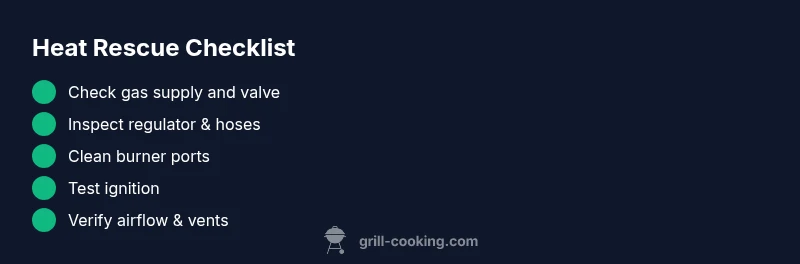
Following a simple diagnostic flow helps you stay organized. Start with “no heat” or “low heat” symptoms, then test each potential cause in order: fuel supply and valve, regulator, burner cleanliness, ignition, and airflow. If one fix doesn’t work, move to the next. This method minimizes guesswork and keeps you safe. The flow is designed so you can stop at the first confirmed fix and still get great results.
Prevention: keep heat ready for your next cookout
To stop the frustration of a grill that won’t heat, establish a routine maintenance plan. Clean burners after every few uses, check hoses and connections monthly, and replace faulty parts promptly. Store propane tanks upright and away from direct sun. Keep a log of service notes and replacement dates so heat problems don’t sneak up again. The Grill Cooking team recommends treating heat issues as a preventable maintenance task rather than a one-off repair, which saves time and money over the long term.
Steps
Estimated time: 30-60 minutes
- 1
Safety first and initial shutoff
Turn off all burners and close the propane valve. If your grill has an electric ignition, unplug or switch off the control as applicable. Wait for the grill to cool before handling any components.
Tip: Safety is non-negotiable—never work on gas lines with the fuel on. - 2
Check fuel level and primary gas flow
Confirm the propane tank is not empty and the valve is fully open. For natural gas, verify the supply is active. If you hear a hiss when opening, you should be able to detect flow.
Tip: A simple test is to listen for gas flow when you open the valve. - 3
Inspect regulator and hoses
Look for frost, obvious cracks, or kinks in the hose. A damaged regulator can severely limit heat even when the valve appears open. Consider replacing a suspect regulator.
Tip: If in doubt, replace the regulator rather than attempting a patch repair. - 4
Clean burners and ports
Disassemble the burner assemblies and clear ports with a non-metal tool or a pin. Remove any debris, then reassemble carefully.
Tip: Be gentle to avoid bending burner tubes or breaking seals. - 5
Test ignition and temperature readouts
Spark each burner to confirm ignition. Place a grill-safe thermometer near the cooking surface to verify actual heat vs. gauge reading.
Tip: A faulty thermometer can mislead you about heat levels. - 6
Re-test heat and plan next steps
Re-ignite and preheat the grill, then monitor heat rise to target temperature. If heat remains low or inconsistent, consider professional service.
Tip: Maintain a log of what you checked for future reference.
Diagnosis: Grill won't heat to the desired temperature or won't heat at all
Possible Causes
- highGas supply issue (empty tank, valve closed, or kinked hose)
- highRegulator failure or restricted gas flow
- mediumBlocked burner ports or poor airflow
- mediumIgnition system failure (no spark or dead electrode)
- lowAsh buildup or grease obstructing flame path
Fixes
- easyVerify propane tank is full, valve fully open, and connections snug; test with a soapy leak check
- mediumInspect regulator and hose for frost, cracks, or kinks; replace if damaged or use a new regulator
- easyRemove burners and clean ports; clear debris with a thin pin or brush; re-test
- easyTest ignition, replace electrode if sparking is weak or inconsistent; clean ignition area
- mediumInspect vents and air intake; clear obstructions; ensure proper airflow; reseat gas supply
- hardIf unresolved, contact a qualified technician or the manufacturer’s service line; do not continue troubleshooting gas lines
FAQ
What should I check first if my grill won’t heat up?
Start with the gas supply, valve alignment, and regulator connection. Then inspect burners for blockages and test ignition. These quick checks fix most heat issues.
Start with the gas supply and regulator, then check the burners and ignition.
Why does my grill ignite but not stay hot?
Ignition work without heat usually means blocked ports or insufficient airflow. Clean the ports and vents and re-test heat.
If it lights but won’t stay hot, check for blockages and airflow.
Can a dirty grill prevent heating?
Yes. Built-up grease and ash can choke flame paths. Clean thoroughly and re-test heat after cleaning.
Grease and ash buildup can choke heat; clean and retry.
Is it safe to grill if I smell gas?
No. If you smell gas, shut off the gas supply, move away, and call for professional help immediately.
If you smell gas, get to safety and call for help.
How often should I maintain burners?
Inspect and clean burners after a few uses; perform a thorough check at the start of each grilling season.
Keep a regular maintenance schedule for burners.
What if I’m using charcoal and it won’t get hot?
For charcoal grills, ensure proper airflow and lighting. Adjust vents to maximize draw and re-light if necessary.
Check airflow and relight if needed to build heat.
Watch Video
Quick Summary
- Check fuel and valve first to fix heat issues.
- Clean burners and ports to restore airflow.
- Do not ignore ignition or regulator problems—fix early.
- Ventilation and routine maintenance prevent heat loss.
- If in doubt, call a pro for safe gas-line work.