Why Is Your Grill Not Working? Troubleshooting Guide
Urgent troubleshooting for why your grill won’t start or heat correctly. Get quick checks, safe fixes, and maintenance tips for home cooks and grill enthusiasts.


Typically, a grill fails due to fuel or ignition problems or a clogged burner. Check that the propane tank has fuel, the valve is open, and the igniter clicks. If those basics are fine, inspect burners for blockages and verify the regulator isn’t tripped. This quick triage restores most backyard grills fast.
Immediate Quick Checks
When the grill won’t start or won’t heat evenly, start with the obvious. Ensure you have fuel in the tank and that the tank valve is fully open. If you rely on an electric ignition, confirm the battery or power source is functioning and that the ignition module is responding with a clear click. Also verify safety locks and lid placement aren’t preventing ignition. This is a common reason people ask, “why is grill not working,” and a quick fix often solves the problem in minutes. If the basics are sound but you still can’t get reliable heat, proceed to airflow checks and burner inspection next.
Common Causes and How to Verify Them
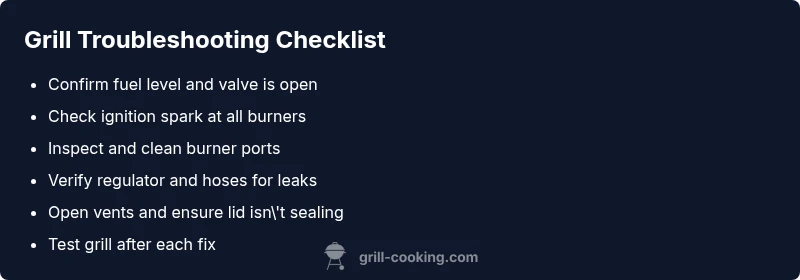
Most grills fail for a small set of repeatable reasons. Begin with the fuel supply: is the tank full, and is the valve fully open? Next, test ignition: does the spark reach each burner when you press the button? If ignition is intermittent or nonexistent, you may need a new igniter or battery. Burner blockages are another frequent culprit; grease, food debris, or rust can clog ports and impede flame. Finally, rule out the regulator or gas valve closures. By verifying fuel, ignition, burners, regulator, and safety features in order, you’ll often pinpoint the exact cause behind the grilling trouble. If you find a single faulty component, replace or clean it before retesting on all burners.
Cleaning, Airflow, and Burners: A Practical Guide
Grease and residue build up on burner ports and inside the venturi, restricting airflow and producing uneven heat. Regular cleaning improves airflow and flame stability. Before cleaning, ensure the grill is off and cool. Remove grates and burners and inspect each port for obstructions. Use a grill brush for open ports and a thin wire or toothpick to clear stubborn clogs. Reassemble and perform a quick flame test. Proper cleaning often resolves stubborn hot spots and restores even cooking temperatures.
Safety First: When to Call a Pro
If you smell gas, hear hissing, or continue to see ignition failures after completing basic checks, stop using the grill and seek professional help. Gas systems carry serious fire and health risks if mishandled. A licensed technician can diagnose regulator faults, leaks, or electrical problems beyond typical home repair. Always follow manufacturer instructions and local codes when in doubt. Prioritize safety, and don’t take dangerous shortcuts.
Diagnostic Quick Reference (Overview)
Think of this as a live, at-the-grill guide. Start from the symptom and work toward a solution without skipping steps. This overview helps you avoid complex repairs you don’t need and keeps safety front and center. After each fix, re-test to gauge progress, then decide whether to proceed with deeper diagnostics or call a professional.
Prevention and Regular Maintenance
Turn grilling sessions into trouble-free experiences with a lightweight maintenance routine. Check hoses for cracks, clean burners after use, and store propane safely. Regular leak checks and igniter testing prevent most common failures. Keep a simple checklist and follow it between uses to ensure peak performance and reduce the likelihood of future outages.
Steps
Estimated time: 45-60 minutes
- 1
Verify fuel and power sources
Check the propane tank level and valve: ensure the valve is fully open and there are no leaks. If you depend on electricity or batter-powered igniters, confirm the power source is active and the battery is fresh. Attempt a fresh ignition and listen for a distinct click from the igniter.
Tip: Always perform this step with the grill cool and away from flammable materials. - 2
Test ignition spark and flame
From the control panel, press the igniter and watch for a consistent spark at each burner. If there is no spark, replace the igniter module or battery. If a spark is present but no flame, the burners may be blocked or misaligned.
Tip: Inspect the spark electrode for wear; a weak spark means a replacement is due. - 3
Clean burners and ports
Carefully remove grates and burners to access the ports. Use a grill brush or a thin wire to clear grease buildup and debris from each port. Reinstall burners correctly and ensure there are no loose connections.
Tip: Do not force objects through ports—gentle pressure clears blockages without damage. - 4
Inspect regulator and hoses
Examine hoses for cracks, kinks, or signs of wear. If the flame is weak or variable, the regulator may need replacement. For leaks, apply soapy water to joints and watch for bubbles.
Tip: Never touch hot parts; handle with appropriate grill tools. - 5
Edge-case checks: vents and lid
Ensure vents are fully open and the lid is not sealing in a way that blocks airflow. If your grill has a safety shutoff, reset following the manufacturer’s guidance and re-test.
Tip: Position the lid so there is room for venting during startup. - 6
Test fire and finalize
Reconnect everything, ignite again, and verify flame stability across all burners. If issues persist after these steps, consider professional service or part replacement.
Tip: Document fixes and parts replaced for future reference.
Diagnosis: Grill won't ignite or maintain heat
Possible Causes
- highLow or empty fuel source (propane tank)
- highFaulty igniter or spark module
- highClogged burner ports or restricted gas flow
- mediumRegulator issue or closed gas valve
- lowSafety switch engaged or lid closed blocking venting
Fixes
- easyRefuel or replace tank and ensure valve is fully open
- mediumTest ignition spark and replace igniter if no spark
- easyClean burner ports and re-seat burners
- mediumInspect regulator and hose for leaks or failure; replace if needed
- easyReset safety shutoff and reposition lid to allow venting
FAQ
What is the most common reason a grill won't ignite?
Most often fuel issues or ignition problems; start with tank level, valve operation, and spark. If those pass, inspect burners for blockages.
Most grills won't ignite mainly due to fuel or ignition problems like an empty tank or a faulty igniter.
Why does my grill heat unevenly?
Uneven heat usually comes from clogged burners or airflow restrictions. Clean burners and adjust vents for balanced flame distribution.
Uneven heat often comes from blocked burners or airflow issues.
Should I replace the igniter?
If you consistently hear no spark or a weak spark, replacing the igniter module or battery is recommended.
If the spark is weak or nonexistent, replace the igniter.
Is it safe to grill if I smell gas?
No. Stop, move to fresh air, shut off the tank, and call for help. Ventilate the area before resuming.
If you smell gas, stop, move to fresh air, and call for help.
Can clogged burners cause flare-ups?
Yes, clogged burners can cause flare-ups and uneven flames. Clean burners and ports thoroughly.
Yes, clogged burners can cause flare-ups; clean them.
When should I call a professional?
If you cannot identify or fix gas leaks, regulator faults, or electrical issues, contact a licensed technician.
If you can't identify the problem or there are gas leaks, you should call a professional.
Watch Video
Quick Summary
- Check fuel, power, and ignition first.
- Clean burners to restore airflow and even heat.
- Inspect regulator and valves for proper pressure.
- Follow safety steps and know when to call a pro.