Why Is Your Grill Not Starting? A Troubleshooting Guide
Urgent, practical troubleshooting for a grill that won't start. Follow step-by-step checks, safety tips, and maintenance guidance from Grill Cooking to get back to grilling fast.


The most common reason a grill won't start is a fuel or ignition issue. According to Grill Cooking, begin with simple checks: ensure propane is plentiful and the valve is fully open, then test the igniter and battery. If those basics fail, inspect the regulator and hoses and reset safety interlocks before proceeding. This quick sequence fixes many non-starting grills safely.
Common Causes of a Grill Not Starting
If you're asking why is grill not starting, you're likely facing one of several common culprits. The two most frequent are fuel and ignition problems: an empty or partially full propane tank, a valve that isn't fully open, or a regulator that has tripped. Ignition issues are equally common: a dead battery in a push-button igniter, a corroded spark electrode, or a damaged ignition wire. Safety interlocks can also prevent lighting if the lid isn't closed, the grill is overheating, or the thermocouple senses a fault. In this section, we identify the primary categories and help you map your symptoms to a likely cause. Remember to rule out the simplest problems first—fuel and power—before moving to more complex checks such as wiring, regulators, or internal safety switches. Addressing these issues promptly can save time and keep you safe while grilling.
Safety First: Immediate checks you should perform
Before you try to light the grill, take a moment to ensure the environment is safe. Never ignite a grill with a strong gas odor. Turn off the valve, disconnect the propane cylinder if you smell gas, and ventilate the area. Check that all connections are tight, clear, and dry. If you have a battery-powered igniter, test it while holding a hand near the electrode to confirm a bright spark. Keep children and pets away, and if you feel unsure, pause and reassess. These quick, safety-minded checks protect you and your grill while you troubleshoot why is grill not starting, and they reduce the risk of a flash fire or gas leak.
Gas Supply and Regulator Checks
A failed ignition is often linked to the fuel supply. Start by confirming the propane tank is not empty and that the valve is fully open. If you use a disposable cylinder, replace it with a fresh one. Inspect hoses for kinks, cracks, or leaks (never use a flame to test for leaks—use soapy water). If the regulator trips or you hear hissing, reset or replace it as needed. The goal is to ensure a clean, steady fuel flow to the burners, which is essential when seeking answers to why your grill won't start.
Ignition System and Spark Generator
The ignition system is a common point of failure. Check the battery (if your model uses one) and replace it if weak. Inspect the spark electrode for cleaning; carbon buildup can muffle the spark. Ensure the ignition wire is firmly connected and not damaged. A robust spark at the burner ports indicates the system is ready to light. If you can't see a spark, the issue may lie in the igniter switch or wiring that should be inspected by a professional if you aren't comfortable.
Valve, Hose, and Connection Inspections
Inspect every hose and connection from the gas source to the burners. Look for signs of wear, cracks, or loose connections. Tighten fittings that are snug but not over-tight. A loose hose or corroded connection can prevent gas from reaching the burner even when the igniter is functioning. If you notice any wear, replace the affected part rather than risking a gas leak. This step is crucial for diagnosing what causes a grill not starting and keeping your grill safe.
Electrical and Battery Considerations
For electric ignition grills, a dying battery or a blown fuse can stop ignition. Check the battery orientation and corrosion on terminals, and replace tarnished batteries. If your grill uses an electronic control board, reset the power by unplugging the unit or removing the battery for a moment, then reconnect. Faulty wiring can mimic ignition failure, so look for loose connectors and damaged insulation. Addressing electrical faults is essential to resolve why is grill not starting on models with electronic controls.
Cleaning, Maintenance, and Common Mistakes
Dirty burner ports, clogged jets, and debris around the firebox are frequent culprits behind ignition failure. Blow out or brush away debris from burner channels and clean the ignition area regularly. Avoid using abrasive tools that damage parts. Another mistake is ignoring cold-weather effects or leaving the grill covered while damp. Regular maintenance not only aids in solving why is grill not starting but also extends the life of your grill and keeps flavor consistent.
Diagnostic Flow Overview: From Symptom to Solution
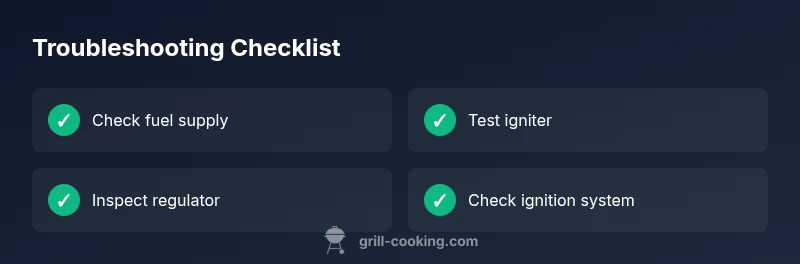
When your grill refuses to start, follow a logical flow: confirm fuel supply, test ignition, check safety interlocks, inspect regulator and hoses, and examine electrical components. If a simple fuel or spark issue is found, fix it and attempt a light. If the problem persists, move to more involved replacements or professional service. This diagnostic approach keeps you focused and minimizes unnecessary guesses.
Preventive Maintenance to Avoid Future Start Issues
Preventive maintenance reduces the odds of future start problems. Keep the gas system clean and leak-free, replace worn hoses, and inspect seals and gaskets regularly. Store propane cylinders upright and in a ventilated area, and replace batteries as recommended by the manufacturer. A routine maintenance routine helps you maintain reliable performance and makes troubleshooting easier when issues arise. Regular checks make your next cookout smooth and predictable.
Steps
Estimated time: 20-60 minutes
- 1
Check propane fuel and valve
Inspect the propane tank to ensure it isn't empty and the valve is fully open. If the tank feels light, replace or refill. Verify there are no kinks or blockages in the hose and listen for a steady gas flow when the valve is opened.
Tip: If you suspect a near-empty tank, replace it before continuing. - 2
Test ignition battery and spark
If your grill uses a battery-powered igniter, replace the battery and test for a bright spark at the burner ports. Clean any soot from the spark electrode and ensure the ignition wire is firmly connected. A weak or absent spark often explains why the grill won't start.
Tip: Keep spare batteries on hand and check electrode cleanliness regularly. - 3
Check safety interlocks and lid position
Ensure the lid is closed firmly and that any safety switch detects the lid position. Some grills will not ignite if the lid is ajar or if a sensor detects an issue. Close the lid completely and retry.
Tip: Hold the igniter close to the burner while attempting a light. - 4
Inspect regulator and hose
Look for cracks, wear, or loose connections in hoses. If you hear a hiss or smell gas, shut off and inspect for leaks using soapy water rather than flame. If the regulator trips, it may need resetting or replacement.
Tip: Never test leaks with a flame; use a soap solution instead. - 5
Reset electronics (if applicable)
For grills with electronic controls, unplug or remove the battery for a moment and then reconnect. Look for loose or burnt components on the control board.
Tip: Take a photo of the wiring before disconnecting to aid reassembly. - 6
Clean burners and jets
Remove burners and inspect the ports for obstructions. Clean soot or debris with a soft brush. Reassemble and try lighting again to verify improved gas flow.
Tip: Regular cleaning prevents future start issues and improves performance. - 7
Attempt a controlled light
With everything reassembled, attempt to light the grill and observe flame behavior. If the flame is weak or inconsistent, recheck gas flow and ignition alignment before calling a pro.
Tip: Do not continue if you smell gas or see a persistent leak. - 8
Call a professional if needed
If gas leaks are present, regulator failure is suspected, or the control board shows faults, contact a licensed technician for service.
Tip: Document symptoms and steps you tried to speed up service.
Diagnosis: Grill won't start
Possible Causes
- highEmpty or low fuel supply
- highIgniter/battery failure
- mediumSafety interlock engaged (lid not closed, overheating)
- lowRegulator or hose issue
- lowElectrical short or wiring problem
Fixes
- easyCheck propane level and ensure valve is fully open; replace tank if empty
- easyReplace battery in igniter and clean spark electrode; verify spark
- easyClose lid securely and reset safety interlocks
- mediumInspect regulator and hose for damage; replace as needed
- hardInspect wiring for damage; consult a professional if you see signs of wear
FAQ
Why won't my gas grill start even after refilling the tank?
Ensure the valve is fully open and the regulator isn't tripped. Check for gas leaks and verify the ignition system is functioning before testing again.
Check the valve, regulator, and ignition to confirm gas flow and spark before testing again.
What should I check first when a grill won't start?
Start with fuel supply and ignition: confirm propane flow, squarely seated connections, and a visible spark at the burner.
Check fuel and ignition first, then move to safety interlocks and regulator checks.
Is it safe to use a lighter if the igniter fails?
Avoid using a lighter near gas lines. If ignition fails, stop and diagnose the gas flow and ignition system instead.
Don't light with a lighter when gas may be present.
Why does the grill spark but won’t light?
Sparks indicate the ignition system works; gas may not be reaching the burners due to regulator or hose issues. Inspect gas flow.
If you see a spark but no flame, check gas flow and connections.
When should I call a professional?
If you suspect gas leaks, regulator failure, or electronic control problems, contact a licensed technician for safety and proper repair.
If you smell gas or see damage, call a professional.
How often should I replace grill batteries?
Follow the manufacturer’s guidance for battery life; replace when the ignition becomes weak or nonfunctional.
Replace batteries when ignition weakens.
Watch Video
Quick Summary
- Check fuel supply and ignition first.
- Safely reset interlocks before testing further.
- Inspect regulator, hoses, and electrical components.
- Perform regular maintenance to prevent start issues.