Why Is Your Grill Flaming? Troubleshooting Guide
Urgent guide to diagnose and fix grill flare-ups on gas and charcoal grills. Learn safe steps, maintenance tips, and prevention to keep grilling delicious and danger-free.


Flaming on a grill usually comes from grease flare-ups, overabundant fat, or oxygen-rich flames. The quickest fix is to shut down heat sources, close the lid, and move food away. Then inspect for grease buildup and clean before resuming cooking. This 2-minute check stops flare-ups from getting out of control.
What causes grill flaming
According to Grill Cooking, the primary causes of grill flaming are grease flare-ups and improper heat management. When fat and oil drips land on hot surfaces, a quick flare-up can turn into a dangerous flame across the grate. This is especially common during the first few minutes of grilling or when turning meat with high fat content. On charcoal grills, curb the flare quickly by managing the coals and avoiding puddles of dirty oil; on gas grills, clogged burner ports or rickety flame control can lead to sudden jumps. Wind gusts can also feed the flame, especially if the lid is left open too long. Understanding these triggers helps you anticipate and prevent dangerous flare-ups. The phrase why is grill flaming often pops up here, reminding cooks to focus on grease, heat, and air as the three main variables. Not every flame is a sign of a failure; some are normal during searing, but sustained flames require action.
Immediate safety steps to take
Safety first. If you see large flames or a flare-up beyond a foot, shut off the gas supply, close the lid, and move food away. Do not spray water on a grease fire; instead, use the grill's built-in fire suppression methods, or a class B fire extinguisher if needed. For charcoal grills, close the vents to starve the fire and let coals burn down; do not attempt to move hot coals with bare hands. If flames persist, turn off the burners one by one, wait for the flame to subside, and then inspect. Keep a safe distance and wear heat-resistant gloves. After the incident, open the lid slowly to vent heat and inspect for damage. This quick triage can prevent injuries and damage.
Diagnostic cues: gas vs charcoal
Looking at the source of the flame helps pinpoint the fix. If flames surge when you turn a knob on a gas grill, the problem is often burner ports or excess grease igniting atop the burner. If a charcoal grill erupts while you’re moving coals, the flare is usually fat drippings igniting on the coals or ash buildup restricting airflow. In windy conditions, keep the lid closed to control oxygen. Regular vent adjustments and clean grates reduce the likelihood of uncontrolled flames.
Step-by-step fixes you can try now
Address flare-ups safely with practical fixes you can perform right away. Start by turning off the heat source and clearing food from flames. Clean the grate and drip tray to remove grease buildup. Check burner ports or vents for obstructions and ensure proper gas flow. If you’re cooking with charcoal, spread the coals evenly, avoid puddles of oil, and close vents to smother intense flames. Finally, wipe the grates with a scraper and reheat gradually rather than diving straight into high heat. By addressing both heat and grease, you’ll reduce future flare-ups and maintain control over your cookout.
Prevention: maintenance and best practices
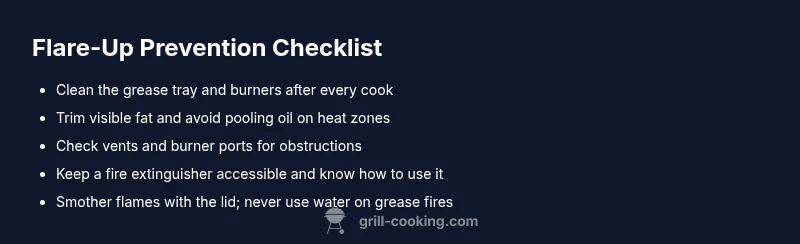
Preventive steps save stress and improve flavor. Clean the grill thoroughly after each use, including the grease tray, burners, and grate gaps. Trim visible fat from meat and avoid dripping fatty sauces directly onto heat zones. Use proper ventilation and avoid opening the lid during peak flame moments. Schedule periodic maintenance checks for burners and ignition systems. Store your grill in a clean, sheltered area to minimize weather-induced flare-ups. Consistent cleaning and mindful cooking are your best defense against why is grill flaming.
When to call a pro and what to expect
If flames persist after trying the standard fixes, or if you smell gas, hear hissing, or notice a gas odor, stop cooking and contact a professional immediately. A tech can inspect for gas leaks, damaged hoses, or cracked connections and verify safe ignition patterns. For charcoal grills, a pro can assess ash buildup in the bowl and verify that the vents are functioning correctly. Expect a quick diagnostic visit, with practical repair or replacement recommendations based on safety guidelines.
Steps
Estimated time: 10-15 minutes
- 1
Shut down heat sources and shield yourself
Turn off all heat sources and close the grill lid to smother the flames. If you’re using a gas grill, shut off the propane or natural gas supply at the valve. Wear heat-resistant gloves and keep a safe distance as you assess the flare.
Tip: Always have a fire extinguisher within reach and know how to use it. - 2
Move food away and stop adding fuel
Use long tongs to move food away from the flare zone. Do not add more fuel or spray liquids on the flames. If you’re near a grease fire, do not pour water on it—smother with the lid or a fire extinguisher if needed.
Tip: Keep pets and children away from the grill during an incident. - 3
Inspect and clean the grease traps
Once flames subside, inspect the grate, burners, and grease tray for buildup. Scrape and wipe away grease and oil, then wipe the interior with warm soapy water. Dry thoroughly before resuming cooking.
Tip: Regular cleanings prevent repeat flare-ups during future cooks. - 4
Check ventilation and flame control
For gas grills, ensure burners are unobstructed and vents operate smoothly. For charcoal, redistribute coals evenly and avoid pooling oil on the charcoal surface. Only reignite after you’re certain airflow is balanced.
Tip: Gradually reintroduce heat; avoid jumping back to high temps immediately. - 5
Resume cooking safely
Lightly reheat with indirect heat before returning to high heat. Monitor flames closely; if flare-ups recur, shut down and reassess. Replace damaged parts if needed and consider a professional inspection.
Tip: Keep a spray bottle of water handy for small, controlled misting—never on grease fires.
Diagnosis: Sudden flames or flare-ups during cooking
Possible Causes
- highGrease buildup on grates or burners
- highExcess oily drippings igniting
- mediumVentilation issues causing too much oxygen
- lowCharcoal lighter fluid or accelerants used improperly
- lowGas line leak or clogged burner ports
Fixes
- easyShut off gas, close lid, and allow flames to subside; clean grates and drip tray
- easyEmpty and clean grease tray; remove excess fat; reposition food
- easyAdjust vents to control airflow; for gas grills, reduce flame height with knobs
- mediumIf a leak is suspected, turn off supply, smell test, and call a pro
- mediumFor charcoal, move coals safely with long tongs and smother flames by closing vents
FAQ
What causes flare-ups on grills?
Flare-ups are usually caused by grease or fat igniting on hot surfaces. Improper heat control and open vents can make flames worse. Identify the source quickly to apply the right fix.
Flare-ups are often grease or fat igniting on hot surfaces; control heat and close vents to stop them fast.
Is it safe to grill when flames are high?
High flames are not inherently unsafe if you follow safety steps: shut off heat sources, close the lid, and move food away. If flames persist, stop cooking and assess the grill before continuing.
High flames can be managed safely by shutting off heat, closing the lid, and moving food away. If flames persist, stop and assess.
Should I use water to put out a grease fire on a grill?
Never pour water on a grease fire. Water can cause the fat to splatter and spread flames. Use the lid to smother, or a fire extinguisher if needed.
Never use water on a grease fire; smother with the lid or use a fire extinguisher if necessary.
How can I prevent flare-ups in the future?
Keep grates clean, trim excess fat, and avoid oil pooling on heat zones. Maintain proper ventilation and perform regular maintenance checks on burners and ignition.
Clean the grill, trim fat, and maintain proper ventilation to prevent flare-ups.
What should I do if I smell gas?
If you smell gas, shut off the gas supply immediately, step away, and call the gas company or emergency services. Do not re-light the grill until inspected.
If you smell gas, shut it off and call for professional inspection before using again.
Can I still cook after flames occur?
Yes, but only after flames are fully controlled and the grill is cleaned and inspected. Start with indirect heat and monitor closely before returning to high heat.
You can cook again once flames are under control and the grill is safe to use.
Watch Video
Quick Summary
- Identify grease and heat as primary flare-up culprits
- Shut down safely and smother flames before inspecting
- Clean grills and trays routinely to prevent flare-ups
- Never use water on a grease fire; call a pro if gas leaks