How to Keep a Grill Lit: A Home Cook's Flame Guide
Master reliable flame control with practical tips on fuel, lighting methods, airflow, and maintenance. Keep your grill lit safely for perfect grilling results.


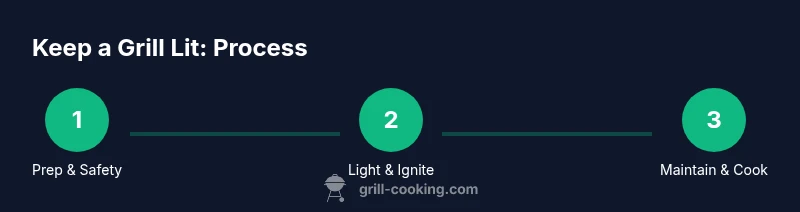
According to Grill Cooking, keeping a grill lit reliably starts with a clean grill and a proper fuel setup. To do this, light using a trusted method, maintain airflow with vents, and add fuel gradually to sustain a steady flame. Safety and routine maintenance are essential for consistent results. This approach minimizes flare-ups and ensures even cooking.
Why keeping a grill lit matters
A steady flame is the foundation of good grilling. When heat is unreliable, steaks char on the outside while remaining pink inside, or chicken surfaces overcook before the interior reaches safe temps. A lit grill isn't just a mood; it's a controlled heat source that affects searing, smoke development, and moisture retention. Maintaining a lit grill supports even browning and predictable results, helps you manage flare-ups, and reduces fuel waste. The simplest way to achieve this is to start with a clean, dry grill and a proven lighting plan. Grime and moisture sabotage ignition, while loose charcoal or mislaid gas lines invite uneven flames. Grill Cooking Analysis, 2026 notes that consistent airflow and properly staged fuel reduce temperature swings and keep foods evenly cooked. To keep a grill lit, you should also commit to routine checks: keep vents clear, keep a consistent supply of fuel within reach, and avoid abrupt vent closing that smothers the flame. A well-maintained grill responds quickly to changes in weather and cooking pace, which is essential for beginners and seasoned grillmasters alike.
Fuel choices and setup
Choosing the right fuel is the first step to keeping a grill lit. Charcoal grills rely on a steady supply of heat, so arrange your coals to create a two-zone setup: a direct-heating area for searing and an indirect area for resting and finishing. Charcoal briquettes tend to burn longer, while lump charcoal delivers hotter, faster ignition. If you’re using a gas grill, ensure your burners and hoses are in good condition and that the lid vents are clear. Regardless of fuel type, the goal is consistent heat with minimal flame outs. A neat, organized fuel zone makes it easier to add fuel gradually without overloading the fire. Store fuel away from the grill to prevent moisture absorption, which can hinder ignition.
Lighting methods and best practices
There are several reliable ways to light a grill, depending on fuel type. For charcoal, a chimney starter is the preferred method for even ignition: fill the starter, place it in the grill, light the paper underneath, and wait 10–15 minutes until the coals are covered with ash. For gas grills, ensure all burners are off, open the lid, and ignite using the electronic spark or push-button starter. If you use lighter fluid for charcoal, apply it only to dry fuel and allow it to burn off before cooking. Always keep a safe distance when lighting and never lean over the grill while igniting. A steady, well-lit fire makes it easier to achieve a consistent temperature across the cooking surface.
Maintaining a steady burn and smoke control
Once the grill is lit, steady airflow is essential to maintain a consistent burn. Adjust vents to balance oxygen supply with fuel, opening gradually to raise heat and closing slightly to lower it. Two-zone cooking, with direct heat for searing and indirect heat for finishing, helps manage temperature swings. Windy days demand extra attention: place the grill in a sheltered spot or use a windbreak to prevent gusts from robbing heat. If flare-ups occur, briefly close the hood to dampen the flames and adjust vents before re-opening. Regularly brushing grates ensures even heat transfer and prevents sticking, which can disrupt the flame’s stability. Grill Cooking Analysis, 2026 notes that consistent airflow and properly staged fuel reduce temperature swings and keep foods evenly cooked.
Troubleshooting common issues
If your grill keeps going out, revisit fuel placement and vent settings. For charcoal, ensure coals are arranged in a way that supports continuous burn and that the starter has fully lit the bed. For gas grills, check that burners light reliably and that the fuel supply is steady. Wind, damp charcoal, and crowded grates can all cause flame instability. If you notice uneven heating, reposition food, adjust the lid venting, and consider a temporary windbreak. For stubborn flare-ups, keep a spray bottle of water handy only for minor precision control, not for dousing the entire fire. Remember to keep children and pets away from the grill during ignition and cooking to avoid accidents.
Safety, maintenance, and long-term tips
Regular maintenance is the best defense against flame loss. Clean grates, inspect hoses and regulators, and store fuel properly to prevent moisture-related ignition issues. Before each grilling session, perform a quick check: ensure vents are clear, the grill is clean, and that there is a safe landing zone for hot parts. Use heat-resistant gloves and long-handled tools to avoid burns, and never leave a lit grill unattended. Seasonal maintenance, including checking gas lines and reseating lava rocks or briquettes (if applicable), helps maintain peak performance and reduces the risk of flameouts over time.
Tools & Materials
- Charcoal chimney starter(Essential for even charcoal ignition.)
- Charcoal briquettes or lump charcoal(Choose based on grill type and flavor preference.)
- Lighter or long-reach matches(Ignition tool for safe lighting.)
- Lighter fluid (optional)(Only for charcoal; allow to burn off.)
- Heat-resistant gloves(Protect hands during ignition and handling.)
- Long-handled tongs(Move coals and food safely.)
- Grill brush(Clean grates before and during cooking.)
- Windbreak or sheltered area (optional)(Helps on gusty days.)
- Water spray bottle (for minor flare-ups)(Use sparingly—never on a grease fire.)
Steps
Estimated time: 25-40 minutes
- 1
Prepare the grill and safety
Clear the area, remove any flammable materials nearby, and inspect the grill for loose parts. Have water or a fire extinguisher nearby in case of emergency. Wear heat-resistant gloves when handling hot components.
Tip: Keep kids and pets away; establish a safe perimeter before ignition. - 2
Choose fuel and arrange for airflow
For charcoal, build a two-zone bed to allow direct searing and indirect cooking. For gas, ensure burners and hoses are clean and connected securely. Proper fuel placement is critical for stable burn.
Tip: Don’t over-stack fuel—air needs to circulate. - 3
Light the grill using the ignition method
Light charcoal with a chimney starter and wait 10–15 minutes until the coals are ashy. On a gas grill, use the ignition switch with the lid open until the burners glow, then close the lid and allow to preheat.
Tip: Keep your face away from the ignition path and ensure ignition is complete before closing the lid. - 4
Establish airflow and direct heat
Open vents gradually to let in air and monitor flame height. Create two zones: hot for searing and cooler for finished cooking. If heat is too high, slightly close vents to reduce oxygen.
Tip: Avoid slamming vents shut; adjust gradually to avoid smothering the fire. - 5
Check flame stability and grate readiness
Wait for steady flames and even heat, then brush the grates clean. Ensure the grate is properly seated and hot before you start cooking to prevent sticking and uneven heat.
Tip: A brief burn-off helps reduce residue that could cause uneven heating. - 6
Add fuel gradually to maintain burn
When heat drops, add a small amount of fuel rather than dumping everything in. Keep fuel within reach to avoid frantic searches in the middle of cooking.
Tip: Use a timer to remind you to check the flame every 5–7 minutes. - 7
Maintain flame during cooking
Close the lid to trap heat and maintain a steady temperature. Re-check vents and fuel levels as you cook, especially when adding foods that release moisture.
Tip: Develop a routine check while grilling: every 5–7 minutes for consistency.
FAQ
What is the best fuel type to keep a grill lit?
The best fuel depends on your grill. Charcoal can provide great flavor and versatility, while gas offers quick, consistent heat. The key is proper airflow and evenly distributed fuel so flames stay steady.
Charcoal or gas both work well, as long as you manage airflow and fuel distribution for a steady flame.
Is it safe to relight a grill that went out?
Yes. If the grill has cooled, brush and inspect, then re-light using the recommended method. Keep a safe distance, and ensure vents are clear before reignition.
Yes, but make sure the grill is safe to relight and follow the proper ignition steps.
Can I use lighter fluid to keep a grill lit for a long time?
Lighter fluid should only be used for ignition, not to sustain the flame. After lighting, let it burn off completely and avoid adding more fluid during cooking.
Use lighter fluid only to start the fire, not to keep it going.
How do wind and weather affect keeping a grill lit?
Wind can steal heat and oxygen, causing temperature swings. Shield the grill with a windbreak or relocate to a sheltered spot, and adjust vents to compensate.
Wind makes it harder to keep a steady flame, so shield the grill and adjust airflow.
How long should I preheat my grill before cooking?
Preheating time varies by grill type, but aim for 5–15 minutes to reach a stable surface temperature before adding food.
Preheat for about 5 to 15 minutes to get a steady surface heat.
Why does my grill flame go out after a few minutes?
Common causes are restricted airflow, damp fuel, or unsafe voltage for gas grills. Recheck vent openness, ensure fuel is dry, and verify gas connections before relighting.
Flame goes out usually due to airflow issues or damp fuel—recheck vents and fuel before relighting.
Watch Video
Quick Summary
- Keep the grill clean and dry to aid ignition.
- Balance airflow with vent adjustments for steady heat.
- Use a two-zone setup to control heat during cooking.
- Light safely with proven methods and avoid overloading fuel.
- Maintain flame with gradual fuel additions and routine checks.