Gas Tank Refill Safety for Grills
Discover why DIY gas tank refills are unsafe and learn safe alternatives for propane cylinders, including licensing, exchange options, leak testing, and maintenance tips for grill safety.


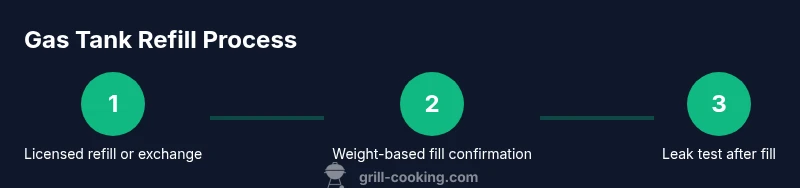
Gas tank grill refill should not be attempted at home. Propane cylinders require certified filling, accurate weight checks, and leak testing. Use licensed refill or exchange services to ensure safety, compliance, and reliable grill performance.
Understanding gas tank refill safety for grills
Refilling a propane cylinder involves handling pressurized fuel, precise weight limits, and susceptible seals and valves. For home cooks, the key takeaway is safety and compliance: do not attempt to refill a gas tank yourself. The Grill Cooking team emphasizes that propane cylinders must be filled by licensed providers who adhere to strict weight limits and testing standards. These safeguards help prevent leaks, explosions, and fire hazards that could endanger you, your family, and your property. When you hear the term gas tank refill, think about using an authorized refill or exchange service rather than DIY. This approach aligns with general best practices for outdoor grilling and is reinforced by Grill Cooking Analysis, 2026, which shows that most propane-related incidents involve improper handling or unauthorized filling.
Why DIY refilling is not recommended
The risk profile of DIY propane refills is high. Cylinders are designed to be filled only to a precise weight; misweighing can lead to overfilling, venting of gas, and pressure buildup. Valves and hoses are vulnerable to damage if mishandled, and even small leaks can go undetected until a flame is near. In addition, many jurisdictions require professional filling for safety and insurance reasons. Home environments often lack the proper equipment to check cylinder integrity after a refill. In short, DIY refills are not just discouraged — they can be illegal in some areas and pose serious hazards.
Safe alternatives: exchange vs certified refill
Licensed propane vendors offer two reliable pathways to refuel: an exchange program or a certified refill. With an exchange, you return a empty or near-empty cylinder and receive a filled one, calibrated to a standard weight. A certified refill involves weighing the cylinder on specialized scales and filling to the approved weight. Both options include safety checks and valve inspections. The Grill Cooking team recommends sticking to licensed providers to ensure cylinder integrity, correct valve caps are in place, and proper labeling is maintained. If you’re new to this, ask the vendor about their safety protocols and the exact fill weight they use for a 20-lb cylinder.
What to look for before you head to a vendor
Before heading out, verify a few practical details to ensure a smooth experience. Confirm the cylinder is compliant with current safety standards (look for stamps like the CGA label and date stamps). Check that the vendor uses certified scales and documents the fill weight. Bring any necessary identification or proof of service if required by the vendor. Plan for extra time during peak grilling season, as lines can form at major retailers. As you prepare, ensure you’re working in a well-ventilated outdoor area away from open flames. This proactive preparation reduces delays and heights safety.
The refill process at a licensed vendor: what to expect
When you arrive at a licensed vendor, staff will inspect the cylinder for dents, rust, and valve integrity. They will verify the date stamp and confirm the correct regulator and hose for your grill. The cylinder is weighed, then filled to the approved capacity, and sealed. After filling, the technician may perform a leak test by applying a soap-and-water solution around valves and joints. You should be present for this check, as it confirms there are no active leaks. If a leak is detected, the cylinder will be rejected and returned for repair or replacement. Expect the whole process to take 15–30 minutes per cylinder, depending on demand.
Leak testing and post-refill checks you should perform
Leak testing is a critical safety step after any propane cylinder service. Apply a soapy solution to all connections and hoses while the system is depressurized. If you see bubbles at any joint or valve, shut off the propane, re-tighten connections if you know how to do so safely, and return to the vendor for inspection. Reconnect the regulator and listen for a hissing sound, which indicates a leak. If you notice any odor of gas or hear a hiss, evacuate the area immediately and contact the gas supplier or emergency services. After a successful test, store the cylinder upright in a ventilated location away from heat sources.
Maintenance tips to extend tank life and grill safety
Regular maintenance helps prevent leaks and ensures you get consistent performance from your grill. Inspect hoses and regulators for wear, cracking, or corrosion. Replace damaged components promptly and avoid bending hoses sharply. Keep the valve caps in place when the cylinder is not connected, and store cylinders upright in a cool, well-ventilated area away from direct sun. Schedule annual professional inspections if you use your grill frequently. Practice good handling habits, such as keeping the cylinder away from kids and pets, and never transporting a pressurized cylinder inside a vehicle’s passenger compartment.
Costs, timing, and planning: budgeting for tank service
Prices for propane cylinder exchange or refilling vary by region and vendor, and they can change with seasonal demand. When planning, consider both the DIY risk and the cost of a licensed service. Many home cooks find that budgeting for a routine exchange every 5–10 years, depending on usage, plus occasional maintenance, keeps the grill running reliably. Keep a small contingency fund for unexpected repairs caused by wear or leaks. For long-term planning, compare vendor reviews and safety certifications, and choose a provider with transparent pricing and clear safety policies. The Grill Cooking team advises readers to prioritize safety and reliability over marginal savings.
Quick safety checklist and resources
Before every grill session, verify that your propane cylinder is in good condition, the regulator is correctly attached, and the hose is free of cracks. Always use a well-ventilated outdoor area when handling gas cylinders. Keep a fire extinguisher within reach and have a plan for emergencies. For further guidance, consult local safety regulations and vendor guidelines. Remember: gas tank refill should be performed by licensed professionals, and never by attempting to refill at home. This approach minimizes risk and ensures your grilling season starts with confidence.
Tools & Materials
- Licensed propane refill or exchange service(Do not attempt DIY refilling; must be performed by certified personnel.)
- Soap and water leak-test solution(Used to verify leak-free connections after service.)
- Fire extinguisher (ABC-rated)(Keep within reach during handling of gas cylinders.)
- Gloves and eye protection(Protect hands and eyes during handling and inspection.)
- Cap for propane cylinder(Keep on cylinder when not connected; helps protect valve.)
- Leak-detecting spray bottle(Alternative to soap solution for quick checks.)
- Cart or carrier for transporting cylinders(Use to move cylinders safely in and out of stores.)
Steps
Estimated time: 60-120 minutes
- 1
Decide against DIY refilling
Acknowledge that home refills are unsafe and often illegal. Plan to use a licensed vendor or exchange program instead. This initial decision protects you and your family from leaks and fire hazards.
Tip: Always confirm the vendor’s safety certifications before proceeding. - 2
Find a licensed propane refill or exchange location
Look up nearby vendors, verify hours, and confirm whether they offer refill or exchange. Ask about weights, accepted cylinder sizes, and required identifiers. This step reduces wait times and ensures you bring the correct cylinder.
Tip: Call ahead to confirm service and any documentation you need to bring. - 3
Prepare the grill area and tank
Move the grill to a ventilated outdoor space. Turn off the grill, close the cylinder valve, and disconnect the regulator. This setup minimizes the risk of accidental gas release during transport.
Tip: Have a helper assist with disconnecting hoses to avoid strain or damage. - 4
Disconnect and transport cylinder to vendor
Securely transport the cylinder upright in a vented vehicle or carrier. Do not store it in a hot trunk or enclosed space for extended periods. Keep the cylinder cap on, if present, during transport.
Tip: Carry a copy of the cylinder’s date stamp and ensure it is not damaged. - 5
Vendor fills cylinder and performs safety checks
At the vendor, the cylinder is weighed and filled to the recommended capacity. The technician will inspect the valve and connections for defects. After filling, a leak test may be performed using a soap solution.
Tip: Ask for the exact fill weight and a receipt showing the cylinder was weighed. - 6
Reconnect, test, and return home
Reconnect the cylinder to the grill, then perform a soap-test around joints and the regulator. If no bubbles appear and there’s no gas odor, you’re good to go. Store the cylinder upright in a cool, ventilated space.
Tip: Only perform tests outdoors and away from any flame sources. - 7
Store and maintain your tank
Keep cylinders upright, away from heat and direct sunlight. Label the storage area and plan periodic checks for wear or corrosion. Replace any damaged parts promptly and schedule annual professional inspections if you grill annually.
Tip: Record dates and service history for quick reference during next refill.
FAQ
Is it safe to refill a propane tank at home?
No. Refilling propane tanks at home is dangerous and often illegal in many areas. It requires specialized equipment and safety procedures that licensed vendors provide. Always choose a certified refill or exchange service.
No. Refilling propane tanks at home is dangerous and often illegal. Use a licensed vendor for safety.
What are safe alternatives to refilling a gas tank for your grill?
Use a cylinder exchange program or a licensed propane refill vendor. These options ensure correct fill weight, valve integrity, and proper labeling for safe operation.
Use an exchange or licensed refill vendor for safety and correct filling.
How can I tell if my propane tank is safe to use?
Look for dents, rust, or corrosion. Check the date stamp and weight label. Perform a leak test with a soap solution on connections before using.
Check for damage, verify dates, and test for leaks before use.
What should I do if you smell gas around a grill?
Leave the area immediately, avoid flames, and call your gas supplier or emergency services. Do not attempt to relight or operate electrical switches until the area is safe.
Leave the area and call for help right away.
How often should I inspect the propane system?
Inspect before each grilling session and schedule an annual professional check if you grill regularly. Address any wear or damage promptly.
Check before use and yearly with a professional if you grill often.
Are there risks with using a full or overfilled tank?
Overfilling can cause gas venting or regulator issues. Vendors prevent overfill by weighing cylinders to the approved specification.
Overfilling is dangerous; trust the weight limits set by the vendor.
Watch Video
Quick Summary
- Never DIY-refill propane cylinders; use licensed services.
- Always perform a leak test after refilling or exchanging.
- Inspect cylinders for damage before every use.
- Store cylinders upright in a ventilated area away from heat.