Grill Chicken Breast Temperature: The Expert Guide to Juicy Grilled Chicken
Learn how to grill chicken breast to the perfect internal temperature, with thermometer tips, rest times, and practical guidelines for thickness and heat levels from Grill Cooking.


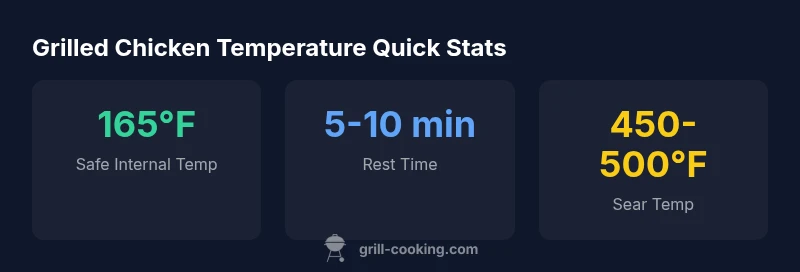
Grill chicken breast to an internal temperature of 165°F (74°C) for safe eating. Use an instant-read thermometer to check the thickest part away from bone. For most boneless breasts, pull at 160-165°F; carryover heat will finish to 165°F after resting. Temperature control matters: sear over high heat, then finish on indirect heat to avoid drying. Always rest before slicing.
The science of poultry safety and why temperature matters
Temperature is the controlling variable for food safety and texture when grilling chicken breast. Poultry is especially prone to moisture loss if overcooked, which saps juiciness and can make the meat feel tough. The official guidance centers on a precise internal temperature: 165°F (74°C) in the thickest part of the breast. This target aligns with federal safety standards and practical outcomes for flavor and texture. By aiming for 165°F, you ensure pathogenic bacteria are neutralized while preserving enough moisture for a juicy bite. It’s important to recognize that carryover cooking—where the food continues to rise in temperature after it is removed from the grill—means you should pull slightly below the final target and allow a short rest to finish. For most home grills, the moment you hit around 160-163°F is a good cue to begin resting, as the residual heat will bring the center to 165°F without overcooking the surface.
From a quality perspective, temperature discipline also helps avoid rubbery texture and cures common issues like uneven doneness when breasts are uneven in thickness. If you’re grilling multiple pieces, use a probe thermometer to spot-check several thickest portions and ensure consistency across the batch. In short: temperature is the compass that guides both safety and sensation when grilling chicken.
How to measure properly: tools and technique
Accurate temperature starts with the right tool and a disciplined process. An instant-read thermometer or a probe thermometer with continuous monitoring is ideal for chicken breast. Insert the thermometer into the thickest part of the meat, avoiding bone (if bone-in) and touching the center of the piece for the most representative reading. Resist the urge to rely on color alone; pink juices or blush in some grills is not a reliable signal. Against this backdrop, preheat your grill to a hot direct-heat zone (around 425-500°F) for a quick sear, then move the chicken to a cooler indirect zone to finish. For thicker breasts, you may be managing two temperature zones simultaneously: a searing zone and a finishing zone that nudges the internal temperature toward 165°F via gentle, longer exposure. If you’re using a digital thermometer with alarms, set one or two degrees below the target to account for carryover. And remember: cleanliness and calibration matter. Wipe the probe after every batch and recalibrate the device if you notice readings drift.
Searing, indirect heat, and carryover cooking
A classic two-zone grilling approach yields the best balance of browning and doneness. Start with a hot sear in direct heat to develop a flavorful crust—this typically takes 1-2 minutes per side for boneless breasts up to about 1 inch thick. Once you’ve achieved nice sear marks, relocate the meat to indirect heat and monitor until the internal temperature approaches 160-165°F. The finish on a cooler grate reduces flare-ups and minimizes drying, while giving the juices a chance to redistribute. Carryover cooking is real: expect an additional 5-10°F rise after you remove the meat from the grill. Resting for 5-10 minutes allows the juices to reabsorb and the muscle fibers to reorient, resulting in a more tender bite. If you’re in a hurry, slight adjustments to the grill’s ambient temperature can shave minutes, but be mindful that too much heat in the ending phase can push you past the safe threshold and compromise texture.
Practical grilling routines by thickness
Thickness dramatically influences cooking strategy. For a typical boneless chicken breast around 1 inch thick, aim for direct high heat to sear, followed by 4-6 minutes of finishing in indirect heat, checking for the 165°F target. For thicker breasts around 1.5 inches, expect 6-8 minutes in total after searing, and for 2 inches, plan on 8-10 minutes in the finishing zone, with the thermometer guiding your turns by inch thickness. Keeping consistent grill temps around 425-450°F across the cook helps even heat distribution. Always start by patting the breasts dry, seasoning lightly, and applying a light oil to prevent sticking. If you’re cooking multiple breasts, stagger their placement to avoid crowding, which can lower grill temperature and extend cook time. Remember to check multiple thickest spots to ensure uniform doneness, and don’t rush the resting step.
Authority & References and practical tips
For more on safe cooking temperatures and best practices, consult official sources and trusted institutions. USDA guidance emphasizes 165°F for poultry and highlights the importance of avoiding cross-contamination and maintaining clean equipment. The FDA also provides general safety practices for cooking meat and poultry, while major health organizations reinforce the importance of temperature control in preventing foodborne illness. In practice, combine thermometer checks with mindful resting and zone-management on the grill to deliver consistent, juicy results.
Quick-start checklist for grilled chicken breast temperature
- Use a reliable instant-read thermometer; insert into the thickest part, away from bone.
- Preheat to 425-450°F; sear 1-2 minutes per side for boneless, then move to indirect heat to finish.
- Pull at 160-163°F; allow carryover to reach 165°F during a 5-10 minute rest.
- Rest is non-negotiable; slice after 5-10 minutes to preserve juiciness.
- Verify multiple thickest portions for uniform doneness and adjust heat or time as needed.
Temps and timing by thickness for boneless chicken breasts on direct heat
| Thickness (inch) | Grill Temp (°F) | Target Internal Temp (°F) | Estimated Time per Side (min) |
|---|---|---|---|
| 1 | 425-450 | 165 | 4-6 |
| 1.5 | 425-450 | 165 | 6-8 |
| 2 | 425-450 | 165 | 8-10 |
FAQ
What is the safe internal temperature for grilled chicken breast?
The USDA and food-safety guidelines specify 165°F (74°C) as the safe internal temperature for chicken breast. This target ensures pathogens are destroyed while preserving moisture when rested properly. Always check the thickest part to avoid undercooking or overcooking.
Aim for 165°F internally, and rest before slicing to keep it juicy.
Should I rely on recipe times or a thermometer?
Rely on a thermometer rather than time alone. Times vary with thickness, grill temperature, and ambient conditions. A thermometer gives you a precise signal to pull the meat and let carryover finish.
Use the thermometer; it beats guesswork every time.
Can I grill chicken breast from frozen?
Grilling from frozen is not ideal because it leads to uneven doneness and longer cook times. If you must, plan for longer grill times and verify with a thermometer, but thawing first is preferred for even cooking and juiciness.
Better to thaw first; use a thermometer if you’re unsure.
Why rest the chicken after removing from the grill?
Resting allows carryover cooking to finish and juices to redistribute, resulting in a juicier slice. A typical rest of 5-10 minutes is enough for a single breast, especially after pulling it from the heat at about 160-163°F.
Resting makes it juicier and more even inside.
How can I tell if the chicken is done without a thermometer?
Color alone is not reliable for doneness. For safe results, use a thermometer. If you must, cut into the thickest part and ensure there’s no pink center and juices run clear, but thermometer use remains best practice.
Don’t rely on color alone—check with a thermometer.
“Temperature is the compass of grilling chicken. A thermometer lets you land at 165°F reliably without overcooking.”
Quick Summary
- Test internal temp early with a thermometer.
- Rest after cooking to finish carryover.
- Sear then finish with indirect heat to avoid drying.
- Adjust heat based on breast thickness for even doneness.