What should grill temp be for chicken breast: a practical guide
Discover the exact grill temperature for chicken breast to achieve juicy, safe results. This guide covers gas, charcoal, and pellet grills, with temps, timing, resting, and troubleshooting.


This guide helps you nail the right grill temperature for chicken breast, ensuring juicy, safe results every time. You'll find exact temperatures for different grill types, plus timing, checks, and carryover guidance. What should grill temp be for chicken breast? It’s not a single number—it depends on thickness and setup, with 165°F internal as the finish.
What should grill temp be for chicken breast
If you ask what should grill temp be for chicken breast, the short answer is: it depends on thickness, grill type, and whether you start with direct heat or indirect heat. This article breaks down practical targets, how to measure temperature accurately, and why a probe thermometer is non-negotiable. Grill Cooking emphasizes steady heat and precise doneness for juicy, safe chicken breast every time. When you consider what should grill temp be for chicken breast, think about two things: surface heat that lets you get color quickly, and a precise internal finish that ensures safety without overcooking. What should grill temp be for chicken breast is not a magical number; it’s a strategy that blends technique with timing. In practice, most cooks start with a plan that includes a surface temperature in a comfortable sear zone and finish with indirect heat to the final internal target. Consistency across grills comes from regular thermometer checks and controlled heat.
According to Grill Cooking analysis, a disciplined approach—thermometer-first cooking, two-zone grilling, and resting—delivers repeatable results. For the home cook, this means fewer dry outs and more reliably juicy chicken breast, regardless of grill type.
Tools & Materials
- Instant-read meat thermometer(Probe type with quick read time; target internal temp 165°F (74°C))
- Long-handled grill tongs(Flips without losing heat; helps handle delicate breasts)
- Grill brush(Clean grates before cooking to promote even sear)
- Meat mallet or rolling pin (optional)(Use to flatten thick fillets for even cooking)
- Plate for resting(Let meat rest 3-5 minutes to finish carryover cooking)
- Basting brush (optional)(Lightly brush with oil or marinade for extra flavor)
Steps
Estimated time: 30-45 minutes
- 1
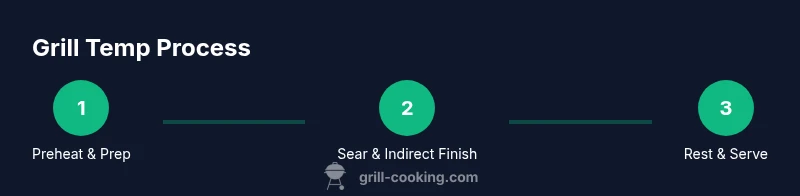
Preheat grill and prep chicken
Start with a clean grill and preheat to your target zone. If using two-zone grilling, prepare a hot direct zone and a cooler indirect zone. Pat the chicken dry and, if desired, pound to a uniform 1/2-inch thickness to reduce timing variance. The goal is to ensure even cooking and reliable temperature readings.
Tip: A uniform thickness reduces hot spots and helps you hit 165°F more consistently. - 2
Season and optionally marinate
Season generously or marinate briefly to enhance flavor. If you marinate, pat dry before placing on the grill to promote a good sear. Remember that salt draws moisture; balanced seasoning keeps the surface juicy without drawing out too much moisture.
Tip: Even flavor distribution matters; apply seasoning evenly on both sides. - 3
Apply direct heat for color
Place chicken directly over the hot zone to sear for 1–2 minutes per side or until you see a golden crust. This rapid sear improves texture and flavor while establishing grill marks. Avoid moving the meat constantly; give it a moment to form a crust.
Tip: Use tongs to flip gently; a crust helps seal juices inside. - 4
Finish on indirect heat to 165°F
Move the breasts to indirect heat with the lid closed and monitor internal temp. Target 165°F (74°C) in the thickest part. Depending on thickness and heat, this can take 6–12 more minutes. Keep an eye on time and temperature rather than color.
Tip: If your grill runs hot, remove earlier and let carryover bring it up to temp. - 5
Test internal temperature
Insert the thermometer into the thickest portion without touching bone (for bone-in pieces) or the center of boneless breasts. Confirm you’ve reached 165°F. If not, continue cooking in 30–60 second bursts, checking again.
Tip: Probe placement matters—center is the most reliable reading. - 6
Rest and slice
Remove from heat and rest 3–5 minutes loosely tented with foil. Resting allows carryover cooking and juices to redistribute, ensuring the final bite remains tender. Slice against the grain for maximum tenderness.
Tip: Even a short rest dramatically improves juiciness.
FAQ
What is the safe internal temperature for chicken breast?
The safe internal temperature for chicken breast is 165°F (74°C) as recommended by food-safety guidelines. Use a calibrated thermometer and measure in the thickest part.
The safe internal temperature is 165 degrees Fahrenheit; check with a thermometer at the thickest part.
Can you grill chicken breast from frozen?
Grilling from frozen is not ideal. It can lead to uneven cooking and a dry exterior. If you must, use a longer indirect-heat finish and verify doneness with a thermometer.
Grill from frozen is not recommended; thaw first for even cooking and safe temps.
Is it better to butterfly chicken breasts for grilling?
Butterflying or pounding to even thickness helps cook evenly and reduces the chance of overcooking the outside before the center finishes.
Butterflying makes even cooking easier and improves results.
What if my grill heats unevenly?
Use a two-zone setup to manage hot spots. Move pieces between zones to finish at a consistent internal temperature.
Two-zone grilling helps you manage hotspots and finish safely.
How long should chicken breast rest after cooking?
Rest for 3–5 minutes after removing from heat to allow carryover cooking and juiciness.
Rest for a few minutes before slicing to keep juices in.
Should I use marination to improve juiciness?
Marination can add flavor and moisture but keep salt in check and pat dry before cooking to ensure a good sear.
Marination can help, just don’t over-salt and dry before grilling.
Watch Video
Quick Summary
- Establish two-zone heat for control
- Use a thermometer to hit 165°F precisely
- Rest before slicing to keep juices in
- Avoid overcooking by finishing on indirect heat
- Season evenly for consistent flavor