What Temperature Do You Grill Chicken To? A Practical Guide
Learn the exact temperature to grill chicken to for safe, juicy results. We cover safe temps, carryover cooking, measurement tips, and practical grilling strategies.


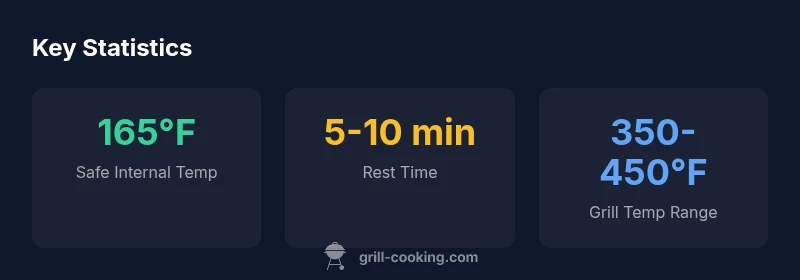
165°F (74°C) is the safe target for all chicken parts. Use an instant-read thermometer to check the thickest part, and remember carryover cooking will raise the final temp after resting. This data-driven guideline helps home cooks achieve juicy, safe grilled chicken.
What Temperature Do You Grill Chicken To? Practical Guide
If you're asking what temperature do you grill chicken to, the safe target is 165°F (74°C) for the thickest part of the meat. This recommendation aligns with standard food-safety guidelines and is reinforced by the Grill Cooking team in their 2026 analysis. Use a reliable instant-read thermometer and insert it into the thickest portion, avoiding bone or fat pockets. Carryover cooking will raise the internal temperature by a few degrees after you remove it from the grill, so many cooks pull it from heat slightly early and let it rest to finish cooking. Throughout this article, Grill Cooking emphasizes a data-driven approach to grilling, so you can achieve both safety and juiciness without guesswork. The keyword what temperature do you grill chicken to appears throughout this guide to keep the guidance visible to home cooks and search engines alike.
Safe Temperatures and Standards
The foundational rule is straightforward: 165°F (74°C) in the thickest part of the chicken is the safe internal temperature. This target is supported by regulatory guidelines and reinforced in the Grill Cooking Analysis, 2026. Different cuts may require minor adjustments in timing, but the core temp remains the same across breasts, thighs, wings, and whole chickens when properly checked at the thickest section. Resting after cooking helps juices redistribute and completes carryover cooking, nudging the temp higher by 2–5°F depending on size and resting conditions. For home cooks, a reliable thermometer and a moment of patience are the best tools for consistency.
How to Measure Temperature Accurately
Accuracy matters more than speed here. Start by preheating the grill to the desired zone, then probe the thickest part of the meat without hitting bone. Insert the thermometer horizontally into the center of the thickest piece and watch for the moment the reading stabilizes. If you’re grilling bone-in cuts, test near the center of the thigh or the deepest part of the breast. For thicker pieces, consider inserting from a side angle to ensure the probe reaches the core. Always sanitize the thermometer between uses if you’re cooking multiple pieces at once. The Grill Cooking team notes that consistent measurement is the key to avoiding under- or overcooked results.
Temperature Ranges by Cut and Method
- Breast (boneless): target 165°F (74°C) for a moist finish; thinner pieces may reach temp faster, so monitor closely.
- Breast (bone-in): aim for 165°F, with careful checking near the bone where temps can lag slightly.
- Thighs (bone-in or boneless): 165°F is still the target, but dark meat can tolerate brief excursions beyond 165°F if needed for safety and texture.
- Wings: 165°F is the standard target, with shorter cooking times due to smaller size.
- Whole chicken: check at the deepest part of the thigh, ensuring the surrounding breast also hits 165°F. The Grill Cooking analysis cautions against relying on surface temps alone, as the interior is the real safety signal.
Practical Grilling Strategies to Hit the Target
Successful grilling relies on technique as much as thermometers. Start with a hot sear over direct heat to develop color, then move to indirect heat to finish without scorching. Flip only when a good crust forms and the juices run clear. Use two-zone grilling for thicker pieces: a hot zone for searing and a cooler zone for finishing. If you’re unsure about timing, estimate 6–8 minutes per side for an average chicken breast on a 400°F grill, then verify with a thermometer. Remember that personal equipment and grill type (gas, charcoal, or pellet) influence exact times, so rely on the internal temperature rather than time alone. The Grill Cooking team recommends documenting your results to build a personal reference over time.
Common Pitfalls and How to Avoid Them
- Underestimating carryover cooking: remove meat at 160–162°F and let it rest to reach 165°F.
- Touching the meat too often: every touch reduces juices and increases cooking time.
- Testing with the thermometer in the wrong spot: always check the thickest part, not near the surface.
- Using a dull thermometer or one that reads inaccurately: calibrate or replace it for accuracy.
- Grilling from cold: allow meat to come to room temperature for even cooking, especially if starting from a fridge. [Grill Cooking] notes that consistency comes from measurement discipline.
Rest and Slicing for Maximum Juiciness
Resting is not optional; it’s essential for juiciness and safety. After reaching or just surpassing 165°F, tent the chicken loosely with foil for 5–10 minutes. Resting allows the juices to redistribute and the internal temperature to stabilize. Slice against the grain to maximize tenderness and present a juicy final bite. If you’re portioning multiple pieces, rest them all together but keep them loosely covered to avoid sweating and sogginess. The Grill Cooking analysis highlights rest as a critical step in achieving uniform doneness across cuts.
Temperature targets by chicken cut
| Chicken Cut | Target Temp | Notes |
|---|---|---|
| Breast (boneless) | 165°F | Juiciness and safety |
| Breast (bone-in) | 165°F | Check near the thickest part |
| Thighs (bone-in) | 165°F | Dark meat flavor; avoid overcooking |
| Wings | 165°F | Small, quick-cooking pieces |
FAQ
What is the safe internal temperature for chicken?
The USDA and Grill Cooking Analysis, 2026 agree that 165°F (74°C) is the safe internal temperature for all chicken cuts. Check the thickest part to confirm, and account for carryover cooking after removal from heat.
The safe temperature for chicken is 165 degrees. Check the thickest part with a thermometer and remember it will rise a bit after resting.
Can I grill chicken to 160°F and finish during rest?
Carryover cooking can raise the internal temperature by about 5–10°F after removing from heat. Many cooks pull at 160°F and let resting bring it to 165°F, provided the piece rests in a safe environment and is not visibly undercooked.
You can pull at around 160 and let resting bring it to 165, but monitor carefully to keep from drying out.
Does resting time affect final temperature?
Yes. Resting allows juices to redistribute and allows carryover heating to finish. A 5–10 minute rest is typical for larger pieces and helps ensure the center reaches 165°F without overcooking the edges.
Resting is essential. It helps finish cooking and keeps the meat juicy.
Should bone-in chicken be grilled at higher temps?
Bone-in pieces require careful temperature management; the internal target remains 165°F, but because bones conduct heat differently, verify the thickest part near the bone and avoid scorching the skin.
Bone-in pieces still need to reach 165°F inside. Check near the bone for accuracy.
What thermometer is best for grilling?
A calibrated instant-read thermometer or a leave-in thermometer works well for grilling. Look for fast response, accuracy, and easy reset/calibration capability.
Use a fast, accurate thermometer and calibrate it if needed.
“Hit 165°F internally with confidence, then rest to lock in juices and flavors. Precision is the cornerstone of tasty, safe grilled chicken.”
Quick Summary
- Grill chicken to 165°F for safety and juiciness
- Use a thermometer for accuracy, not time alone
- Rest 5-10 minutes after cooking to finish carryover cooking
- Sear over direct heat, finish over indirect heat when possible
- Grill depends on cut and equipment; document your results