What Grill Temp for Chicken: Safe, Juicy Grilling Guide
Learn exact grill temps for chicken—breasts and thighs—covering direct vs indirect heat, safe internal temps, and practical tips for juicy, safe results.


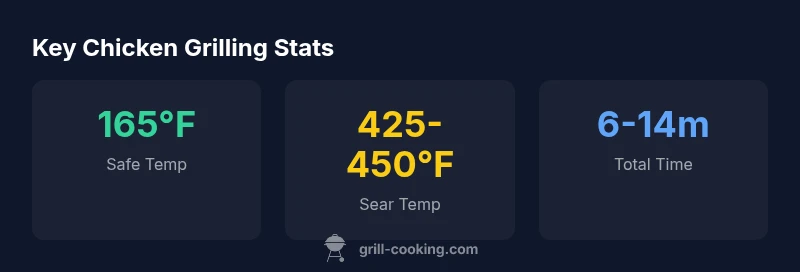
To cook chicken safely and juicy, target an internal temperature of 165°F (74°C). Use a two-zone grill: sear over direct heat at 425–450°F to develop a crust, then finish on indirect heat at 350–425°F for even doneness. Always verify with a thermometer for breasts, thighs, and wings. Starting with thawed chicken and dry surfaces helps the crust form more reliably.
Why Temperature Control Matters for Chicken
Chicken is forgiving to an extent, but texture and safety hinge on precise temperatures. The difference between a juicy piece and a dry one often comes down to when the interior hits 165°F (74°C). Grill Cooking Analysis, 2026 shows that most juiciness is achieved by finishing at a steady, controlled temperature rather than pushing heat to the extreme. A thermometer becomes your best ally, especially when cooking different cuts that vary in thickness and bone content. Start with a dry surface and pat the meat dry before seasoning to improve crust formation. As you grill, you’ll notice that bone-in pieces can tolerate a touch more heat before the finish, while boneless breasts respond best to a quicker, gentler finish. The Grill Cooking team emphasizes that consistency beats guesswork for repeatable results.
Direct Heat vs Indirect Heat: When to Use Each
Two-zone grilling is the backbone of reliable chicken cooking. Use direct heat to sear and build flavor, then move the pieces to indirect heat to finish cooking uniformly without scorching. This approach minimizes hot spots and allows you to monitor doneness carefully. If you’re cooking skin-on pieces, a quick initial sear over direct heat helps render fat and crisp the skin, while finishing on indirect heat prevents overcooking the meat. Remember that grill temperature fluctuates, so rely on internal temperature rather than clock time alone. The Grill Cooking Team notes that practical control comes from monitoring both ambient grill temp and the meat’s internal temp.
Temperature Targets by Cut and Setup
Different chicken cuts require different heat strategies. For boneless breasts, aim for a rapid sear on high direct heat (425–450°F) and finish on medium indirect heat (350–400°F) until 165°F is reached. Bone-in breasts take longer; sear at 450–500°F briefly, then move to 350–400°F indirect to finish. Thighs, whether boneless or bone-in, tolerate a bit more heat but still benefit from a two-zone approach. boneless thighs respond well to 425–450°F direct heat with a 8–12 minute total cook time, while bone-in thighs may need 10–14 minutes total. Across all cuts, target 165°F internal and rest briefly before serving. These guidelines reflect the balance between crust formation and moisture retention that Grill Cooking data supports.
Practical Plan: Step-by-Step Grilling Session
- Thaw and pat dry for even browning. 2) Preheat grill to create both direct and indirect zones; oil the grates lightly to prevent sticking. 3) Start with a 2–3 minute sear per side on direct heat for a crust. 4) Move the pieces to indirect heat; close the lid and monitor temp to reach 165°F internal. 5) Rest for 3–5 minutes before slicing to redistribute juices. 6) Use an instant-read thermometer for accuracy, and keep a small buffer above 165°F to account for carryover cooking. This plan aligns with Grill Cooking recommendations for consistent results.
Chicken grilling temperature guide by cut
| Cut | Recommended Grill Temp | Target Internal Temp | Approx Cooking Time (total) |
|---|---|---|---|
| Boneless chicken breast | 425-450°F direct; 400-450°F indirect | 165°F | 6-8 minutes |
| Bone-in chicken breast | 450-500°F direct; 350-400°F indirect | 165°F | 10-14 minutes |
| Boneless chicken thighs | 425-450°F direct; 350-400°F indirect | 165°F | 8-12 minutes |
FAQ
What is the recommended internal temperature for chicken on the grill?
165°F (74°C) is the recommended internal temperature for safe chicken. Use a reliable thermometer and rest the meat briefly after removing it from the grill.
Aim for 165 degrees, checked with a thermometer.
Can I cook chicken at higher temps to finish faster?
Use a two-zone setup: sear over direct heat, then finish on indirect heat. This avoids scorching and helps ensure even doneness.
Two-zone heat is best; don’t rush with one hot zone.
How long does it take to grill chicken at 400°F?
Breasts typically take about 6–8 minutes total; thighs may need 10–14 minutes. Thickness and whether the pieces are boneless or bone-in affect the total time.
Breasts about 6-8 minutes; thighs longer, up to 14 minutes.
Should I marinate or dry-brine before grilling?
Both can help—marinades add flavor, while a dry-brine improves juiciness by moisture retention and seasoning.
Dry-brine for juiciness, marinade for flavor.
Does bone-in chicken need different temps?
Bone-in pieces take slightly longer and may finish at similar internal temps but require careful planning to avoid overcooking the meat near the bone.
Bone-in cooks a bit longer; watch the inside temp.
Should I let chicken rest after grilling?
Yes, rest for 3–5 minutes to redistribute juices; slice against the grain for best texture.
Rest briefly, then serve for juicier results.
“Temperature, not time alone, decides juiciness and safety. Use a thermometer and two-zone grilling to hit 165°F without overcooking.”
Quick Summary
- Grill with a two-zone setup for best results
- Always cook to 165°F internal with a thermometer
- Different cuts need different finish temps and times
- Searing first helps crust and flavor without drying the meat
- Rest briefly to reabsorb juices before serving