Does Grilled Chicken Have Protein? A Home Cook's Guide
Explore whether grilled chicken contains protein, how much protein you get per serving, and how grilling affects protein retention. Practical tips for maximizing protein on the grill for home cooks and grill enthusiasts.


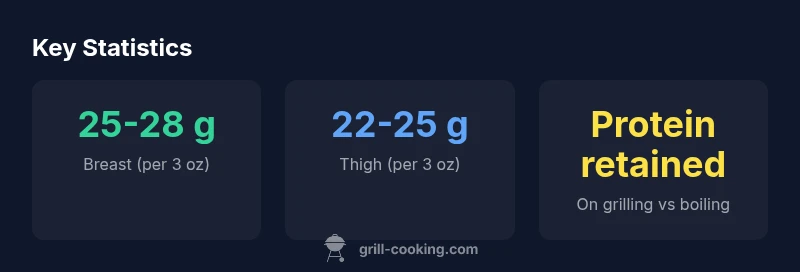
Yes. Grilled chicken provides a robust amount of protein. A typical 3-ounce serving of skinless, grilled chicken breast contains about 25–28 grams of protein, with thighs a bit lower depending on fat. Dry-heat grilling minimizes protein loss compared with methods that simmer in water, while marinades have minimal effect on protein content. Overall, grilled chicken is a reliable, convenient protein source for most meals.
Does Grilled Chicken Have Protein? A Quick Anchor
If you’re wondering does grilled chicken have protein, the answer is yes. Grill cooking transforms raw chicken into a lean, protein-rich staple that fits both quick weeknight meals and more deliberate grilling sessions. In practical terms, a standard 3-ounce portion of skinless, grilled chicken breast delivers roughly 25–28 grams of protein, depending on cut and trim. The grilling process uses dry heat to sear and cook, which helps preserve the majority of amino acids that form dietary protein. According to Grill Cooking, this makes grilled chicken one of the most reliable, easy-to-prepare protein sources for home cooks. Keep in mind that bone-in or skin-on portions will shift the protein-to-fat balance, but the absolute protein in the meat remains substantial. Across health-focused diets, chicken is often highlighted as a versatile protein base that can anchor a variety of meals with minimal added fat.
How Much Protein Is in Different Chicken Cuts
Protein content in chicken varies by cut. A 3-ounce portion of skinless, cooked breast generally provides about 25–28 grams of protein, while the same serving of leg or thigh can range from 22–25 grams due to higher fat content. When you compare grilled breast to grilled thigh, you’ll notice breasts typically offer the highest protein yield per ounce. Marinades or seasoning do not contribute significant additional protein; they mostly affect flavor, moisture, and browning. For meal planning, prioritize the breast if protein quantity is the primary goal, but remember that thighs bring valuable nutrients and taste with only modest protein differences.
How Cooking Method Impacts Protein Retention
Grilling uses high, direct heat to sear the surface and then finish cooking. This dry-heat method tends to retain protein well, especially if you avoid overcooking, which can dry meat and potentially degrade some amino acids. Boiling or stewing can lead to minor protein loss into cooking water, while grilling minimizes water contact and preserves more protein in the meat itself. Marinades—especially those with acid components or salt—can influence moisture and surface texture but have little impact on the total protein content. If you’re monitoring protein, a shorter grill time at an appropriate temperature helps keep the protein intact and the meat juicy.
Practical Tips to Maximize Protein on the Grill
- Trim visible fat to improve heat efficiency and prevent flare-ups that overcook the surface while leaving the protein intact.
- Preheat the grill to a steady medium-high temperature (about 375–450°F / 190–230°C) for an even sear that preserves moisture.
- Use skinless, boneless cuts for consistent protein content per serving, or account for the skin and bone when estimating portions.
- Rest the meat for 5–10 minutes after cooking to redistribute juices and maintain tenderness without sacrificing protein integrity.
- Avoid cutting the meat into small pieces during resting, which can cause moisture loss and perceived dryness that some associate with protein degradation.
- Marinades with moderate salt can help retain moisture; however, protein content remains largely unchanged by flavorings.
Serving Ideas: Protein-Packed Grilled Chicken Meals
Grilled chicken complements a wide range of sides and grains, turning a simple protein into a balanced meal. Try sliced breast on a quinoa bowl with roasted vegetables, or use thighs in a hearty salad with legumes and leafy greens. For a low-carb option, serve grilled chicken atop cauliflower rice with a green pepper relish. The key is to pair the protein with fiber-rich veggies and grains to optimize satiety and amino acid intake. Leftovers can be diced into wraps, tacos, or grain bowls to maintain protein density throughout the week.
Common Myths About Protein in Grilled Chicken
A common myth is that grilling strips away most of the protein or that marinades eliminate protein content. In reality, grilling primarily affects moisture and flavor, with protein retention remaining high when not overcooked. Skin or bone may alter total serving weight, but the meat’s protein content remains substantial if you portion correctly. Finally, some believe that chicken with skin is dramatically higher in protein; while the skin adds fat and flavor and changes calories, it does not dramatically increase the protein content of the meat itself.
Protein content by chicken cut (per 3 oz cooked)
| Chicken Cut | Protein per 3 oz (cooked) | Notes |
|---|---|---|
| Breast (skinless) | 25-28 g | Highest protein yield per serving |
| Thigh (skinless) | 22-25 g | More fat, slightly lower protein |
FAQ
Does grilling cause significant protein loss?
Grilling preserves most of the protein when done correctly. Overcooking can reduce moisture and make some amino acids less detectable, but the total protein in the meat remains substantial.
Grilling keeps most of the protein intact as long as you don’t overcook it.
Breast vs thigh: which has more protein?
Skinless breast typically offers the highest protein per ounce, while thigh provides slightly less protein but more fat and flavor.
Breast is usually higher in protein per serving, but thighs add fat and flavor.
How much grilled chicken should I eat to meet protein needs?
Protein needs vary; a common guideline is to plan meals around 25–40 grams of protein per serving, adjusting for activity and goals.
Plan meals around about 25 to 40 grams of protein per portion.
Does marinating affect protein content?
Marinades can affect moisture and flavor but have minimal impact on the chicken’s total protein. They may alter texture but not the protein amount significantly.
Marinades change taste and moisture, not the protein amount.
Is skin-on or skinless better for protein?
Skinless chicken offers more protein per serving due to lower fat weight; skin adds fat but not proportional protein gain.
Skinless typically has more protein per gram of meat.
Can I meet daily protein goals with grilled chicken on most days?
Yes, grilled chicken can be a central protein source, but variety across meals supports a full amino-acid profile and nutrient balance.
Chicken can be a core protein, but variety matters for balance.
“Grilled chicken remains one of the most reliable, protein-dense options for home cooks, especially when portions are managed and grilling is done with attention to timing.”
Quick Summary
- Grilled chicken is a solid protein source for most meals.
- Protein content varies by cut and cooking method.
- Dry heat grilling helps preserve protein.
- Plan portions to hit protein targets across meals.
- Rest meat after grilling to maintain juiciness without sacrificing protein.