What Grill Temp to Sear Steak: Mastering the Sear
Discover the exact grill temperature to sear steak for a crusty, juicy finish. Learn direct heat, two-zone setup, timing, and safety tips from Grill Cooking for perfect sears every time.


Goal: achieve a crusty, juicy sear by using high direct heat. Start with a hot grill (about 450–500°F) for the initial crust, then control doneness with indirect heat or a brief rest. Use a quick thermometer to verify internal temp and avoid overcooking. Consistency comes from preheating, timing, and resting.
Understanding the science of searing steak on a grill
When you ask what grill temp to sear steak, you're really asking how to trigger the Maillard reaction while preserving heat inside the meat. A hot surface caramelizes surface sugars and proteins within seconds, creating that crust you recognize as a perfect sear. The recommended starting point for most grills is in the high direct-heat range—typically around 450–500°F (230–260°C). At these temperatures the steak sizzles as soon as it touches the grate, and the rapid crust formation helps lock in juices. According to Grill Cooking, precise heat management matters more than chasing a single exact number, because grill temps can fluctuate with airflow, weather, and fuel. The key is to create two zones: a blistering hot surface for the initial crust and a cooler area to finish the steak without overcooking. This approach also minimizes flare-ups by keeping extra fat away from direct flame during the final browning.
Direct heat vs two-zone setup: how to configure your grill
The simplest path to a great sear is to use direct heat for the crust and then transition to indirect heat to finish. A two-zone setup gives you the best of both worlds: a hot, searing zone and a cooler area where you can control the interior without burning the crust. On a gas grill, one side can be set to high while the other remains off or at a lower temperature. On charcoal, bank the coals to one side to create a dedicated hot zone and a cooler zone on the opposite edge. Expect the hot zone to run in the 450–550°F range, while the indirect area stays more moderate, around 325–400°F, depending on your grill. This arrangement prevents flare-ups from turning into charring and enables you to move the steak as needed without losing the crust.
How to measure grill temperature accurately
Accurate temperature control starts with good measurement. Use the built-in grill gauge as a baseline, but verify with a digital probe or infrared thermometer for surface temperature. A probe placed into the steak’s center or a surface infrared check can help you gauge when the crust has formed and when the interior is approaching the desired doneness. If you’re using a charcoal or gas grill without a precise probe, preheat to the target range and monitor the flames visually. Remember that airflow, weather, and fuel load can cause temporary temperature fluctuations, so rely on real-time readings rather than a single dial setting. Consistency comes from routine checks and calibrations over time.
Step-by-step searing method (overview)
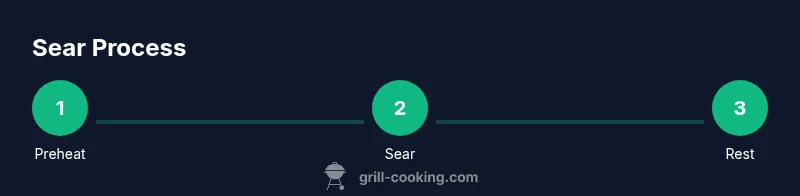
To build a reliable sear, you’ll start with a hot surface, apply oil judiciously, and use a two-stage approach to finish just right. Avoid moving the steak too early, which can interrupt crust formation. The goal is to form a deep brown crust quickly, then use controlled heat to finish to your preferred doneness without scorching. Seasoning should be applied just before cooking to maximize crust adhesion and flavor.
Resting and carryover cooking: finishing the steak
Resting after searing is essential. Heat that continues to cook the steak once it’s off the grill can push a perfect medium-rare steak into medium territory or beyond if you cut it too soon. A short rest of 5–10 minutes allows juices to redistribute, improving juiciness and flavor. During this rest, carryover cooking will continue to raise the internal temperature by a few degrees. For thicker cuts, a slightly longer rest is beneficial. Keep the steak loosely tented with foil if the ambient temperature is cool, but avoid steaming it in a hot blanket of foil—this can soften the crust you worked to develop.
Thickness, marbling, and doneness: adapting temps
Steaks vary in thickness and marbling, which affects how you sear and finish. Thinner steaks (1 inch or less) require a shorter sear time on a very hot surface, then immediate rest. Thicker cuts (1.5–2 inches) benefit from a two-zone approach: a rapid crust in direct heat, followed by a longer finish in indirect heat to reach the target internal temperature without burning the crust. Marbling contributes flavor and juiciness; higher marbling can tolerate a hotter, faster sear, whereas leaner cuts benefit from careful timing and a slightly cooler surface to avoid drying out.
Tips for different grills and finishing techniques
Gas grills can provide quick, repeatable high heat, while charcoal grills deliver better flavor from smoke and fat rendering. If you’re using a cast-iron skillet on the grill, you can also achieve a very strong crust by moving the steak to the hot pan after the initial sear. For those who prefer lighter crusts, you can use a longer, slower sear, but this requires more precise temperature control to prevent overcooking. Regardless of the method, pat the steak dry before seasoning to improve crust formation, and avoid using an overly heavy marinade that can create steam and hinder browning.
Troubleshooting: common issues and fixes
If your steak isn’t browning, it could be too wet or the surface is too cool. Pat dry thoroughly and ensure the grill is preheated to the correct temperature. In case of excessive flare-ups, move the steak to the indirect zone or shield the meat with a portion of the grill lid to dampen the flame. If the crust forms too slowly, raise the heat momentarily or remove excess fat to reduce flare-ups. Finally, allow sufficient rest time after cooking to finish the interior gently and preserve juiciness.
Tools & Materials
- Grill thermometer or probe(For real-time grill temperature and internal steak check.)
- Tongs(Firm grip without piercing the meat.)
- Oil with high smoke point(Avocado or high-oleic canola; light coat on steak.)
- Paper towels(Pat dry steak and clean grates as needed.)
- Cast-iron skillet (optional)(Finish crust on the stove if desired.)
- Meat thermometer(Check internal temps for doneness targets.)
- Grill grate protector or oil spray(Prevents sticking and makes flipping easier.)
- Two-zone grill setup(One hot zone for searing, one cooler zone for finishing.)
Steps
Estimated time: 25-35 minutes
- 1
Preheat the grill
Preheat the grill to a high direct-heat zone (approximately 450–500°F / 230–260°C). If using gas, turn one side to high and the other to low or off to create two zones. This ensures a blistering crust when the steak first contacts the grates.
Tip: Use the lid to stabilize temperature and avoid temperature surges. - 2
Prepare the steak
Pat the steak dry with paper towels, then lightly oil and season just before cooking. Dry surfaces promote browning, and oil helps prevent sticking on hot grates.
Tip: Season generously, but avoid salting too early which can draw out surface moisture. - 3
Sear the first side
Place the steak on the hot zone and resist the urge to move it for 1–2 minutes. A crisp, dark crust should form quickly as surface proteins brown.
Tip: Minimal touching and no shifting during the first crust stage. - 4
Flip and sear the opposite side
Turn the steak and sear the other side for another 1–2 minutes or until a deep crust forms. If flare-ups occur, move to the indirect zone immediately.
Tip: Use tongs to flip cleanly; avoid piercing the meat. - 5
Finish in indirect heat
Move the steak to the cooler zone to finish to desired doneness, using a probe to monitor internal temperature. Target 120–125°F for rare, 130–135°F for medium-rare, etc., depending on thickness.
Tip: Keep the heat lower to prevent further crust burning while finishing. - 6
Rest before serving
Remove the steak and rest for 5–10 minutes to let juices redistribute. Resting prevents juice loss when cut and allows carryover cooking to finish gently.
Tip: Loosely tent with foil if resting in a warm room—don’t seal tightly.
FAQ
What grill temperature should I use to sear steak?
Aim for a direct heat zone in the 450–550°F range for a strong sear. Finish in indirect heat if the interior isn’t yet at target doneness. Use a thermometer to check internal temperature for consistency.
Aim for a hot direct zone around 450 to 550 degrees, sear quickly, and finish with indirect heat as needed. Use a thermometer to confirm doneness.
Should I preheat with the lid closed?
Yes. Preheating with the lid closed helps stabilize the grill temperature and reduces hot spots, giving you an even sear.
Yes. Close the lid to steady the heat and get a consistent sear.
Do I oil the steak or the grill?
Oil the steak lightly to prevent sticking and promote browning. Oil on the grate is usually unnecessary and can cause flare-ups.
Oil the steak lightly and pat dry; oiling the grate isn’t usually needed and can flare up.
How thick should the steak be to sear properly?
Thicker steaks (1.5–2 inches) benefit from a sear plus finish in indirect heat. Thinner steaks sear quickly; adjust timing to avoid overcooking.
Thicker steaks need a sear then finish; thinner ones sear fast, so watch doneness closely.
How can I know when it’s done?
Use an instant-read thermometer: rare 120–125°F, medium-rare 130–135°F, medium 135–145°F. Factor carryover cooking by resting 5–10 minutes.
Check the internal temp with a thermometer: about 125 for rare, 130–135 for medium-rare, rest after cooking.
Is searing on high heat unsafe for beginners?
Searing isn’t inherently unsafe, but you should manage flare-ups, keep children and pets away, and use long tongs and precision tools.
It’s safe when you manage flare-ups and use proper tools. Keep a safe distance and watch the flames.
Watch Video
Quick Summary
- Preheat to a hot direct-heat zone for crust formation.
- Use a two-zone setup to control doneness without burning crust.
- Rest the steak after searing to finish cooking evenly.
- Monitor internal temps with a probe for doneness accuracy.
- Adapt heat and timing based on thickness and marbling.