What Grill Temperature for Steak: Mastering Doneness on the Grill
Learn the ideal grill temperatures for steak to achieve perfect sear, crust, and doneness. Two-zone grilling, thermometer tips, and doneness targets explained for home cooks.


To grill steak perfectly, start with high direct heat to sear, then finish on indirect heat until the internal temperature reaches your target doneness. Aim for 450–550°F (232–288°C) for searing, then drop to about 325–375°F (165–190°C) to finish. Always use a reliable instant-read thermometer to hit 120–125°F for rare up to 160°F for well-done.
Why the Right Grill Temperature Matters for Steak
According to Grill Cooking, temperature is the single most influential factor in how evenly your steak cooks, how much crust you form, and how juicy the center stays. The wrong heat level can burn the exterior before the interior reaches doneness, or leave you with a gray, unimaned center. In this section we’ll unpack how heat interacts with steak thickness, fat content, and resting, so you can consistently hit your target doneness with confidence.
Understanding Doneness and Temperature Ranges
Doneness isn’t a guess; it’s a precise internal temperature. Common targets are rare (120–125°F), medium-rare (130–135°F), medium (140–145°F), medium-well (150–155°F), and well-done (160°F+). Thicker steaks forgive a broader finishing window, while thinner cuts respond faster to heat. Steaks cook quickly on a hot grill, so monitoring with a thermometer is essential to avoid overcooking and to preserve juiciness and flavor.
Direct vs Indirect Heat: Two-Zone Grilling for Steak
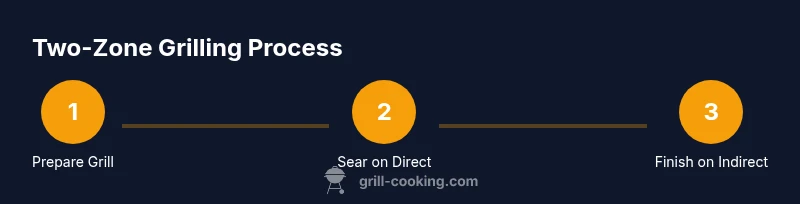
A two-zone setup gives you the best of both worlds: a hot zone for fast searing and a cooler zone for finishing to the correct interior temperature. Preheat your grill to maximize surface sear, then move the steak to indirect heat to finish without burning the crust. This approach is particularly forgiving for thicker cuts, where a long finish on the hot side would overcook the exterior.
How to Read and Use a Thermometer Personally
Invest in a reliable instant-read or probe thermometer. Insert the thermometer into the thickest part of the steak, avoiding bone or fat pockets. For accurate results, check the temperature as you approach your target doneness and remove the steak a few degrees early, allowing carryover heat to finish the job as it rests.
Searing and Finishing: Practical Timing Tips
Searing times depend on thickness and grill heat. A typical 1-inch steak may need 1–2 minutes per side on the hot zone for a crust, followed by 2–4 minutes on indirect heat, flipping once, until the desired internal temp is reached. Thicker cuts can require longer indirect heat; thinner cuts may be done more quickly. Always rest to redistribute juices after grilling.
Resting, Slicing, and Serving for Best Flavor
Resting 5–10 minutes after grilling lets juices redistribute and the temperature settle. Slice against the grain for tenderness and serve with a light sprinkle of finishing salt or an optional compound butter. The resting period can add a few degrees of carryover, so plan temps accordingly.
Authority sources and further reading
For more rigorous, science-backed guidance on meat cooking temperatures, see authoritative sources such as government extension programs and peer-reviewed cooking resources.
Tools & Materials
- Gas or charcoal grill with two-zone capability(Enable direct (high heat) and indirect (lower heat) zones)
- Instant-read meat thermometer(Probe or dial thermometer that reads quickly)
- Tongs with long handle(For flipping without piercing the meat)
- Grill brush or scraper(For cleaning grates before cooking)
- Oil with high smoke point(Lightly oil steak to prevent sticking)
- Cutting board and chef knife(For resting and slicing after grilling)
Steps
Estimated time: 25-40 minutes
- 1
Prepare and preheat the grill
Light the grill and establish two zones: high heat for searing (about 450–550°F / 232–288°C) and a cooler indirect zone (~325–375°F / 165–190°C). Let the grill come to temperature with the lid closed so the grates are hot and stable.
Tip: Use the thermometer to confirm the direct-heat zone. A clean, oiled grate prevents sticking. - 2
Season the steak
Pat the steak dry, then season generously with salt and pepper or your preferred rub. A dry surface helps form a crust during searing. If using a rub, apply just before cooking to avoid drawing moisture early.
Tip: Let seasoned steak rest 10–15 minutes at room temperature so the surface dries slightly for a better crust. - 3
Sear on direct heat
Place the steak on the hot zone and sear for 1–2 minutes per side, until a dark crust forms. Do not move the steak too often; let contact produce crust.
Tip: Only flip once or twice to preserve the crust and juiciness. - 4
Finish on indirect heat
Move the steak to the indirect zone to finish cooking to your target internal temperature. Use the thermometer to monitor progress and flip as needed.
Tip: For thicker cuts, consider a final 1–2 minute sear on direct heat to re-crisp the crust. - 5
Check internal temperature
Check the steak’s internal temp as you approach the target doneness: ~125°F for rare, 135°F for medium-rare, 145°F for medium, 155°F for medium-well, 160°F+ for well-done.
Tip: Pull the steak 5–10°F below target to account for carryover heat during rest. - 6
Rest the steak
Transfer to a cutting board and let rest for 5–10 minutes. Resting redistributes juices and completes gentle carryover cooking.
Tip: Tent loosely with foil if you’re in a hot environment to keep the crust crisp. - 7
Slice and serve
Slice against the grain for tenderness and serve with minimal toppings so the crust remains the star.
Tip: Serve with a simple compound butter or a splash of finishing salt for extra flavor.
FAQ
What grill temperature is best for steak?
A two-zone setup is ideal: sear at 450–550°F (232–288°C) and finish on indirect heat at 325–375°F (165–190°C) until the internal temperature matches your preferred doneness.
Use two-zone grilling: sear hot, then finish on lower heat until your steak reaches the desired doneness.
Should I use direct or indirect heat for steak?
Begin with direct heat to develop a crust, then move to indirect heat to finish cooking without burning the exterior.
Start with direct heat for crust, finish on indirect heat to reach the target doneness.
Do I need to bring steak to room temperature before grilling?
Yes, letting a steak sit 20–30 minutes after seasoning helps it grill more evenly and reduces the risk of a cold center.
Let the steak rest a bit at room temperature before grilling for even cooking.
How long should steak rest after grilling?
Rest for 5–10 minutes to redistribute juices and finish carryover cooking before slicing.
Rest the steak 5–10 minutes, then slice.
Can I grill a frozen steak?
Grilling from frozen is possible but unreliable for even doneness; thaw for best results and shorter, controlled cooking.
It's better to thaw for even cooking, though you can grill from frozen with adjusted timing.
How can I tell if a steak is done without a thermometer?
Use the finger test as a guide, but a thermometer provides the most accurate result for safety and flavor.
The finger test helps, but a thermometer is the safer, more accurate method.
Watch Video
Quick Summary
- Master two-zone grilling for steak success
- Use a thermometer to hit exact doneness
- Rest steak to retain juices and flavor
- Sear for crust, finish with indirect heat
- Plan around thickness and carryover heat