Should Grill Door Be Open? A Practical Grilling Guide
Discover when to keep the grill door open or closed, how airflow affects heat and smoke, and practical safety tips for gas and charcoal grilling.


Typically you should not leave the grill door fully open while cooking. Keeping the door mostly closed maintains steady heat, minimizes smoke, and reduces flare-ups. Only briefly open for checking food, adding fuel, or managing flare-ups, and adjust vent settings accordingly. On some grills or recipes, a controlled, short door opening can be useful for searing or finishing at higher temps.
The Physics of Grill Ventilation and Heat Control
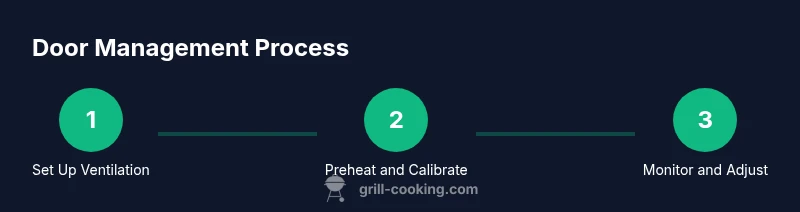
Heat management on a grill is driven by airflow. The door position matters because it controls how hot air flows in and out of the cooking chamber. When the door is closed, hot air recirculates, maintaining steady temperatures; when opened, fresh oxygen rushes in, which can spike temperature briefly but also increases smoke output. For most backyard cooking, you want a controlled, moderate airflow rather than a wide-open vent. According to Grill Cooking, proper door management helps minimize heat loss and ensures even cooking across the grate.
Gas grills rely on flame height and vents; charcoal grills depend on air through bottom vents and the lid. In both cases, keeping the lid closed during long cooks reduces heat fluctuations and prevents flare-ups triggered by sudden oxygen inflow. However, some techniques benefit from temporary door opening.
- Brief door openings are okay for checking food or rotating pieces.
- Use built-in vents to fine-tune air; remember that large door openings can double heat loss.
This foundation sets the stage for understanding when to open or close the door and how it ties to safety across fuel types.
Door Position and Heat Zones: How It Affects Cooking
Door position directly shapes heat zones inside the grill. Closed lids trap heat and create stable indirect zones ideal for larger cuts or longer cooks. Opening the door momentarily introduces a blast of fresh air, which can raise the flame for a quick sear or help manage a flare-up, but it disrupts the even heat you’ve built up. For many home cooks, the best practice is to establish and maintain a primary heat zone with the lid closed, then use brief door openings only as needed to monitor progress or manage flames. This approach reduces fuel waste and yields more consistent results, especially when cooking thick meats or poultry. As you gain experience, you’ll learn how long you can keep the door shut before needing a check, and you’ll adjust vent settings to fine-tune the airflow without losing confidence in the heat.
Gas vs Charcoal: Door Strategy Differences
Gas grills benefit from a sealed cooking environment; the lid largely governs heat and smoke. Keep the door closed for most of the cook to maintain even temps, then briefly lift the lid to check temperature or flip meat if needed. Charcoal grills rely more on airflow through vents and lid position, so door management becomes a critical part of heat control. When starting charcoal, keep the lid on while coals come to temperature to establish a steady crown of heat; then adjust vents to control airflow as you move into the main cooking phase. Throughout, a fabric-friendly lighter or a metal sun shield helps reduce flare-ups when you briefly open the door to monitor progress.
Grill Cooking Analysis, 2026 emphasizes that controlled door openings can improve heat retention and fuel efficiency, whereas frequent, long openings lead to heat loss and uneven cooking. Apply this insight to both fuel types for best results.
Practical Scenarios: Searing, Smoking, and Finishing
Direct searing benefits from high heat; for many grills, you’ll want the lid closed to reach peak temperatures and maintain a stable surface for browning. If your grill is running hot, give the lid a quick check-and-rebalance by adjusting vents rather than keeping the door open. Smoking typically requires a tight seal and a steady airflow; keep the door closed and use vents to tune the smoke path. Finishing at higher temps may require a brief door opening to check crust formation or to reposition pieces for even browning. The key is to keep openings short (usually 10–20 seconds) and to return to a closed lid quickly so the temperatures don’t dip. A short, purposeful opening can be part of a precise finish, but avoid turning the cook into a venting exercise.
Remember: every grill behaves differently. Start with conservative settings and observe how your unit responds before making large changes.
Checking Food Safely Without Constant Door Openings
The simplest way to monitor doneness without keeping the door ajar is to use a reliable instant-read thermometer and to know your target internal temperatures. Plan checks at intervals rather than continuous observations. For thick cuts, probe near the center of the thickest portion at regular intervals to gauge progress. When you do open the lid, do so quickly and close again to minimize heat loss. If you’re cooking thicker proteins, consider using indirect heat with the lid closed for most of the cook, then finish with a brief, controlled door opening to assess the crust or color. Maintain good spacing between grill grates so air can circulate, which helps even heating and reduces the chance of hot spots forming.
Safety, Maintenance, and Common Mistakes
Safety starts with equipment readiness. Ensure your grill lid seals properly, vents operate smoothly, and you have a heatproof surface nearby. Common mistakes include leaving the door open during long cooks, constantly poking the grill while hot, and neglecting vent adjustments as temperatures shift. A widely adopted practice is to plan checks and flips during short pauses rather than continuous monitoring. Regular cleaning of grates and lids helps maintain consistent airflow, while keeping extinguishing gear within reach ensures that flare-ups are quickly controlled. By treating door position as an active part of your grill setup, you’ll improve both safety and cooking performance.
Authority and Practical Reading List
For further reading on grilling safety and heat management, consult authoritative resources from reputable food safety and fire safety organizations. See USDA’s safe cooking temperatures and NFPA guidance on outdoor grilling safety for official recommendations and precautions. These sources provide detailed, evidence-based guidance that complements practical, experience-based advice from Grill Cooking.
Tools & Materials
- Grill (gas or charcoal)(Ensure lid seal is intact and vents are accessible)
- Heat-resistant gloves(Choose gauntlet style for wrist protection)
- Long-handled tongs(18-inch or longer for safe handling)
- Thermometer with probe(Indispensable for checking internal temps)
- Spray bottle with water(Useful for light flare-up control)
Steps
Estimated time: 30-40 minutes
- 1
Preheat and set ventilation
Light the grill and bring it to the target temperature with the lid closed. Position vents to establish moderate airflow suitable for the planned cook—indirect heat typically benefits from tighter air, while high-heat searing may require slightly more open ventilation. Allow 5–10 minutes for the temperature to stabilize before placing food on the grate.
Tip: Pro tip: align the vents with the flame or coals to avoid hot spots and enable even warming. - 2
Close the lid to establish heat
Close the lid to trap heat and create a stable cooking environment. This helps you reach and maintain the target temperature more efficiently and reduces heat loss during the initial phase. Use the built-in thermometers or an external thermometer to monitor the exact temperature.
Tip: Pro tip: set timer for the first 10 minutes and avoid opening the lid unless necessary. - 3
Briefly open to check progress
When you need to assess progress or reposition food, open the lid only briefly—10 to 20 seconds is usually enough. Have tongs ready and be prepared to close the lid immediately after the check to minimize heat loss.
Tip: Pro tip: open from the hinge side to preserve as much heat as possible and keep gloves on for quick work. - 4
Rotate and reposition for even browning
Turn pieces so all sides get even contact with the grate and consistent heat exposure. This reduces hot spots and ensures a uniform crust. Use long tongs and avoid moving more than needed during a hot cook.
Tip: Pro tip: rotate in small increments rather than full flips to maintain moisture and crust formation. - 5
Fine-tune airflow during cook
As temperature shifts, adjust the vents gradually to maintain stable heat. Small vent changes can have a large effect on temperature, especially with charcoal. Keep the lid closed whenever possible to preserve heat, and only open for critical checks.
Tip: Pro tip: keep a vent dial in sight; even slight turns can prevent temperature spikes. - 6
Finish with rest and safe shutdown
When the target internal temperature is reached, remove food and let it rest off the heat. Close the grill and let it cool safely before cleaning. Post-cook cleanup preserves grill performance and reduces the risk of flare-ups during future cooks.
Tip: Pro tip: rest meat 5–10 minutes before slicing to reabsorb juices.
FAQ
Should I keep the grill door open for direct high-heat searing?
In most cases, keep the lid closed during high-heat searing to trap heat and create a strong crust. Briefly open only if you need to monitor progress closely, then close again to maintain temperature.
For searing, keep the lid closed to trap heat and form a good crust; open only briefly if you must check progress, then close.
How long can I leave the door open during cooking?
Open inspections should be brief—usually 10 to 20 seconds. Prolonged openings cause heat loss, uneven cooking, and longer cooking times.
Open the door briefly for checks, about 10 to 20 seconds; longer openings lead to heat loss and uneven cooking.
Does the door position affect smoke flavor?
Yes. Keeping the door closed promotes smoke buildup and even flavor distribution. Opening the door reduces smoke immersion and can cause uneven seasoning.
Closing the door helps smoke flavor to circulate evenly; opening it can reduce that effect.
Is the best door strategy different for gas vs charcoal?
Yes. Gas grills benefit from a mostly closed cook to maintain steady temps, while charcoal grills rely more on vent control and can tolerate brief openings for flavor or checks.
Gas grills do best with the lid on most of the time; charcoal grills depend more on vents and may require brief openings.
Can door position cause flare-ups?
Opening the door increases oxygen and can trigger flare-ups. If a flare-up occurs, briefly close the lid and adjust vents to suppress it.
Yes—opening the door can feed a flare-up. Close the lid briefly and adjust vents to calm it.
What is a good door position for a reverse-sear method?
For reverse-sear, start with the lid closed to build heat, then briefly open for a final sear if needed. Return to closed cooking to rest and finish.
In reverse-sear, keep it closed to start, briefly open for the final sear, then close again to finish.
Watch Video
Quick Summary
- Keep lid closed for steady heat and even cooking.
- Open the door briefly only for checks or flame management.
- Gas and charcoal require different vent strategies for best results.
- Use a thermometer to verify doneness and ensure safety.
- Plan and practice door control to improve consistency over time.