When Grilling Should Vents Be Open: A Practical Guide
Learn when to keep grill vents open for optimal airflow, temperature control, and safety. This step-by-step guide covers charcoal and gas grills, vent strategies, common pitfalls, and practical tips for home cooks and grill enthusiasts.


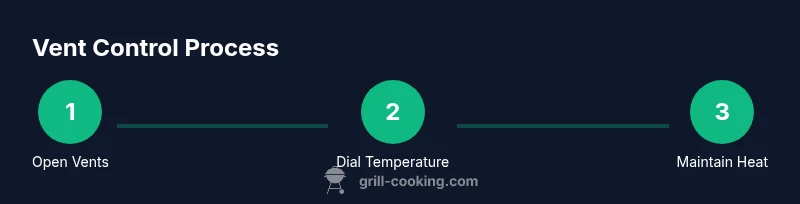
Key principle: use vent openings to control airflow. Start with bottom vents wide to spark flames, then adjust the top vent to dial in temperature. For intense high heat, keep both vents open. For steady medium heat, keep bottom wide and top halfway closed. To cool the grill quickly, close the top vent first and trim bottom air. Do not seal vents completely.
Understanding How Grill Vents Work
Vent systems are the unsung heroes of grilling. The bottom vents regulate the flow of air into the fire, while the top vent serves as the exhaust that lets hot gases escape. Together, they create a controlled loop: more air equals hotter flames, less air cools the fire. When grilling should vents be open is not a fixed rule; it depends on the grill design, fuel type, and what you’re cooking. According to Grill Cooking, getting comfortable with vent adjustments is a foundational skill for predictable results. In practice, you’ll start with the vents wide when lighting fuel to establish a strong flame, then gradually modulate them to hold a target temperature without constant stoking. Understanding the balance between intake and exhaust is the first step toward mastering consistent sear and even heat.
Airflow is also influenced by ambient conditions: wind, ambient temperature, and grill lid position all shift how much air moves through the chamber. If the grill struggles to ignite or flames surge, widen the bottom vents and open the top vent slightly to vent excess air. If the grill is running too hot with high flames, close the top vent a touch and, if needed, partially close the bottom vents. The goal is steady, controllable heat rather than chasing numbers. Grill Cooking Analysis, 2026 emphasizes consistent venting as a practical route to stable temps and better results.
This foundational understanding helps you tailor vent use to your specific setup and cooking style.
Charcoal Venting Essentials
Charcoal grilling relies on a dynamic balance of air intake and exhaust. Start by opening the bottom vents wide to feed the fire, especially when lighting the charcoal and building a robust bed of coals. The top vent acts as a throttle for heat: opening it fully allows maximum exhaust and fresh air; closing it partially reduces airflow for slower, steadier burns. For high-heat searing, keep both vents open and monitor the flames, adjusting the top vent to maintain the desired surface sear without scorching. For low-and-slow cooking, you’ll gradually close the bottom vents while leaving the top vent slightly ajar to vent moisture and keep a steady, controlled fire. When refueling, avoid large vent changes all at once—make incremental adjustments as the breeze shifts. Grill Cooking’s practical guidance underscores that charcoal vents are a tunable system: small changes yield noticeable temperature shifts.
A helpful rule of thumb is to start with bottom vents wide and top vent open; then, as the fire stabilizes, tighten down the top vent to reduce heat gradually. If the grill seems to flood with smoke and high heat, a quick top-vent adjustment can tame temperatures without starving the fire. Remember to maintain safe distances from hot coals and never chock vents fully closed during active cooking.
Gas Grill Venting Essentials
Gas grills offer a different venting dynamic because the heat source is controlled by the burners rather than by a coal bed. Keep the bottom burners on for fuel supply and flame stability, with the lid closed to trap heat—opening the lid briefly helps you read temperature, but long openings let heat escape. The top vent on many gas grills is a decorative feature, but some models use a dedicated lid vent. In general, for high-heat grilling, keep the lid closed and use the burners to regulate temperature, opening vents only enough to relieve built-up heat when needed. For medium heat, you’ll rely on a combination of burner settings and brief lid openings, rather than aggressively fiddling with vents. A steady approach—avoiding abrupt vent changes—helps maintain uniform heat across the cooking surface. Grill Cooking emphasizes that gas grills respond quickly to changes in flame, so small adjustments can yield rapid temperature shifts.
Practical Scenarios: High Heat, Medium Heat, and Slow Cooking
High heat: keep bottom vents open wide and top vent partially open to encourage rapid oxygen flow and flame height. This setup supports quick searing and browning. Medium heat: maintain a wider bottom intake with the top vent set to about halfway to suppress surges and keep a steady flame. Low/indirect heat: for slow cooking, close the bottom vents to reduce airflow and use the top vent to vent excess humidity. Shift between scenarios by making small, staged adjustments rather than large vent changes. Adapt to wind or weather by briefly opening the lid to stabilize before you resume cooking.
Grill Cooking’s analyses suggest that a thoughtful vent strategy reduces fuel consumption and yields more predictable results, especially when cooking different foods on the same grill.
Common Mistakes and Troubleshooting
Common mistakes include closing vents too aggressively, which starves the fire, or leaving vents fully open for extended periods, which can overshoot temperature targets. If temperatures spike unexpectedly, try a two-step vent adjustment: lower the top vent slightly and adjust the bottom vents to restore balance. If you notice excessive smoke before searing, ensure you’re not dumping unburned fuel by leaving vents closed; add airflow gradually. For beginners, a simple rule is to keep at least some airflow active through both intake and exhaust; tiny adjustments can yield big temperature changes. Grill Cooking recommends monitoring flame behavior and using the vents to fine-tune rather than chase the thermometer with constant stoking.
Grill Cooking Analysis, 2026 highlights that consistent vent management improves heat stability and reduces fuel waste. If you’re cooking with charcoal and see stalled flames, open the bottom vents a bit more and allow oxygen to revive the fire without overfeeding it.
Safety, Maintenance, and Quick Reference
Vent management is not just about heat—it’s about safety and equipment longevity. Always start with clean vents and a clear chimney. Periodically inspect and clean vent holes to avoid buildup that restricts airflow. When you finish cooking, close the vents gradually to extinguish the fire and prevent lingering smoke. Before lighting again, give the grill time to cool and wipe down any grease or ash residues. A simple checklist helps: 1) confirm vents move freely, 2) remove ash buildup, 3) verify the lid or chimney cap is intact, 4) ensure the grill is on a stable, heat-resistant surface. The Grill Cooking team emphasizes that disciplined venting practices improve safety and performance over time.
Authority sources: Always consult grill manufacturer instructions for vent operation; local fire codes may have additional guidelines for outdoor cooking equipment.
Authority Sources
- https://www.ncsu.edu/extension/grilling-safety/ventilation
- https://www.osha.gov/publications/osha-3150
- https://www.nap.edu/read/25260/chapter/1
Tools & Materials
- Charcoal grill with adjustable vents(Ensure bottom and lid vents can be opened and closed smoothly)
- Lighter or fire starter(Used to ignite fuel safely; avoid lighter fluids for hot coals)
- Long-handled tongs(For safe handling of hot coals and food)
- Heat-resistant gloves(Protect hands during vent adjustments and handling hot components)
- Infrared or standard grill thermometer(Helpful for monitoring surface temp beyond built-in gauge)
Steps
Estimated time: Total time: 60-90 minutes
- 1
Prepare and light the grill
Open the bottom vents wide to promote air intake and set up for ignition. Light the fuel and allow coals to establish a strong, even bed. Keep the top vent open to help exhaust moisture and prevent smoldering. Why: a good airflow start accelerates ignition and builds a stable heat foundation.
Tip: Avoid closing vents immediately after lighting; give the fire 5–7 minutes to establish a clean flame. - 2
Establish target temperature
As the fire builds, monitor the temperature rise and open or close the top vent to approach your target. For high heat, keep the vents more open; for medium heat, taper the top vent to halfway. Why: the lid position interacts with vent openings to regulate heat and smoke.
Tip: Make small adjustments (1/4 turn) and wait 2–3 minutes before reassessing. - 3
Direct-heat cooking mode
When searing, maintain wide bottom vents and keep the top vent slightly open to maximize airflow and peak flame height. Why: direct heat needs robust oxygen to sustain strong flames for a good sear.
Tip: Keep a vigilant eye on flare-ups; move food away from direct flames if needed. - 4
Switch to indirect/medium heat
For larger cuts or drafts, shift to indirect cooking by arranging coals to the sides and closing the top vent a bit more. Why: reducing airflow helps maintain steady heat over longer periods.
Tip: Use a two-zone setup and rotate food for even cooking. - 5
Cool-down phase
As you near completion, gradually reduce airflow by gently closing the bottom vents and the top vent. Why: controlled cooling prevents overcooking and preserves moisture.
Tip: If you’re finishing with a rest, keep the lid on to stabilize heat while resting food. - 6
Shut down and clean
Close the vents to smother the fire or let it burn out safely. Once cool, clean the ash from the bottom and wipe down the grill to maintain airflow for next time. Why: clean vents ensure predictable performance later.
Tip: Never leave a hot grill unattended while vents are closed. - 7
Rest and reassess
Let grilled items rest briefly after cooking. Reassess venting practice for future sessions based on results and adjust accordingly. Why: small tweaks based on outcomes improve consistency over time.
Tip: Keep notes on fuel, vent positions, and results for future reference.
FAQ
What is the difference between bottom vents and top vents on a charcoal grill?
Bottom vents regulate air entering the fire, while the top vent acts as the exhaust. Together, they control flame intensity and temperature. Proper use involves wide bottom intake to start, then adjusting the top vent to reach and maintain target heat.
Bottom vents feed the fire; the top vent lets heat escape. Start with wide bottoms and adjust the top to hit your temperature goal.
Should I keep vents fully open when searing steaks?
For a good sear, keep bottom vents open to feed oxygen and the top vent partially open to prevent flames from starving and to maintain a steady flame. Avoid closing vents completely during searing.
Keep the bottom open and the top just a bit open to sustain a strong, steady flame for searing.
Can closing vents cause creosote or safety issues?
Yes, shutting vents too tightly can smother the fire and cause dangerous smoke buildup. Always maintain some airflow and monitor flame behavior rather than sealing vents completely.
Closing vents too much can smother the fire and create risky smoke; keep some airflow.
How quickly do vent changes affect temperature?
Vent changes can shift temperatures within a few minutes, depending on fuel type and grill design. Make small adjustments and wait 2–3 minutes before reevaluating.
Changes show up in minutes; wait a short while to see the effect before adjusting again.
Is there a difference between gas and charcoal grills regarding venting?
Yes. Charcoal relies more on vent balance to fuel and regulate flame height, while gas grills rely on burner output and lid handling. In both cases, small, controlled vent tweaks help maintain stability.
Charcoal is vent-sensitive; gas grills respond quickly to burner changes, with vents playing a smaller but still important role.
Watch Video
Quick Summary
- Open bottom vents for ignition and heat; use top vent to dial temps
- Use vent adjustments to transition between direct and indirect cooking
- Avoid sealing vents completely; maintain some airflow for safety and control
- Small, incremental vent changes yield big temperature changes
- Practice with different foods to learn how venting affects results