Do Grills Need to Be Open? A Practical Lid-Use Guide
Learn when to open or close a grill lid, with practical tips for charcoal and gas grills, to control heat, smoke flavor, and safety across cooking stages.


Do grills need to be open? Not always. For most grilling, you should close the lid to trap heat, maintain consistent temperatures, and enhance smoke flavor. Open the lid for fast sears, flare-ups, or when using indirect heat to avoid scorching. The best approach varies by grill type (charcoal vs gas) and cooking phase.
Do grills need to be open? What the lid does
The lid on a grill acts like a little oven door, controlling heat, moisture, and airflow. When you close the lid, heat and smoke are trapped inside, which helps achieve an even temperature and deeper flavor. Conversely, leaving the lid open reduces heat retention, cools the cooking surface, and can speed surface browning but risks uneven cooking. The question 'do grills need to be open' is not a simple yes or no; it depends on the grill type, the cooking method, and the stage of the meal. According to Grill Cooking, lid position has a direct impact on heat retention, airflow, and moisture levels. For many cooks, starting with the lid closed sets a stable baseline, then opening the lid at the right moment lets you finish with a precise crust and color. Understanding these dynamics helps home cooks make smarter lid decisions and avoid common heat-control mistakes.
Charcoal grills: lid position drives airflow and heat
Charcoal grills rely heavily on the lid to regulate airflow through vent adjustments and lid position. With the lid down, the fire breathes through the vents, creating consistent heat and smoky flavor. When you want a rapid surface sear, briefly lifting the lid to check progress is acceptable, but prolonged exposure can let heat escape and stall the cook. If you’re chasing a high-heat crust on thicker cuts, a short, controlled lid-down phase followed by a quick lift to check crust can be effective. Always manage your vents to balance oxygen with the lid position for even cooking and predictable temps. Grill Cooking emphasizes that charcoal’s heat comes from trapped air; the lid is your primary tool for controlling temperature.
Gas grills: lid behavior and heat management
Gas grills are designed for fast, predictable heat, and the lid is your ally for consistency. With the lid closed, you trap heat and create a stable environment ideal for indirect cooking and longer roasts. Opening the lid is best reserved for peeking, flare-ups, or when you’re finishing with a quick high-heat sear. Because gas grills heat quickly, a short lid closure during preheating helps you reach target temps faster and reduces heat loss when you add food. Remember to monitor the thermometer and adjust burner output rather than relying solely on lid position to control temperature. A well-timed lid close keeps moisture in and flavors concentrated.
Indirect heat cooking: when to keep lid closed
Indirect cooking relies on heat circulating around the food rather than directly under it. In this mode, keeping the lid closed is essential for even cooking through thick cuts, poultry, or larger roasts. The lid traps heat and smoke, turning a simple grill into an oven-like chamber. If you need to speed things up or turn down convection, you can adjust the vents and burners, but don’t omit the lid when cooking away from direct flame. Grill Cooking suggests treating lid time as a primary control lever for steady, lower temperatures and better moisture retention during long cooks.
Direct heat searing and quick checks: lid open vs. closed
For fast searing, some cooks prefer the lid open to monitor color and prevent overcooking on the surface. However, many chefs advocate closing the lid briefly to trap intense heat for a crisp crust, then opening to check and flip as needed. The key is to balance surface browning with interior doneness. If your goal is a strong crust on a thick steak, a short dash of lid-closed time followed by a lid-open finish often yields the best combination of crust and juiciness. Practice and timing will teach you how long to keep the lid down for a particular cut and grill type.
Flare-ups and safety: lid management
Flare-ups are a real challenge on open flames. When a flare-up occurs, you can crack the lid slightly to vent heat and control oxygen, or close the lid to smother flames for a few seconds while you move food away from the hot zone. Keeping a spray bottle handy for minor flare-ups can help reduce flames without losing heat. The lid can be a safety tool—use it to control oxygen flow and protect hands and face from splatters. Never leave cooking food unattended during flame-ups, and adjust position to minimize charring.
Temperature, smoke, and flavor: trade-offs you should know
Lid-down cooking concentrates heat and smoke, producing richer flavor and even texture but can cause higher temperatures and faster moisture loss. Lid-open cooking reduces temperature but increases airflow, which can lead to drier surfaces and quicker cooking in some cases. Grill Cooking analysis shows that lid management alters heat retention and aroma, shaping the final taste profile. When you’re chasing strong smoke notes, keep the lid closed longer during the early phase, then open to finish and assess crust and doneness. For delicate proteins, precision control means leaning on the lid as your primary tool for temperature regulation.
Cooking stages and lid strategy: a practical framework
Think of a grill session as a sequence of stages: preheat, searing, indirect cooking, and resting. Start with a closed lid to hit target temps quickly, then switch to indirect heat with lid closed for thorough cooking. If you’re chasing a crust, move to direct heat for a final minute or two, and decide on lid position based on crust color and internal temperature. A simple rule of thumb: use the lid to control heat and moisture during longer phases, and uncover briefly when you need color and moisture checks. Consistency comes from practice and paying attention to grill type and fuel.
Common mistakes and fixes for lid usage
Common missteps include opening the lid too often, chasing heat by raising flames, or not accounting for grill type. Frequent lid-raising during long cooks can lead to temperature swings and uneven doneness. Fixes include establishing heat zones, preheating with the lid closed, and using a thermometer to guide adjustments rather than relying solely on time. If you notice frequent temperature fluctuations, re-check vent or burner settings, then adjust lid position accordingly. A systematic approach reduces guesswork and produces reliable results.
Tools & Materials
- Long-handled tongs(Grip meat without getting close to flames)
- Grill brush(For cleaning grates before and after cooking)
- Instant-read thermometer(Monitor internal temps quickly)
- Heat-resistant gloves(Protect hands during high-heat flips)
- Spray bottle of water(Lightly dampen flames for flare-ups (use sparingly))
- Oil spray or brush(Prevent sticking and improve crust)
- Chimney starter (for charcoal grills)(Efficient, even charcoal ignition)
- Aluminum foil or grill-safe pan(Mop up drippings or create safe indirect zones)
Steps
Estimated time: 30-45 minutes
- 1
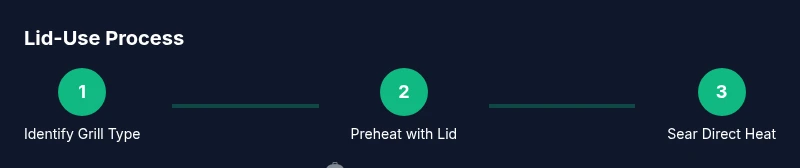
Identify grill type
Determine whether you are using charcoal or gas. Confirm the target heat method (direct or indirect) and the expected cooking time. This upfront assessment guides lid position and heat management for the whole cook.
Tip: Knowing the fuel and setup at the start prevents unnecessary lid adjustments later. - 2
Preheat with lid closed
Preheat the grill to the desired temperature with the lid closed. For charcoal, allow the coals to reach a steady glow and vent set; for gas, bring burners to the target temp. A closed lid stabilizes heat.
Tip: Closed preheating reduces hot spots and creates a uniform cooking environment. - 3
Create heat zones
Set up a direct high-heat zone for searing and an indirect zone for finishing. On gas grills, adjust burners to create a hot front and a cooler rear; on charcoal, bank coals to one side for indirect heat.
Tip: Label zones with the spatula handle or a marker so you can switch food between zones without confusion. - 4
Sear on direct heat
Place food over the direct-heat zone to sear. Use a short lid-closed phase if possible to trap heat, then open to monitor crust development. Flip once when a crust forms and avoid moving meat too soon.
Tip: Close the lid briefly to intensify sear, but check color every 30-60 seconds to prevent burning. - 5
Finish on indirect heat
Move food to the indirect zone and close the lid to finish cooking through without scorching the exterior. Use a thermometer to verify internal doneness before removing from heat.
Tip: A lid-closed finish yields even doneness with retained moisture. - 6
Rest and monitor
Let meat rest off direct heat for 5-10 minutes to redistribute juices. If needed, a brief final heat check with the lid closed can help reach final internal temp without overcooking.
Tip: Rest time makes for juicier, tastier results and reduces carryover cooking surprises.
FAQ
Do grills need to be open all the time?
No. Keeping the lid closed during most of the cook helps reach target heat and retain moisture. Open the lid only for quick checks, flare-ups, or final color adjustments.
No. Keep the lid closed during most of the cook to maintain heat and moisture. Open it briefly for checks or flare-ups.
Is lid closed always better for charcoal?
Charcoal lid use greatly influences airflow and heat. A closed lid creates consistent heat and stronger smoke, while occasional lid lifting allows for visual checks and crust formation.
Charcoal cooks best with a mostly closed lid to maintain heat and smoke, with occasional openings for checks.
What about cooking poultry or thick cuts?
Poultry and thick cuts benefit from a closed lid during the initial cooking phase to ensure even doneness. Finish with the lid open briefly to check color or sear if needed.
Poultry and thick cuts do best with a closed lid early on, then a quick open check if you want more color.
How do I handle flare-ups safely?
Keep a safe distance, close the lid partially to starve the flames of oxygen, and move food away from the fire. If flames persist, temporarily remove the food and re-establish indirect heat.
Move food away, close the lid a bit to smother flames, and only reopen when safe to do so.
Can lids be used to enhance smoke flavor?
Yes. Closing the lid traps smoke and heat, intensifying flavor. For lighter smoke, you can keep the lid slightly ajar for a portion of the cook.
Closing the lid helps trap smoke for deeper flavor; leave it slightly ajar if you want less smoke.
How does lid position affect temperature control?
Lid position is a primary method to regulate temperature. Closed lids raise and stabilize temps; open lids lower temps and increase air flow.
Lid position is a main tool for temperature control: closed = hotter and steadier, open = cooler and more variable.
Watch Video
Quick Summary
- Master heat zones to control lid needs
- Close lid to trap heat, open for checks or flare-ups
- Direct vs indirect heat dictates lid strategy
- Charcoal relies more on lid for airflow control
- Safety and resting are essential for flavor and doneness