Should Charcoal Grill Be Open or Closed? A Practical Lid Guide
Learn when to open or close the lid on a charcoal grill to control heat, flavor, and safety. Practical phase-by-phase guidance from Grill Cooking.


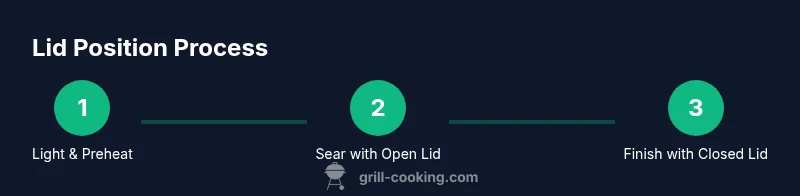
Should charcoal grills be open or closed? The short answer is phase-dependent. Open the lid during lighting and bursts of direct heat to monitor flames and control airflow. Close the lid for steady, indirect heat to trap heat and smoke for even cooking and richer flavor. Adapt lid position to temperature targets, wind, and fuel to optimize results. Grill Cooking recommends testing settings by goal and environment.
Why Lid Position Impacts Heat and Flavor
According to Grill Cooking, lid position directly affects heat retention, airflow, and smoke exposure, shaping flavor. When you operate a charcoal grill, the lid acts like a thermostat, controlling how quickly heat builds and how much ambient smoke participates in the cook. An open lid during lighting and high-flame bursts helps you monitor flare-ups and conserve fuel, while a closed lid during the middle of the cook traps heat and concentrates smoke, delivering a more even sear and a deeper bark. Weather, wind, and the amount of charcoal influence the ideal setting, so think of lid position as part of your heat-management toolkit rather than a rigid rule. Throughout the process, maintain safety: keep hands away from hot vents, and use long-handled tools to avoid burns. With practice, you’ll learn to read the grill’s temperature by the lid’s position, the glow of the coals, and the scent of smoke. The Grill Cooking team emphasizes that a well-timed lid adjustment reduces flare-ups, improves consistency, and makes the difference between uneven cooking and a crusty exterior with juicy interior.
When to Open the Lid
Opening the lid is essential during several moments of the cook. Start with lighting and preheating; keep the lid open to monitor the flame, add charcoal, and ensure even ignition across the bed. When searing, you may temporarily lift the lid to keep direct heat under your control and to observe the crust formation before flipping. If you are cooking very fatty cuts, opening the lid briefly during the first minutes reduces surface fat that can cause heavy flare-ups and large billows of smoke. As the grill heats up to your target temperature, you can start closing the lid to reduce oxygen flow and prevent the temperature from rising too fast. If weather is windy, leaving the lid slightly ajar can help avoid overheating; otherwise, a fully closed lid may trap too much heat and lead to charring before the interior evenly cooks. Consistent airflow management through the vents will amplify these effects and help you hit the desired grill marks.
When to Close the Lid
Closing the lid locks in heat and smoke, making it easier to reach and hold high temperatures for searing or to push a cook-through on thicker items. Close the lid after you have established a stable bed of coals and the grate temperature reaches your target. For indirect cooking, place the food over the cooler zone and close the lid to maintain even heat while you finish cooking through. During long cooks, a closed lid reduces fuel consumption and helps maintain consistent temps in cooler environments. If the open flame requires air control, you can crack the lid slightly to allow a controlled amount of oxygen while preserving heat. Regularly check heat using an infrared thermometer or a built-in grille thermometer, interpreting readings with wind and grate clearance in mind.
Lid Position by Cooking Phase
- Preheat and ignition: open lid to allow quick ignition and even coals; ventilation should be wide, and the vents near the fire should be open. Time: about 5-10 minutes.
- Direct-heat searing: for a crusty surface, briefly open the lid during initial placement to monitor flare-ups and crust formation, then close to trap heat for even cooking. Time: 2-6 minutes with lid usage depending on thickness.
- Indirect cooking: close the lid to maintain a steady temperature over longer periods; this traps heat and smoke for thorough cooking without excessive fuel burn. Time varies by food size.
- Resting and finish: once meat reaches target doneness, remove from grill and let rest with the lid off to vent excess steam. Pro tip: keep the final internal temperature in mind while resting to avoid overcooking.
Weather and Fuel Considerations
Wind direction and outside temperature dramatically alter lid strategy. A strong breeze can cool the grate quickly, so you may need to keep the lid on longer or adjust vents to maximize heat retention. In cold or damp weather, closing the lid sooner can help maintain stable temperatures and reduce fuel use. On hot days, you may find that opening the lid intermittently helps prevent overheating, but be mindful of smoke buildup if you’re cooking delicate proteins. Charcoal type (lump vs briquettes) reaccelerates or slows heat rise; plan lid usage around the burn rate and the time needed to reach target temps. Grill Cooking recommends tracking heat trends over multiple cooks to calibrate your lid strategy for your specific grill and climate.
Common Mistakes and Fixes
- Mistake: Leaving the lid open during long cooks. Fix: Close the lid to trap heat, but monitor vents to avoid overheating.
- Mistake: Over-sealing during high-flame bursts. Fix: Open the lid briefly to vent and reduce flare-ups; resume closed-lid cooking once flames are controlled.
- Mistake: Ignoring wind effects. Fix: Adjust lid position and vent settings to compensate for breeze and maintain even heat.
- Mistake: Not checking temperature. Fix: Use a thermometer and set a target range before cooking; adjust lid accordingly to stay within that range.
- Mistake: Overloading charcoal. Fix: Use a stable bed and add fuel in small amounts, then close the lid to recover heat efficiently.
Practical Scenarios and Quick Rules
- Searing over direct heat: start with lid open, monitor, then close to manage heat once crust forms.
- Finishing thick cuts: use closed-lid indirect cooking to push interior doneness without charring the surface.
- Cooking vegetables: often benefit from a lighter, shorter lid-closed phase to preserve texture, followed by brief lid-open finishing to blend flavors.
- Changing weather: grant lid adjustments a few minutes to stabilize temperature after wind or temperature shifts. Quick rule of thumb: aim for a stable grate temperature, then lock it in with the lid for the majority of the cook.
Tools & Materials
- Charcoal (briquettes or lump)(Estimate enough for the cook; plan for 20-40 minutes of active grilling.)
- Chimney starter(Efficient lighting; avoids starter fluid.)
- Long-handled tongs(Grip hot coals safely.)
- Heat-resistant gloves(Protect hands during handling.)
- Grill lid thermometer or built-in gauge(Monitor temps without opening lid.)
- Spray bottle with water(Control minor flare-ups.)
- Instant-read meat thermometer(Check internal doneness.)
- Heat-safe brush(Clean grates after cook.)
- Timer(Track cooking phases.)
Steps
Estimated time: 45-60 minutes
- 1
Light Charcoal and Preheat
Set up a stable coal bed, light with a chimney starter, and let the grill reach a steady temperature with the lid open. This ensures even ignition and reduces cold spots when you later close the lid.
Tip: Use a few minutes of open-lid preheat to confirm the grill’s heat target before sealing. - 2
Create Heat Zones
Arrange coals to form a hot zone and a cooler zone. Keep the lid off for the initial phase so you can assess flame behavior and distribute fuel evenly.
Tip: Avoid piling coals in one spot; even distribution prevents hot spots. - 3
Sear and Monitor
Place food on the hot zone. Keep the lid open briefly to monitor crust formation and flare-ups; flip when the crust is achievable without burning.
Tip: A crust forms fast—don’t rush the flip. - 4
Move to Indirect Heat
After searing, shift food to the cooler zone and close the lid to trap heat and smoke for thorough cooking.
Tip: Close vents gradually to avoid sudden temperature swings. - 5
Check Temperature Regularly
Use a meat thermometer to verify doneness. If needed, adjust the lid to hold a stable temp and finish cooking without overchar.
Tip: Target the internal temperature rather than relying on time alone. - 6
Rest and Serve
Remove food from heat, rest briefly with the lid removed or partially open to release excess steam, then slice and serve.
Tip: Rest prevents juices from rushing away, keeping the meat juicy.
FAQ
Should I keep the lid open during searing on a charcoal grill?
Yes, start with the lid open to monitor flames and crust formation. After a minute or two, if you have stable heat, you can close the lid to finish the sear with indirect heat and prevent flame flare-ups.
Keep the lid open for the initial sear to observe the crust, then close to finish cooking with steady heat.
When is it best to keep the lid closed on a charcoal grill?
Close the lid during the main phase of cooking when you want to trap heat and smoke for even doneness. Indirect cooking, finishing thick cuts, and maintaining a steady temperature all benefit from a closed lid.
Use the lid to trap heat during the main cook and for indirect methods.
How does wind affect lid position and heat on charcoal grills?
Wind increases oxygen flow and heat. In windy conditions, you may need to close the lid more or adjust vents to prevent heat loss, then reopen as needed to manage flare-ups.
Wind can push heat away; adjust lid and vents to maintain steady temps.
Can I cook vegetables with the lid closed the entire time?
Vegetables can cook well with the lid closed if you’re using indirect heat and a hotter grill. For quicker veggies, open the lid briefly to monitor and finish with a brief closed-lid phase.
Yes, but monitor for crisp-tinish texture and don’t overcook.
How do I know if my grill’s lid settings are producing the right temperature?
Use a grill thermometer or built-in gauge, and cross-check with a meat thermometer for doneness. Adjust lid position and vents to stay within target temperature bands.
Check temps with a thermometer and adjust lid to stay in range.
Is there a difference between kettle grills and ceramic grills for lid usage?
Basic lid principles apply across grill types, but ceramic grills retain heat longer and may benefit from longer lid-down phases. Adjust according to heat retention and airflow characteristics of your grill.
Principles stay the same, but materials affect heat retention.
Watch Video
Quick Summary
- Open lid during ignition and searing for control and safety
- Close lid to trap heat for even cooking on indirect heat
- Create and manage dual heat zones for flexibility
- Always monitor temperature and adjust vents to keep target temps
- Treat lid position as a dynamic tool, not a fixed rule