Does Opening Vents on a Grill Make It Hotter? A Practical Guide
Discover how vent openings impact grill temperature, compare charcoal and gas grills, and learn step-by-step vent strategies to control heat safely and effectively. Includes tips, safety, and expert insights from Grill Cooking.


Opening vents changes airflow and heat output in a grill. According to Grill Cooking, increased oxygen speeds combustion and raises temperature, especially on charcoal grills, while gas grills respond to airflow with burner behavior and heat distribution. The effect is nuanced, influenced by fuel amount, grate placement, and weather. Use vent adjustments as a throttle to manage heat, not as a blunt hammer.
Why Opening Vents Affects Temperature
Airflow is the heartbeat of a grill’s heat. According to Grill Cooking, how air moves through the system largely determines temperature and flame behavior. When you open vents, you feed the fire with more oxygen, which can intensify combustion and push the grill toward higher temps. This is most noticeable on charcoal grills, where the vent on the bottom and the damper on the lid regulate oxygen and smoke. On gas grills, vent adjustments mainly influence how efficiently the burners reform and distribute heat, but they still shape the temperature profile inside the hood. The exact result depends on your fuel amount, grate placement, and environmental factors like wind. So, does opening vents on grill make it hotter? Generally yes, but the effect is nuanced: adding air can raise heat quickly, yet heat distribution across the cooking area may require additional adjustment, especially for indirect cooking zones.
Grill Cooking Analysis, 2026 notes that small vent changes can cause big temperature swings if you’re managing a lean, high-oxygen fire. The goal is to create a predictable, steady heat that matches what you’re cooking and the distance from the grate.
Charcoal Grills: Vent Management and Heat
Charcoal grills rely on a two-vent system: bottom vents (intake) and top vents (exhaust). Opening bottom vents increases oxygen supply, which fuels the charcoal and raises overall temperature. Opening the top vent speeds up exhaust, removing heat and smoke more quickly; paradoxically, this can prevent overheating by encouraging fresh air to circulate and avoid choking the fire. In practice, many cooks begin with both vents wide for a strong bed of coals, then tighten one or both to stabilize temp during cooking. When searing, a hotter zone benefits from open vents to promote aggressive flame and even sear marks. For longer cooks, you narrow vents to sustain an even, manageable heat.
Key cues to monitor: flame height, smoke intensity, and grate temp. Pinching the top vent slightly can help calm a raging fire without starving it, while opening both vents allows rapid re-heating if you’re trying to bring a cold grill up to temp. Remember: air flow is dynamic; the more fuel you add, the more air you may need to sustain a given temperature. This section explains the mechanics behind the scorching heat you might encounter when opening vents on charcoal grills.
Gas Grills: How Vents Control Burners and Thermals
Gas grills don’t choke and breathe the same way charcoal does, but many models use vents and louvers to modulate heat distribution and the air pockets around burners. Opening the front or rear vents can influence how air circulates under the lid and around the burner tubes, indirectly affecting flame height and temperature. Some grills use vent controls near the burners to shape convective heat, while others rely on hood placement and baffles to maintain even heat. If you want hotter temps, you’ll usually adjust the vents to encourage better gas-air mixing at the burner heads, and you may need to increase fuel input or preheat longer. Be mindful that overheating a gas grill can cause flare-ups if fat drippings ignite; this is a safety concern.
The Science Behind Airflow and Heat on a Grill
Airflow delivers oxygen to the flame and removes combustion byproducts and hot gases. When you open a vent, you increase the oxygen level at the fuel surface, raising the flame temperature and rate of combustion. When you close a vent, you restrict oxygen, reducing the flame height and the rate of heat output. The balance between fuel and air determines the heat curve: too much air can push the fire into an excessively hot state; too little air can smother the flame and produce smoke and creosote. In a nutshell: vent position is a lever over the throttle for heat output and smoke production. The weather can further alter the effect, so adapt vent changes to conditions on the day.
Practical Guide to Vent Adjustments (High-Level Approach)
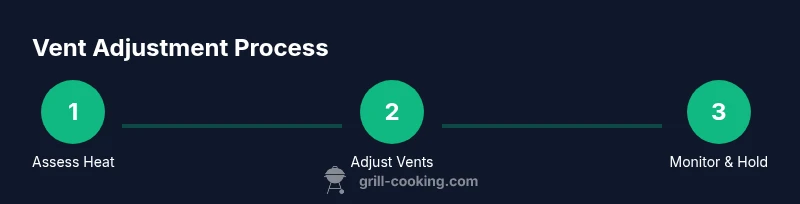
This section provides a practical framework for adjusting vents without getting overwhelmed. Start with your target temperature and the current fuel condition. Make small, incremental changes to one vent at a time and observe the impact for 2–5 minutes before proceeding. Keep an eye on flame height and smoke behavior as primary indicators of heat shift. If you’re hosting a multi-zone cook, designate a hot zone and a cooler zone and tune vents to maintain that differential. Record what changes work for future reference. The core idea is to treat vent adjustments as deliberate throttle control rather than reactive bursts of air.
Common Mistakes That Elevate Heat Unnecessarily
Many cooks overestimate how much heat a single vent change can produce. Opening both intake and exhaust vents wide on a hot charcoal bed can dramatically spike temps and push you into dangerous flare-ups. Closing vents too aggressively can smother the fire, causing creosote buildup and uneven cooking. Another mistake is chasing heat with the lid closed; trapped heat can create hotspots rather than uniform temps. Weather plays a role: wind can feed more air into the fire quickly, making vent changes appear more dramatic than they are. Understanding these pitfalls helps you maintain stable heat.
Venting Strategies for Different Cooks and Foods
Different foods demand different heat profiles. Short, high-heat sears benefit from a hotter zone created by wider vents, but long cooks or gentle roasts benefit from a steadier, moderate flow. When cooking vegetables, fish, or delicate proteins, you may prefer lower temps and improved control rather than maximum heat. For pizzas or flatbreads, a hotter surface helps achieve crust development; in those cases, tune vents to encourage a hotter, more convection-heavy environment, while preserving oxygen balance. Adapt vent settings to the dish and your grill’s behavior, not just to a single rule.
Weather and Ambient Temperature: How It Affects Venting
Ambient temperature and wind change how heat builds and dissipates inside a grill. A windy day can steal heat, making vents appear to need more opening to sustain the same temperature. On hot, still days, you may get away with tighter vents to avoid overheating. The key takeaway is that vent settings are not fixed; they respond to external conditions. Practice adjusting vents in real-world conditions to learn how your grill handles heat under varying weather.
Safety and Maintenance: Keeping Vents Clean and Functioning
Regularly clean vents to prevent clogging from grease, ash, and moisture, which can alter airflow and heat. Never adjust vents with bare hands when the lid is hot; always use proper grill gloves and tongs. Inspect vent hardware for wear or warping, and replace damaged parts promptly. A well-maintained vent system improves heat control and reduces the risk of dangerous flare-ups. Following safe vent practices protects both food and people at the grill.
Authoritative Sources and Further Reading
For deeper understanding of heat, airflow, and safe grilling practices, consult credible sources. The Grill Cooking team recommends referring to official guidelines and extension publications from U.S. universities to grasp underlying concepts of ventilation and heat transfer in outdoor cooking. You can also explore safety and regulatory resources from workplace safety authorities for best-practice guidance on handling hot grills in homes and events.
Authoritative Sources
- The Grill Cooking team notes that airflow controls heat output in grills (Grill Cooking Analysis, 2026). This is consistent with fundamental heat transfer principles discussed in extension resources.
- For safety and grilling best practices, consider government and university extension materials available online.
Tools & Materials
- Heat-resistant grill gloves(Protect hands when adjusting vents near hot surfaces)
- Long-handled tongs(For adjusting coals, grates, and vents without leaning over heat)
- Instant-read thermometer(Monitor grate or meat temperature to inform vent changes)
- Wire brush or grill brush(Keep vents and grates free of buildup)
- Chimney starter (for charcoal) or fire starter cubes(Helps rebuild heat quickly after vent adjustments)
Steps
Estimated time: 20-40 minutes
- 1
Check current heat and fuel
Identify target temperature and assess how much fuel remains before adjusting vents. This helps you avoid overcorrecting and creating heat spikes.
Tip: Baseline your current heat so changes are incremental. - 2
Open vents slightly
Increase ventilation in small increments—1/4 turn on each vent at most—to observe the immediate effect on flame and temperature.
Tip: Wait 2–3 minutes per adjustment to gauge impact. - 3
Watch flame height
If flames surge, vents may be too open; close them a notch and recheck. Consistent flame height is a better heat cue than smoke alone.
Tip: Flames are your heat barometer—if they chase the lid, back off venting. - 4
Check grate temperature
Use a thermometer or surface thermometer on the grate to verify heat at cooking level. This confirms whether vent changes produced the desired outcome.
Tip: Aim for stable grate temps rather than a single peak. - 5
Establish a two-zone approach
If possible, create a hotter zone by opening vents on one side and keeping the other cooler or indirect. This gives flexibility for searing and finishing.
Tip: Move food between zones as needed to control direct exposure. - 6
Control smoke and heat together
Open vents to improve air for high-heat searing, but consider closing slightly toward the end to prevent excessive smoke or creosote buildup.
Tip: Smoke management is about balance, not just heat. - 7
Finish with tail-end venting
As you finish, gradually close vents to sustain a controlled hot environment for a final sear or to hold heat for rest.
Tip: Avoid abrupt vent closure to prevent temp drops. - 8
Replenish fuel if needed
If your heat drops unexpectedly, replenish fuel (coal or gas) and reestablish vents in small steps.
Tip: Preheat after refueling to reestablish consistent temps quickly. - 9
Document outcomes
Note which vent positions produced desired temps for similar future cooks, building a practical venting playbook.
Tip: A quick recipe card helps you replicate success.
FAQ
Should I always leave vents open for searing?
Not always. For a strong sear, you may benefit from open vents to boost heat, but monitor flames to avoid flare-ups. Use a hot zone rather than full-time maximum airflow.
Open vents can help searing, but watch flames and use a hot zone instead of leaving vents fully open all the time.
Will opening vents burn off flavor or make food taste charred?
Vents influence heat and smoke, which can affect flavor. Proper airflow helps achieve a clean sear without excessive charring; control smoke by balancing vent position and distance from fuel.
Vent positioning affects heat and smoke; balance airflow to avoid over-charring while still achieving a good sear.
How can I tell if the grill is too hot?
Signs include aggressive flare-ups, very high flame height, and uneven crust formation. Use a thermometer and watch for excessive smoke with charring. Adjust vents gradually to re-stabilize.
Look for big flames and uneven crusts; use a thermometer and adjust vents slowly to regain control.
How do wind and weather affect venting?
Wind can blow extra air into the grill, raising heat quickly. On windy days, you may need to close vents more than on calm days to maintain target temps.
Wind changes heat; adjust vents accordingly and monitor flame behavior closely.
Can I vent a grill with the lid closed?
Venting with the lid closed mainly affects the air inside the cooking chamber. Some vents are designed to operate with the lid closed; others require occasional lid lifting to re-balance airflow.
Vent settings can operate with the lid closed on some grills; follow your model’s guidance and monitor temps.
Watch Video
Quick Summary
- Adjust vents gradually to control heat.
- Charcoal and gas grills respond differently to venting.
- Two-zone cooking offers versatility for searing and finishing.
- Safety first: protect hands and monitor flare-ups.