How to Cook Without Power: A Comprehensive Grilling Guide
Learn practical, electricity-free cooking methods using grills, camp stoves, or solar cookers. This guide covers safety, heat control, fuel options, and step-by-step techniques for meals from breakfast to dinner when the power is out.


You’ll learn practical, electricity-free cooking methods you can pull off with a grill, camp stove, or solar cooker. This guide covers safety, heat management, fuel options, and step-by-step techniques for breakfasts, lunches, and dinners without power. Gather a few essential tools, plan simple menus, and adapt to outdoor conditions with confidence.
Understanding Power-Out Cooking
Power outages force us to rethink how we cook, since electric ovens, stoves, and microwaves are unavailable. This challenge doubles as an opportunity to expand your outdoor cooking repertoire and become more self-reliant. According to Grill Cooking, the most reliable approach is to assemble a compact, ready-to-use outdoor setup and practice with it before you actually need it. Start by inventorying available heat sources—charcoal grills, propane grills, camp stoves, and even solar cookers—and map them to the meals you normally prepare. Think in heat zones: a hot zone for searing, a medium zone for simmering, and a warm zone to hold finished dishes. If you live in an apartment, a small portable stove or rooftop grill can become your primary tool. With simple menus and steady heat, you can produce satisfying meals even when the power grid fails.
Safety First: Fire, Food, and Carbon Monoxide
Outdoor cooking dramatically reduces indoor CO risk, but it introduces new safety responsibilities. Always cook in a well-ventilated outdoor area away from structures, trash, and low hanging branches. Use stable surfaces, keep a water source or extinguisher close at hand, and never leave flames unattended. Hygiene remains essential: keep raw foods separate, wash hands when possible, and use an instant-read thermometer to confirm doneness. Grill Cooking Analysis, 2026 emphasizes planning your heat zones and having clearly defined tasks so you don’t improvise under stress. Outdoor cooking also means wind can shift heat unexpectedly—position vents and shields accordingly and monitor flame stability closely.
Essential Tools and Fuel Sources
A small toolkit for power-out cooking includes a grill (charcoal or gas), a camp stove for backup, a cast-iron skillet for versatile cooking, and basic bakeware like a Dutch oven. Aluminum foil is indispensable for packets and lining, while a sturdy pair of tongs, heat-resistant gloves, and a thermometer ensure safe handling and precise doneness. Stock a supply of fuel (charcoal, lighter fluid, propane) and keep them organized in a dedicated bag. If you’re using a solar cooker, place it in direct sun and follow manufacturer guidelines. These essentials let you flip between different cooking methods without relying on electricity.
Building a Safe Cooking Space Outdoors
Choose a location that’s flat, sheltered from wind, and at a safe distance from your home and combustible materials. Create a defined cooking zone with a makeshift windbreak if necessary, so heat stays concentrated where you want it. Use a stable table for utensils and a dedicated area for cooling hot dishes. Keep pets and children away from hot surfaces. If you must transport gear, pack pre-measured ingredients and pre-scored prep work to minimize open flames and handling time. A well-planned space makes power-out cooking calmer and safer.
Step-by-Step Methods Without Power
There are several reliable paths to cooking without power. Grilling with charcoal or a gas grill gives you direct heat for searing and quick cooking. A cast-iron skillet on a hot grill surface expands your repertoire to sautéing and pan-roasting. A Dutch oven, placed in hot coals or on a grate, enables slow braises and baking. Foil packets trap moisture and flavors for hands-off meals, while a camp stove delivers a compact, controllable flame for sauces and simmered dishes. Start with a basic meal plan and practice each method separately to build confidence. The key is maintaining steady heat and monitoring food readiness with a thermometer or careful touch test. Pro tip: keep a small, shaded area for resting cooked foods to preserve texture and safety.
Menu Ideas That Travel Well
Plan a day of meals that travel well and reheat easily. Breakfast ideas include eggs and peppers scrambled in a cast-iron skillet or foil-wrapped breakfast burritos warmed on a hot grill. Lunch can be grilled sandwiches or veggie skewers with a simple marinade. Dinner options range from charcoal-grilled chicken thighs and potatoes to foil-baked fish with lemon and herbs. For sides, keep corn on the cob, peppers, and zucchini on the grill or in packets. Snacks like roasted nuts or jerky round out power-out menus. Adapt quantities to your family size and always factor in safe handling times for perishable foods.
Food Safety Without Electricity
Without a fridge, timing and temperature control become your primary defenses against foodborne illness. Keep cold foods in a cool, shaded area if possible and cook perishable items promptly. Refrain from leaving hot foods unrefrigerated; use the “hot hold” zone on the grill for brief periods if needed. Always cook meats to safe internal temperatures—check with a thermometer rather than guessing. When in doubt, discard questionable leftovers rather than risking illness. For long outages, rotate stock and rely on shelf-stable ingredients when possible to minimize risk.
Quick Hacks and Troubleshooting
If heat feels weak, rebuild your heat source: reopen vents on a charcoal grill to increase airflow, adjust a gas grill’s regulator, or reposition windbreaks to optimize flame. Foil packets can salvage moisture when the grill run is short, and pre-seasoned cast-iron pans maintain heat well even after you move food. Practice makes perfect: run through a few test meals on weekends so you’re ready when the power goes out. Always have a backup plan for weather changes and ensure you have an alternate cooking space if your primary area becomes unsafe.
Planning for Longer Outages and Resources
For longer outages, anticipate fuel logistics and storage. Keep a well-stocked emergency kit that includes fuel, matches, a dependable thermometer, and safe cooking surfaces. Build a rotating stock of non-perishable ingredients that you enjoy and that cook well on grill heat. National food-safety agencies advise following standard safety practices: keep foods out of the danger zone, clean tools and surfaces, and supervise grills at all times. Grill Cooking Analysis, 2026 suggests rehearsing a multi-day menu and prioritizing meals that reuse ingredients to minimize waste. Outside of food, have a fire-safe plan and know when to evacuate if conditions become dangerous.
Tools & Materials
- Charcoal grill or propane grill(Keep a fresh supply of charcoal or full propane tanks; check ignition system and vents.)
- Camp stove(Use outdoors in a well-ventilated area and place on a stable, heat-resistant surface.)
- Cast-iron skillet(Excellent heat retention; seasoned surface improves with use.)
- Dutch oven(Great for braises and baking over coals; needs a coal bed or grate access.)
- Aluminum foil(For packets and quick cleanups; heavy-duty foil preferred.)
- Meat thermometer(Essential for safe doneness without relying on time alone.)
- Long-handled tongs(Helps keep hands away from heat and reduces flare-ups.)
- Heat-resistant gloves(Use when handling hot cookware or coals.)
- Water and a fire extinguisher(Keep accessible for emergencies; know how to use a fire extinguisher.)
Steps
Estimated time: 60-120 minutes
- 1
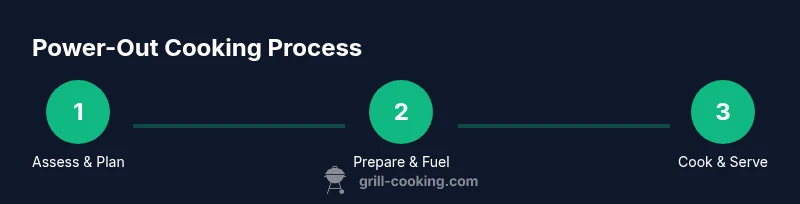
Assess power-out situation and plan
Take stock of available heat sources, fuel, and weather. Review your meal plan and identify which methods fit today’s conditions. Establish zones for hot searing, medium cooking, and safe holding. This step minimizes improvisation under pressure.
Tip: Pre-pack ingredients into clearly labeled bags to speed up cooking once you decide on a method. - 2
Prepare your cooking area and fuel
Clear a safe workspace, lay down a heat-proof mat, and arrange tools within reach. Check fuel levels and open vents if you’re using charcoal or a gas grill. Keep a dedicated bin for used foil and tools to stay organized.
Tip: Pre-warm your pan if you plan to sear; this improves browning and reduces sticking. - 3
Light and stabilize your heat source
If using charcoal, light it and allow the coals to form an even bed with visible ash. For gas grills, preheat to the desired zone. Place a cast-iron pan on the hottest area for quick searing, then move to a cooler zone for finishing.
Tip: Avoid overloading the flame; regulate heat with vents or the regulator to prevent flare-ups. - 4
Cook using chosen method
Proceed with your method—packet meals, pan-seared proteins, or baked dishes in a Dutch oven. Use lids to trap heat as needed and rotate ingredients for even cooking. Use a thermometer to verify safety before serving.
Tip: Smaller bites cook faster and more evenly; cut larger cuts into manageable portions before cooking. - 5
Monitor and rest
Watch internal temperatures and adjust heat to avoid overcooking. Let meats rest after removal from heat to redistribute juices. Keep hot foods in the heat zone if you need to hold them briefly until serving.
Tip: Rest times make a big difference in texture and juiciness. - 6
Store leftovers safely
Cool foods quickly and transfer to insulated containers or shaded spaces if refrigeration isn’t available. Label leftovers and plan a rotation so nothing spoils. If in doubt about safety, err on the side of caution and discard.
Tip: Have a dedicated cooler or insulated tote for cold items if a fridge outage lasts more than a few hours.
FAQ
Can I cook indoors during a power outage?
No. Indoor cooking without power should be avoided unless you have a dedicated, vented outdoor appliance. Outdoor cooking reduces carbon monoxide risk and keeps you in control of heat and airflow.
No, indoor cooking without power is not safe. Use outdoor grills or stoves to stay safe and avoid carbon monoxide buildup.
What if I don’t have a grill?
Use a camp stove or a solar cooker if available. A camp stove is compact, portable, and provides reliable heat for many meals. Solar cookers require direct sunlight but are quiet and fuel-free.
If you lack a grill, use a camp stove or solar cooker for reliable heat; both work well for many recipes.
How should I handle meat safely without refrigeration?
Cook perishable items promptly and avoid leaving cooked meat unrefrigerated for long. Use hot-holding zones if you need to wait, and rely on a thermometer to ensure safe temperatures.
Cook perishables promptly and verify they reach safe temperatures; don’t rely on guesswork.
Is it safe to use a propane tank indoors if there’s a power outage?
No. Propane and other fuels should only be used outdoors with ample ventilation. Never operate grills in enclosed spaces, garages, or near flammable materials.
Propane grills must stay outdoors with good airflow to avoid fire hazards.
How long can I keep foods safe without electricity?
Rely on standard food-safety guidelines: keep cold foods cold and hot foods hot, and use a thermometer to verify doneness. When in doubt, discard questionable leftovers.
Follow basic safety rules: keep hot foods hot, cold foods cold, and check with a thermometer.
What’s the easiest power-out meal to start with?
Foil packet meals wrapped with vegetables and a protein are quick, safe, and versatile. They require minimal supervision and work well on most grills.
Foil packet meals are a great starting point for power outages.
Watch Video
Quick Summary
- Plan ahead with safe outdoor heat sources
- Use zones to manage heat efficiently
- Prioritize safety: ventilation, fire basics, and temperatures
- Practice recipes to reduce stress during outages
- Keep a simple, stock-ready menu for emergencies