How to Check Grill Temperature: A Home Cooks Guide
Master grill temperature with precise thermometer readings, two-zone heat, and safe practices. Learn to check temperature efficiently for perfect steaks, burgers, and vegetables.


In this guide, you’ll learn how to check grill temperature accurately, whether you’re using a digital or dial thermometer. You’ll set target temperatures for direct-heat and indirect-heat zones, choose the right thermometer, and verify heat at multiple grill zones to ensure consistently cooked results from first bite to last every time.
Why Checking Grill Temperature Matters
Achieving juicy, safe results starts with knowing exactly how hot your grill is. When you check temperature regularly, you prevent undercooking or charring, and you can manage two-zone cooking more reliably. According to Grill Cooking, accurate temperature control is the cornerstone of consistent grilling outcomes. Whether you grill with a digital probe or rely on a tried-and-true dial gauge, staying aware of heat levels translates to better searing, even cooking, and fewer guesswork moments. This section explains what temperature means for different cooking methods—direct-heat searing versus indirect slow cooking—and why temperature readings should become part of your daily grilling routine. You’ll also learn how ambient grill temperature interacts with food placement and carryover cooking, so you can plan rest periods and finish temps with confidence.
Tools and Thermometers: Choosing the Right Instrument
Selecting the right thermometer is more than a purchase; it’s a strategy for precision. For fast checks at the grill surface, an instant-read digital probe is ideal; for ongoing monitoring inside the meat, a long probe with high-temperature tolerance is best. A dial thermometer may be inexpensive, but it’s slower and less precise than digital options. Grill Cooking analysis, 2026, suggests adopting a dual-thermometer setup—one probe for the grill ambient temperature and one for internal meat temperature—so you can respond quickly to heat changes without guesswork. You’ll also want a reliable, heat-resistant glove and a good pair of long tongs to adjust food without losing heat. Finally, calibrate your thermometers before each grilling session to ensure readings reflect reality, especially if you’re using a new device or after heavy cleaning. In general, choose instruments with fast response times, wide temperature range, and clear display, plus a probe that can reach into the thickest cuts you plan to grill.
Dial vs Digital Thermometers: Pros, Cons, and When to Use Them
Dial thermometers are simple and affordable but can lag behind real-time heat and meat changes. Digital thermometers, especially those with remote probes, provide rapid readings and higher accuracy, making them better for dynamic cook sessions. For high-heat grilling, ensure the thermometer’s probe tip can tolerate the heat and that the wiring is rated for outdoor use. When using direct-heat zones, you want fast confirmation if a hotspot forms or if your grill’s air flow shifts. For indirect cooking, you’ll rely more on internal meat temperature than ambient readings, but ambient data still guides your zone management and fuel usage. The best practice is to have both tools available and to understand when to trust ambient heat versus internal temperature. Keep in mind that dial thermometers can be misleading at the edges of a grate, where airflow and lid position differ from the center. If you have a choice, lean digital for most tasks, but keep a spare dial thermometer as a backup.
How to Calibrate a Thermometer Before Grilling
Calibration ensures the numbers you read match reality. Start with ice water method: insert the probe into ice water and confirm a 32°F (0°C) reading; if not, adjust per device instructions. Then verify in boiling water (100°C/212°F at sea level) to check for broader accuracy. If your readings are off, recalibrate or adjust as allowed by the device. Some thermometers require a dedicated calibration routine; others use a knob to offset readings. Do this right before grilling so the baseline matches your current conditions (altitude, weather, and grill setup). Regular calibration is a small step that pays off with fewer misreads and more consistent results across multiple cooks. Keep the calibration technique simple and repeatable, and document any tendencies (e.g., consistently slightly high readings) so you can compensate during cooking.
Reading Temperature Across Direct-Heat and Indirect-Heat Zones
A two-zone strategy is essential for most grills. Place your ambient thermometer near the grate in the direct-heat zone to monitor searing temps, and position another sensor in the indirect zone to gauge ambient air when you’re finishing with slower cooks. Expect the direct zone to run hotter, but don’t rely on one reading for the entire cook; heat can fluctuate with wind, lid position, and fuel changes. Use a target chart for the foods you’re cooking and cross-check the internal temperature of the food against doneness guidelines. If readings diverge significantly, adjust vents, fuel, or distance from the grate to bring the zones into balance. Record the temperatures at the start of the cook and after major turning points to track how your grill behaves over time.
Techniques for Quick Temperature Checks Without Losing Heat
If you open the lid too long, you risk losing heat and lengthening cook times. Use an instant-read thermometer to perform a quick, few-second check by lifting the lid only slightly, inserting the probe, and watching the display. For wider or multi-piece cooks, take temperature readings at multiple moments during the cook to confirm you’re trending toward the target. Some grills allow you to insert the probe through a vent or gasket, reducing heat loss even further. Practice timing: aim to check no more than 2-3 times per half-hour for steady cooks, and always recheck the internal temperature toward the end of the cook to confirm doneness.
Practice Scenarios: Steaks, Chicken, and Veggies
Practice with common targets to learn how your grill behaves. For steaks, you’ll want to measure both ambient surface temperature and the internal temp at the thickest part; for chicken, ensure the deepest part reaches a safe internal temp. Vegetables like peppers and corn benefit from quick checks near the end of cooking to avoid scorching while maintaining grill marks. Keep notes on how long each food takes to reach target temps on your specific grill with your temperature tools. Over several sessions, you’ll develop a mental map of where hotspots live and how long each food needs to stay on the heat. The more you practice, the less guesswork you’ll rely on.
Cleaning, Safety, and Maintenance for Temperature Tools
After cooking, clean thermometers and probes with hot, soapy water; dry thoroughly to prevent corrosion. Store devices away from the grill’s heat while protecting cords and sensor tips. Inspect probes for bent tips or wear; a damaged probe can give inaccurate readings or fail at high temperatures. Regular maintenance includes recalibration as needed, battery checks, and a quick inspection before each use. Charge or replace batteries as recommended by the manufacturer. By taking care of your tools, you’ll preserve accuracy and extend their life. Finally, follow standard grilling safety practices: never touch hot components, use protective gear, and keep kids and pets away from the cooking area while you monitor temperatures.
Authoritative Temperature Guidance and Further Reading
For definitive temperature guidelines, consult official safety resources. The USDA’s Food Safety and Inspection Service provides the safe minimum temperatures for different foods and don’t rely on estimates. The CDC offers general food safety tips and risk mitigation strategies for home cooking. For independent, peer-reviewed context, see published guidance from national academies and other major publications. These sources help you verify your practice against established standards and adjust your grill technique accordingly.
Tools & Materials
- Instant-read thermometer(Fast readings; probes for both ambient and internal temps)
- Long probe thermometer(Infrared or embedded probe; heat tolerant)
- Heat-resistant gloves(Protect hands during flips and lifting lids)
- Long tongs(Maintain distance from heat when turning food)
- Ice bath and boiling water for calibration(For ice-water and boiling-point calibration checks)
- Cleaning supplies (soap, brush)(Keep probes clean to maintain accuracy)
Steps
Estimated time: 25-35 minutes
- 1
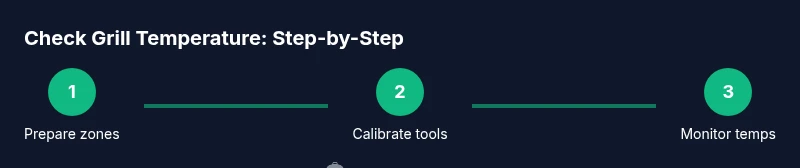
Gather gear and set up two zones
Collect all thermometers, gloves, tongs, and a water bath for calibration. Preheat the grill to create distinct direct and indirect zones, ensuring there’s a safe separation between hot and cooler areas. This setup will let you monitor ambient heat while cooking without constant lid lifting.
Tip: Label each zone with a quick marker so you remember which area is for searing and which is for finishing. - 2
Calibrate thermometer
Calibrate using the ice-water method (32°F/0°C) and, if possible, confirm with boiling water (100°C/212°F at sea level). Document any offset and apply it during cooking if your device allows. A properly calibrated thermometer reduces wild temperature swings during cook.
Tip: Do calibration right before you start cooking to reflect current conditions. - 3
Preheat and settle heat
Preheat the grill to your target direct-heat temperature and allow the ambient air to stabilize for several minutes. If you’re using a charcoal setup, spread coals to establish the two zones and test the grate temperature with a quick probe check.
Tip: Give the grill a 5–10 minute buffer to reach stable temperatures before testing. - 4
Place ambient probes
Insert one probe into the direct-heat zone near the grate and place another in the indirect zone away from direct flame. Ensure probe tips don’t touch metal edges or food to avoid skewed readings.
Tip: Protect cords from flames by routing them along the lid edge. - 5
Begin sampling internal temps
With thick cuts, insert the internal probe into the center of the meat, avoiding bone and fat for the most accurate reading. Cross-check ambient temps with the target doneness temperatures for your food.
Tip: Take readings at the thickest part to prevent undercooking or overcooking. - 6
Adjust heat and continue cooking
If ambient readings drift from targets, adjust vents, fuel, or distance from the grate to rebalance zones. Continue cooking and monitor both ambient and internal temps as you approach the finish.
Tip: Make small adjustments and recheck after 2–3 minutes. - 7
Final checks and rest
Toward the end, verify the final internal temp for safety and desired doneness. Remove from heat, tent, and allow a brief rest so carryover cooking settles.
Tip: Rest times can complete the cooking process for some foods. - 8
Clean up and store tools
Clean probes with warm, soapy water, dry thoroughly, and store in a cool, dry place. Inspect for wear before the next cook and recalibrate if needed.
Tip: Regular maintenance preserves accuracy and prolongs tool life.
FAQ
What thermometer is best for grilling?
For most griller workflows, use an instant-read digital thermometer for quick ambient checks and a separate long-probe for internal temps. A dial thermometer can work as a backup, but digital options are faster and more accurate.
An instant-read digital thermometer works best for grill checks, with a second long probe for internal temps.
How often should I check the temperature while cooking?
Check at the start, mid-cook, and near the end. For multi-piece meals, sample at several key moments to confirm you’re trending toward target temperatures without losing heat.
Check in a few key moments during cooking to ensure you’re on track without cooling the grill too much.
What temperatures should I target for common foods?
Refer to official safety charts for precise targets. Poultry should reach safe internal temps, while beef doneness varies by preference. Use a thermometer for final confirmation.
Use official safety charts for target temps; check the internal temps with a thermometer near the end.
Can I check temperature without opening the lid?
Yes, you can perform quick checks with minimal lid lifting. Use an instant-read thermometer to peek for only a few seconds and resume cooking immediately.
Yes—do quick checks with the lid mostly closed, using a fast thermometer.
How do I set up two temperature zones on a grill?
Bank fuel or adjust vents to create hot direct-heat and cooler indirect zones. Place ambient probes in each zone to monitor differences and manage heat actively.
Create hot direct and cooler indirect zones, and monitor both with probes.
What safety steps should I follow when using thermometers?
Keep probes and cords away from flames, wear heat-resistant gloves, and avoid touching hot grates. Always unplug or turn off devices after use.
Keep cords away from flames, wear gloves, and handle devices safely.
Watch Video
Quick Summary
- Use a thermometer for accuracy, not guesswork.
- Calibrate before every session to ensure reliable readings.
- Adopt a two-zone setup for direct and indirect cooking.
- Check ambient and internal temps for consistent doneness.
- Follow USDA guidelines and official safety resources for doneness targets.