How Long to Leave the Grill On Before Cooking: A Practical Preheat Guide
Master preheating for perfect searing and even heat. Gas vs charcoal, safety tips, and a step-by-step prep plan from Grill Cooking.


Before you cook, preheat the grill until the grates are hot to the touch and ready to sear. For most gas grills, aim for 400–450°F (205–232°C); for charcoal grills, wait 10–15 minutes with the lid closed until the coals glow and ash over. This preheat window promotes even heat and better searing.
Why Preheating Matters
Preheating sets the stage for even heat across the cooking surface and improves searing, crust formation, and flavor development. A well-preheated grill minimizes sticking and reduces the risk of undercooking the interior while the exterior browns; it also helps you achieve predictable grill marks. According to Grill Cooking, taking time to preheat isn't optional—it's a foundational step that informs your entire cook. In addition to temperature, lid position, airflow, and grate cleanliness influence outcomes. By allowing the grill to come up to temperature, you create a stable thermal environment that cooks foods evenly and prevents scorching.
On gas grills, preheating typically means turning burners to high and closing the lid for several minutes; on charcoal, it means waiting for the coals to glow and ash over before spreading them for direct and indirect zones. If you skip preheating, you risk uneven internal temperatures, longer cook times, and less reliable searing. This section explains why preheating matters and how to apply the principle across different grill types, so you start your cooks with confidence.
Gas vs Charcoal: Preheat Fundamentals
Gas grills heat up quickly and rely on burners to reach a target temperature. Charcoal grills require time for the coals to burn hot and form a stable bed. Regardless of the fuel, preheating constructs a consistent thermal surface. If you preheat only briefly, you may see temperature fluctuations, uneven browning, and unpredictable cook times. By understanding the fundamental differences, you can tailor your approach for optimal results whenever you grill.
Gas Grills: Typical Preheat Timings
Gas grills usually need 5–15 minutes of preheating, depending on burner count, ambient temperature, and lid usage. A hot grill is indicated by a consistent flame and a thermometer reading in the target zone. For most recipes, allow the grill to come to temperature with the lid closed to trap heat and ensure even heating across the grate. If you’re cooking delicate proteins, a longer preheat can improve browning and reduce sticking.
Charcoal Grills: Lighting and Preheat
Charcoal grills require lighting the fuel and allowing it to reach a stable state with a radiant heat source. Start with a full dump of hot coals and a chimney starter if possible, then spread coals to create direct and indirect zones. Wait 10–15 minutes until the coals glow and ash over, then arrange for direct heat over the hot zone and indirect heat on the cooler area. Closing the lid speeds preheating and provides consistent temperatures.
Testing Readiness: Temperature, Grates, and Smoke
Before you place food on the grate, test the heat. For gas grills, use the built-in thermometer or an infrared thermometer to confirm 400–450°F (205–232°C). For charcoal, ensure the grates are hot, and the ash cover is gray. A light layer of smoke often indicates an active grate temperature, especially when searing meats. If the grill doesn’t reach temperature, inspect burners, vents, and conduits for blockages or leaks.
Safety Considerations During Preheating
Always keep a fire extinguisher or baking soda nearby when grilling, and never leave a hot grill unattended. If flare-ups occur, close the lid or adjust airflow to cut oxygen. Use heat-resistant gloves when handling hot grates and tools. Ensure propane hoses are undamaged and properly connected, and monitor for gas leaks before lighting.
Common Mistakes and How to Fix Them
Mistake: Opening the lid too often—Fix: Keep the lid closed during preheating to maintain heat. Mistake: Not cleaning grates—Fix: Scrub grates hot to remove residue that steals heat. Mistake: Overlooking wind and ambient temperature—Fix: Shield the grill or adjust vents to control heat. Mistake: Skipping the test—Fix: Always verify temperature with a thermometer before cooking.
Quick Reference Timings by Grill Type
- Gas grill: 5–15 minutes preheat, depending on BTUs and lid position.
- Charcoal grill: 10–15 minutes until coals glow and ash over, then set up direct/indirect zones.
- Indirect-heat cooking: Preheat longer if you plan to sear first and finish with indirect heat.
Use these benchmarks as starting points and adjust for your equipment and weather conditions.
Tools & Materials
- Gas grill with lid and burners(Make sure propane supply is secure; check regulator for leaks.)
- Charcoal starter (chimney) or lighter fluid(Use chimney starter for quick, even lighting.)
- Grill thermometer or infrared thermometer(Track grate temperature to target range.)
- Grill brush and scraper(Clean grates while hot for best heat transfer.)
- Tongs and heat-resistant gloves(Handle hot grates safely.)
- Oil spray or brush(Lightly oil grates to prevent sticking.)
- Fire-safe mat or tray(Place under grill when working near surfaces.)
- Food thermometer (for cooking readiness)(Check internal temps after sear.)
Steps
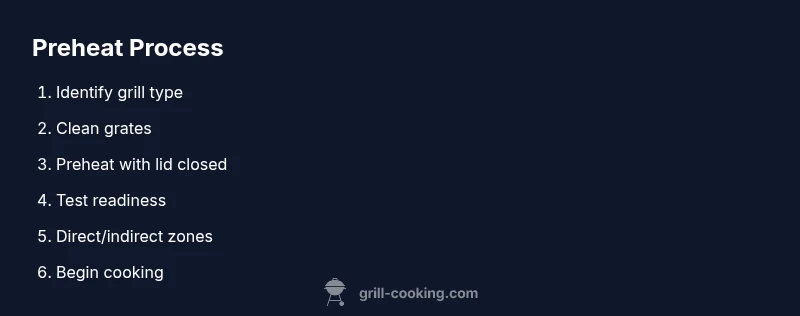
Estimated time: Estimated total time: 20-35 minutes
- 1
Identify grill type and safety ready
Confirm whether you’re using gas or charcoal and inspect hoses, valves, and handles for safety. Ensure the area around the grill is clear of flammable objects.
Tip: Always perform a quick safety check before lighting. - 2
Clean the grates
Use a hot grill brush to remove stubborn residue and recoat grates with a light oil to prevent sticking.
Tip: Cleaning while hot saves time and improves sear quality. - 3
Preheat gas grill
Open the lid, turn on burners to high, and close the lid. Wait 5–15 minutes until the temperature stabilizes in the target range.
Tip: Avoid opening the lid frequently during preheat. - 4
Preheat charcoal grill
Light the coals and wait 10–15 minutes for the bed to glow and form an ash-gray layer. Spread coals for direct and indirect zones.
Tip: Let the lid stay closed during preheat to build even heat. - 5
Create heat zones
Set up a direct heat zone for searing and an indirect zone for finishing. This ensures a perfect crust without overcooking.
Tip: Keep the direct zone hot but not overwhelming; you should hear a sizzle when you place food. - 6
Test readiness
For gas, check 400–450°F with a thermometer. For charcoal, ensure grate is hot and coals are ashed over.
Tip: If you don’t reach temp, inspect vents and burners for obstructions. - 7
Ready to cook
Oil the grates lightly, place food on direct heat for searing, then move to indirect heat if needed.
Tip: Keep a close eye on cooking times to prevent flare-ups.
FAQ
Why is preheating important for grilling?
Preheating ensures even heat, better browning, and reduces sticking. It also helps you hit target temperatures quickly for predictable results.
Preheating creates an even heat environment and helps you get better sear and timing.
How long should I preheat a gas grill?
Typically 5–15 minutes, depending on the grill’s BTUs and whether you keep the lid closed during preheat.
Gas grills usually need about 5 to 15 minutes to preheat.
How long should I preheat a charcoal grill?
About 10–15 minutes, until the coals glow brightly and ash over. Then create direct and indirect zones.
Charcoal grills take roughly 10 to 15 minutes to preheat until they glow and ash over.
Can I preheat with the lid open?
Preheating with the lid open is possible but slower and uneven. For best results, keep the lid closed during preheat.
It’s better to keep the lid closed during preheat for even heat.
Is it unsafe to leave the grill unattended during preheat?
Yes. Always supervise preheating and have a safety plan in case of flare-ups. Keep a fire extinguisher nearby.
Never leave a preheating grill unattended; have safety measures ready.
What if my grill won’t reach the target temperature?
Check vents or burners for blockages, inspect gas hoses for leaks, and ensure your fuel supply is adequate. If problems persist, consult manufacturer guidance.
If you can’t reach temperature, inspect vents and hoses and ensure you have enough fuel.
Watch Video
Quick Summary
- Preheat to achieve even heat and better searing.
- Gas and charcoal grills require different preheat times and methods.
- Test readiness with temperature and grate condition before cooking.
- Use direct and indirect heat zones for flexibility and safety.