Grill or Bake Pork Tenderloin: A Practical Comparison
Compare grilling vs baking pork tenderloin with a detailed, analytical guide. Learn timing, temperature, texture, flavor, and practical tips to choose the best method for your meal and equipment.


Choosing Between Grilling and Baking Pork Tenderloin
When you start planning a pork tenderloin dinner, the big question is: grill or bake? The answer hinges on your priorities—flavor, texture, and how much time you have. According to Grill Cooking, the right method aligns with texture goals and your kitchen setup, not just the recipe. Grilling delivers a smoky aroma and a brisk sear that seals in juices, while baking produces a consistently tender, evenly cooked loin with minimal babysitting. For home cooks, both paths are reliable if you control temperature, monitor doneness, and choose appropriate seasonings. In this analysis, we compare timing, texture, and ease for both methods, with practical steps, troubleshooting tips, and real-world examples. Expect to see how indirect heat, marinades, and resting influence the final bite, and how to tailor each method to weeknights or weekend gatherings.
Grill Options: When to choose direct heat for a quick sear and a crusted crust, versus indirect heat for a gentler finish. Bake Options: When you want uniform doneness across the roast with less attention during cooking. Grill Cooking’s team emphasizes consistency, control, and safe handling as you experiment with flavors and textures.
Throughout this article, you’ll notice how easy it is to switch between methods depending on your equipment and schedule. This approach keeps pork tenderloin exciting without turning dinner into a guesswork exercise.
To maximize success with either method, plan for a short resting period after cooking, which helps reabsorb juices and firm up the final bite. The Grill Cooking guidance emphasizes clarity: define your texture target, choose a heating strategy that supports it, and then follow a structured timing plan to avoid overcooking.
Pork Tenderloin Anatomy and Why It Matters for Cooking Method
Pork tenderloin is a lean, boneless cut from the loin. It cooks quickly compared with thicker roasts, and its lean profile means it can dry out if not cooked carefully. Because the meat is relatively small and uniform in thickness, it responds well to both high-heat searing and gentle, controlled baking. Understanding the cut helps you decide whether a rapid sear (grill) or steady heat (oven) better preserves moisture and achieves your desired crust. The Grill Cooking team notes that the choice also depends on how you season and rest the meat; salt and aromatics can migrate into the meat differently depending on the heating method. If you’re short on time, a brief sear followed by a gentle finish on indirect heat can yield a flavorful exterior without sacrificing interior moisture. If you want a low-maintenance approach, baking on a single sheet or rack can deliver predictable results with less hands-on attention.
Texture and Flavor: What Changes with Heat Source
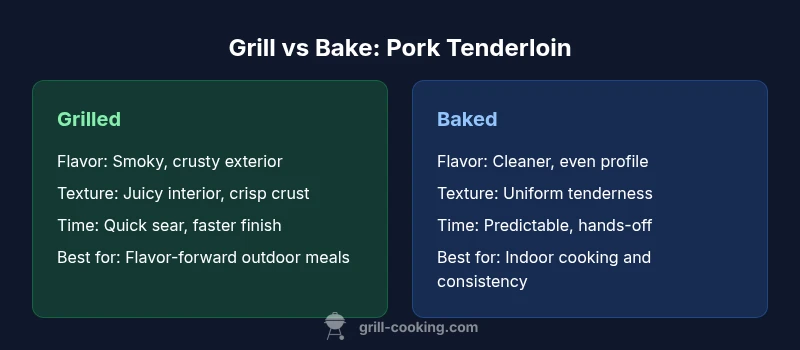
Textural outcomes diverge notably when you switch from grill to bake. Grilling promotes a quick Maillard reaction on the surface, creating a flavorful crust and a smoky edge that carries into each bite. The interior remains juicy if you manage temperature and resting time. Baking, particularly at a steady oven temperature, favors uniform doneness and a softer exterior. You’ll notice a milder smoke profile (if any) and a more consistent bite all the way through. The Grill Cooking analysis shows that flavor complexity can be increased with marinades or rubs that cling to the surface during grilling, whereas baking excels with dry rubs and glazes that caramelize slowly in the oven. For most home cooks, a combination approach—initial sear on the grill, then finish in a controlled bake—offers the best of both worlds.
Temperature Targets and Rest Times
Target temperatures guide both methods, but the pace and cues differ. For safety and juiciness, aim for a final internal temperature around 145°F (63°C) with a brief rest of a few minutes before slicing. Resting allows juices to redistribute and reduces the risk of a stringy texture. When grilling, start with high direct heat to sear, then move to indirect heat to finish to temperature without scorching. For baking, set a moderate oven temperature that supports even penetration; a typical range is a gentle bake followed by a quick broil or a finish under a hot grill for color. Remember to use a reliable meat thermometer and remove the meat from heat a few degrees below the target, letting carryover warmth carry it to the final temperature. Grill Cooking’s guidance emphasizes steady monitoring and a predictable resting window to avoid overcooking and dryness.
Grilling Method in Depth: Setup, Temps, and Timing
Grilling pork tenderloin requires a clear two-zone setup: direct heat for searing and indirect heat for finishing. Preheat the grill and oil the grates to prevent sticking. A brief, intense sear (1–2 minutes per side) creates a crust that boosts flavor and texture. Move the tenderloin to the cooler zone, close the lid, and cook until the internal temperature approaches the target. Turn the meat occasionally for even color and use a thermometer to monitor progression. Depending on thickness and heat, total grill time can vary, so rely on temperature rather than time alone. Rest the meat before slicing to retain moisture. A two-zone approach minimizes flare-ups and helps you control the final pull toward medium-rare to medium doneness. The Grill Cooking team highlights the importance of planning for warmth distribution across the piece to avoid dry edges.
Oven Baking Method in Depth: Rack Position, Temps, and Timing
Baking offers a forgiving environment for pork tenderloin. Position the rack in the middle of the oven and preheat to a moderate temperature that permits gradual heat transfer. Place the tenderloin on a lightly oiled rack or a lined baking sheet to promote even air circulation. Bake until the internal temperature nears the target, then switch to a high heat or a quick broil for color if desired. The advantage of baking is uniform doneness with less risk of scorching or uneven crusting, which is particularly helpful for cooks who prefer predictable results. If you’re using a glaze or rub, apply it during the final minutes to maximize flavor without burning. Resting remains essential to keep the meat juicy after the oven heat is removed. Grill Cooking’s guidance underscores the value of dialing in oven temperature and timing for consistent outcomes.
Flavor Enhancers, Rubs, and Marinades for Both Methods
Both methods benefit from thoughtful seasoning. A simple rub with salt, pepper, paprika, and garlic powder provides a savory crust on the grill and a robust baseline for baking. Marinades add moisture and tang, but be mindful of acid strength; too much acidity can begin to “cook” the surface if left too long before grilling. For grill-friendly flavor, consider a smoke-friendly rub and a glaze that caramelizes quickly. In the oven, a glaze applied near the end adds shine without burning. The Grill Cooking team notes that timing rub application to avoid oversaturation helps maintain texture. For maximum juiciness, plan for a brief rest after cooking to let juices redistribute.
Practical Comparison: Time, Cleanup, and Convenience
Time varies with method, but both can fit in a weeknight window if planned well. Grilling often requires outdoor space, weather considerations, and grill maintenance, but can be quicker for smaller portions and adds a desired smoky dimension. Baking is typically more forgiving, indoors, with less supervision and easier cleanup—especially when using sheet pans or racks. For outdoor cooks, grilled tenderloin can be a centerpiece that pairs with seasonal sides; for indoor cooks, baked tenderloin works well with roasted vegetables and starches. The choice hinges on your priorities: flavor intensity and outdoor cooking flair versus hands-off convenience and consistent texture. Grill Cooking’s perspective emphasizes using a two-zone grill or a well-calibrated oven to maximize success in either scenario.
Real-World Scenarios: Weeknight Dinner vs Special Occasion
For weeknights, baking may win for simplicity and predictability: you can start the tenderloin and focus on sides with minimal attention. On weekends or gatherings, grilling offers a dramatic finish with a crusty exterior and a smoky fragrance that elevates the dining experience. You can even combine methods by searing on the grill and finishing in the oven to achieve a crusted exterior with an evenly cooked interior. The key is to plan, monitor temperature, and rest the meat. The Grill Cooking team recommends keeping a thermometer handy and having your rubs or marinades prepared in advance for a smooth workflow.
Common Mistakes and How to Fix Them
Common mistakes include cooking too hot and too long on the grill, which dries the meat, or rushing the finish in the oven, which can yield uneven doneness. To fix these, establish a two-zone fire, monitor the internal temperature closely, and avoid slicing immediately after cooking. Also watch for over-salting or overpowering rubs that mask the natural pork flavors. A light rest period is essential; skipping it can ruin juiciness. If you notice uneven color, rotate the tenderloin during cooking to ensure uniform exposure to heat. Grill Cooking’s team stresses the importance of a calm, methodical approach over guesswork on timing.
Quick-Start Checklist for Grilled vs Baked Tenderloin
- Decide on method based on flavor vs convenience.
- Prepare a two-zone grill or oven setup.
- Use a reliable thermometer and target 145°F with rest.
- Apply rubs or marinades appropriately for the chosen method.
- Rest before slicing for maximum juiciness.
- Clean up method-specific equipment after use.
- Note flavor outcomes to refine future cook sessions.