Difference Between Grill and Broil: A Practical Guide
A thorough, analytical comparison of grilling and broiling, detailing heat sources, equipment, best uses, and techniques to help home cooks choose the right method for flavor, texture, and reliability.


Grilling and broiling share a goal—high-heat browning—but they differ in heat source and cooking context. Grilling uses direct radiant heat from below outdoors; broiling relies on top-down heat inside an oven. For flavor, control, and weather, each method suits different foods and outcomes. Understanding the difference between grill and broil helps you choose the right tool, prevent overcooking, and achieve consistent browning.
Understanding the difference between grill and broil
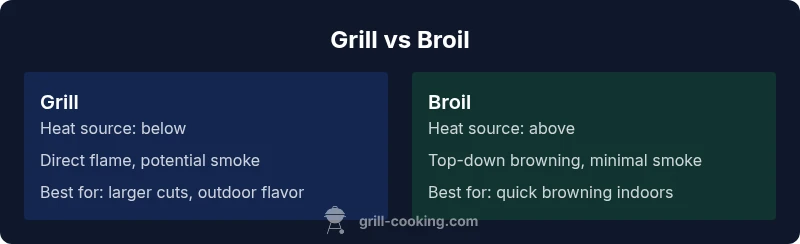
The difference between grill and broil shapes how you approach flavor, texture, and timing, and it influences every step from prep to plating. According to Grill Cooking, the distinction begins with heat source and the cooking environment. Grilling relies on direct radiant heat from below, typically produced by charcoal, gas flames, or wood-fired flames, and it is almost always performed outdoors. The heat travels upward through the food, creating a sear at the surface and, with the right airflow, appealing grill marks and a subtle smoky aroma. Broiling uses a different setup: intense heat from above, delivered by a dedicated broiler element or the oven’s top burner. The food sits close to the heat source, browning rapidly on top and often finishing with a crisp crust. Because the heat comes from above rather than around the food, broiling is a more controlled, weatherproof indoor technique. The practical implications are significant: choose grill when you want outdoor sear and a smoky edge; choose broil when you need fast top browning, indoor consistency, or when weather blocks outdoor cooking. Mastery of both expands your repertoire and reduces kitchen stress.
Core heat sources and heat direction
To understand how grill and broil behave differently, start with where heat originates and how it moves. Grilling borrows heat from below; the flame or hot grate transfers energy upward, delivering a direct surface sear and, depending on wind and grill design, a characteristic smoky profile. Broiling, by contrast, situates the food under a powerful heat source above. The heat radiates downward, creating rapid browning on the top surface while the bottom stays relatively cooler. The result is a crust with less smoke influence and a cleaner, sometimes crisper exterior. Practical cooks—especially in climates with frequent rain or in small kitchens—use this distinction to plan marinades, timing, and whether to rely on an outdoor grill or an indoor oven broiler. The heat direction matters because it dictates which side cooks first, how you flip the food, and how you manage grease and flare-ups. In short, grill = bottom heat, broil = top heat, each optimized for different dishes and environments.
Temperature and cooking ranges for grill and broil
Temperature control shapes the final texture and juiciness of foods, and the two methods emphasize different ends of the spectrum. Grilling typically operates at high heat with zones that allow a rapid exterior seal while moving foods to cooler areas to finish. Broiling relies on consistently intense top heat, offering quick browning and crust formation without direct exposure to open flame. Because weather and ventilation affect outdoor grills, many cooks plan for flexible timings and accept some variability in doneness when grilling. When broiling, you gain a weatherproof, controlled indoor environment, making it easier to reproduce a precise crust on small or delicate items. A practical rule is to aim for quick surface browning with grilling and rely on the oven’s steady top heat for even browning and crust formation when broiling. By matching heat behavior to the food’s thickness and fat content, you achieve predictable results consistently.
Equipment and setup: when to use a grill vs a broiler
Choosing between a grill and a broiler begins with the equipment you own and the cooking context. Outdoor grills bring open flame, adjustable vents, and the ability to handle large cuts and charred vegetables. You’ll rely on fuel source (gas, charcoal, or pellet) and careful flame management to avoid flare-ups. Indoor broilers live in the oven and provide compact, weatherproof access to intense top heat. To maximize control, read the recipe’s guidance on rack position, preheating duration, and heat level. For broiling, you’ll want a sheet pan or broiler-safe rack, while for grilling a sturdy grate and appropriate utensils are essential. In cold or rainy seasons, a good broiling setup can substitute for outdoor cooking with surprisingly similar browning effects on the right cuts. The choice depends on convenience, kitchen layout, and the flavor profile you want to achieve in the final dish.
Flavor, texture, browning, and smoke: what changes between grill and broil
Flavor and texture outcomes hinge on how heat is delivered and how air interacts with the surface of the food. Grilling often yields smoky, charred notes and visible grill marks due to direct flame and smoke from the cooking process. The texture can be a crisp exterior with a juicy interior when executed with care. Broiling emphasizes rapid surface browning and crust development without smoke contributions unless smoke is introduced deliberately through wood chips or seasoning. The top-down heat in broiling can lead to a uniform crust with less variation in surface texture compared with grill marks. While grilling suits thick steaks, ribs, and robust vegetables, broiling excels with thin cuts, delicate fillets, and toppings that benefit from quick, intense browning. Understanding these flavor and texture expectations helps you plan marinades, timing, and whether to rely on wind, flame intensity, or oven heat to reach your culinary goals.
Common mistakes and how to avoid them
Even experienced cooks stumble when switching between grill and broil. Common issues on the grill include flare-ups caused by dripping fat, uneven heat zones, and under-seared interiors for thick cuts. On the broiler, problems often involve burning the top surface before the interior cooks, relying on insufficient preheating, or crowding the pan which blocks heat circulation. Prevent flare-ups by trimming fat, using a two-zone grill setup, or moving foods away from direct flames briefly. For broiling, keep a careful eye on the top surface, place items at the recommended distance from the heat source, and rotate or flip foods for even browning. A digital thermometer is invaluable for both methods, helping you monitor doneness without overcooking. Finally, maintain your equipment: clean grates to maximize browning and ensure oven broilers stay calibrated for consistent heat output. With a proactive approach to heat management, you minimize surprises and achieve more reliable results.
Step-by-step workflows: grill vs broil in practice
Grill workflow: 1) Preheat the grill to high heat with vents adjusted for airflow. 2) Prepare foods with dry rubs or marinades as appropriate. 3) Sear over direct heat for surface browning, then move to indirect heat to finish through. 4) Rest before serving to retain juiciness. 5) Clean the grates to prevent residue buildup. Broil workflow: 1) Preheat the oven broiler and position the rack 4-6 inches from the heat source. 2) Pat foods dry to encourage browning and apply seasonings. 3) Place items on a broiler-safe pan and monitor closely. 4) Flip as needed to achieve even browning. 5) Remove, rest, and slice.
Both workflows emphasize timing and surface texture, with grill emphasizing smoke and crust, while broil emphasizes top browning and interior doneness.
Food-specific guidance: steak, chicken, and vegetables
Steak shines on the grill with a strong sear and flavorful char, achieving a rosy interior by managing heat zones and flipping strategically. Broiling a steak can work in a pinch when outdoor cooking isn’t possible, but it may produce a more even crust with less smoky aroma. Chicken benefits from grilling when you want crispy skin and a juicy interior, though bone-in pieces need careful heat management to ensure even cooking. Broiling chicken can be a quick method for browning the skin on smaller cuts, but you risk drying the meat if not watched closely. Vegetables, especially sturdy ones like peppers and squash, respond well to both methods; on the grill you’ll gain a smoky edge, while broiling delivers a crisp exterior in a compact, indoor setting. The key is size, thickness, and fat content: thicker items respond better to grilling’s multi-zone heat, while thin cuts and delicate vegetables may fare well under top-down broiling.
Health, safety, and cleanup considerations
Both methods require standard food safety practices: keep cold foods cold until cooking, avoid cross-contamination, and use a thermometer to verify doneness. Grilling demands attention to flare-ups and flame management, including proper airflow and ventilation in outdoor spaces. Broiling indoors requires careful oven use, monitoring to prevent burning and ensuring proper rack placement to avoid splatter and scorching. Cleanliness matters for both: remove grease buildup from grates, wipe interior oven surfaces, and sanitize utensils after handling raw proteins. Adopting a routine of preheating, controlling heat exposure, and letting foods rest before slicing reduces the risk of undercooked centers or overly dry textures. When in doubt, rely on a meat thermometer and trusted timing guidelines for each method to ensure safety and optimal flavor.
Quick scenarios and decision framework: when to grill vs when to broil
If you’re cooking for a backyard gathering with a smoky profile, grill. If you’re in a small kitchen, facing cold or rainy weather, or working with thin cuts that need fast browning, broil. For thicker steaks, both methods have value: grill for an initial sear and flavor development, broil to finish with a crust if you don’t have a stove‑top searing setup. For vegetables, grilling yields char and aroma, while broiling can produce a crisp crust on the surface in a weeknight routine. In the end, your choice should hinge on the food’s size, the desired texture, weather or kitchen constraints, and how much time you have for preheating and finishing. With a clear plan, you can switch between methods without sacrificing flavor or texture.
Variations in grill types and broiler configurations
Different grill styles—charcoal, gas, and pellet—offer distinct flavor profiles and heat dynamics that influence how you grill. Charcoal emphasizes smoky, rich notes and uneven heat that rewards attentive management. Gas grills provide consistent heat and easier control, making dialing in a sear more predictable. Pellet grills combine convenience with a nuanced flavor profile and great temperature stability. On the other hand, broilers in modern ovens vary in intensity and distance from the rack, affecting browning speed and crust formation. If you rely on a grill for flavor, learn how to adjust vents or burners to control heat spread. If you primarily rely on a broiler, experiment with rack positioning and preheating duration to optimize crust without burning the top. Understanding these variations helps you maximize cooking performance across both techniques.
Final practical considerations: building a flexible kitchen toolbox
Successful cooks treat grill and broil as complementary techniques rather than competing methods. By leveraging both, you can handle a wider range of recipes and adapt to changing circumstances. Start with a practical inventory: a well‑seasoned grill or a reliable oven with a robust broiler, sturdy cookware, accurate thermometers, and a plan for heat management. Practice basic recipes with both methods to calibrate timing, temperature, and texture expectations. Keep notes on what works best for different foods and thicknesses, so you can reference your personal blueprint when planning future meals. With a well‑curated toolkit and a thoughtful strategy, difference between grill and broil becomes a straightforward choice rather than a last‑minute guess.
Comparison
| Feature | grill | broil (oven) |
|---|---|---|
| Heat source | direct radiant heat from below (flame/grate) outdoors | direct radiant heat from above (broiler element) indoors |
| Heat direction | from below upward | from above downward |
| Best for | smoky flavor, grill marks, larger cuts and outdoor cooking | fast browning, indoor convenience, thin cuts |
| Typical equipment | outdoor grill (charcoal or gas) | oven with broiler element |
| Flavor impact | smoky, charred notes with grill marks | crisp crust with top browning, less smoke |
| Control and accessibility | weather-dependent; flame management and airflow matter | weatherproof indoor setup; consistent top heat |
| Food types suited | steaks, burgers, larger vegetables, ribs | thin steaks, fish fillets, toppings, compact portions |
Strengths
- Grill delivers smoky flavor and classic char
- Outdoor cooking accommodates large items and crowd-friendly meals
- Flexible flame control allows zone cooking and searing
- Char and grill marks enhance presentation and texture
Negatives
- Weather and wind impact performance on grill
- Flare-ups can char or dry foods if not managed
- Broiling indoors lacks smoky flavor and can over-brown if unchecked
- Limited space for large cuts when broiling compared to grilling
Grilling is generally more versatile and flavor-forward; broiling excels for rapid browning and indoor convenience
Choose grilling to maximize flavor and outdoor cooking versatility, especially for larger cuts. Opt for broiling when you need quick browning indoors or when weather blocks outdoor cooking, while still achieving a crisp surface.
FAQ
What is the key difference between grill and broil?
The key difference is heat direction and source: grilling uses bottom-fired heat outdoors, while broiling uses top-fired heat indoors. Each method yields distinct browning, flavor, and texture. Understanding this helps tailor temperature, time, and equipment choices.
Grill uses bottom heat outdoors; broil uses top heat indoors. Both browning methods rely on high heat, but the heat source and environment change how you cook and what flavors you get.
Can I substitute broiling for grilling, or vice versa?
You can substitute in some recipes, but expect changes in browning, flavor, and texture. Broiling can mimic a sear, but missing outdoor smoke; grilling can mimic top browning with careful oven broiling techniques. Adjust time and watch closely.
You can swap in many cases, but be ready for different flavors and textures. Watch timing closely when substituting.
What foods work best with grilling vs broiling?
Grilling shines with thick cuts, burgers, and vegetables that benefit from smoky char and outdoor heat. Broiling works well for thin steaks, fish fillets, and toppings needing rapid surface browning without outdoor cooking.
Grill for thick cuts and smoky flavor; broil for thin cuts and fast browning indoors.
How do I adjust cooking times when switching from grill to broil?
Switching from grill to broil usually shortens cooking times due to intense top heat. Start with a conservative time, flip as needed, and monitor with a thermometer to avoid overcooking.
Top heat browns faster, so start with less time and check doneness early.
Is broiling safer than grilling?
Both methods can be safe when done correctly. Grilling requires flame management and grill cleaning to prevent flare-ups; broiling requires careful oven monitoring to prevent burning. Use meat thermometers and follow safe handling practices.
Safety depends on careful heat management and monitoring, not on the method alone.
Quick Summary
- Choose grill for smoky flavor and outdoor char
- Use broil for indoor rapid browning and consistency
- Match food thickness to heat direction for best results
- Control heat zones and rack positions to avoid overcooking
- Practice both methods to expand recipe versatility