Is Grill and Broil the Same in Oven? A Complete Comparison
Discover whether grilling and broiling are interchangeable in the oven. This analytical guide explains heat sources, best-use scenarios, gear tips, and practical techniques to get authentic sear and grill-like results indoors.


Is grill and broil the same in oven? No. Broiling uses intense radiant heat from the oven’s top element to sear the surface, while indoor “grill” typically means searing with a grill pan or a dedicated grill setting. You can mimic outdoor grilling with a broiler or grill pan, but browning patterns and interior doneness differ. According to Grill Cooking, understanding these differences helps home cooks choose wisely.
Is grill and broil the same in oven? Debunking the myth
Is grill and broil the same in oven? No. Broiling uses intense radiant heat from the oven’s top element to sear the surface, while indoor “grill” typically means searing with a grill pan or a dedicated grill setting. You can mimic outdoor grilling with a broiler or grill pan, but browning patterns and interior doneness differ. According to Grill Cooking, understanding these differences helps home cooks choose wisely.
In practice, many kitchens rely on a powerful top heat without realizing the distinction. When choosing between broiling and a grill option, you’re deciding not just how hot the heat is, but how it arrives at the food. Broiling places heat overhead and can create a crust quickly, but it often concentrates heat on the exterior. An indoor grill approach, in contrast, uses direct contact heat through a pan or grate and can allow more even interior texture while still delivering sear lines. Grill Cooking emphasizes planning: select your equipment, preheat adequately, and monitor heat to prevent scorching.
How an oven broiler works
A broiler turns the oven’s top heating element into a focused heat source. When you set the oven to broil, the element is positioned above the food and directs radiant energy downward. There is little air movement, so the surface browns quickly while interior heat lags unless the cut is thin. To optimize results, place the food on a shallow, heat-safe pan and position it on the highest rack. Preheating is brief, but timing is critical: check frequently to avoid burning. Broiling favors thin cuts and short cooking times, producing a crusty exterior with a juicy interior when done right. Understanding its limitations helps prevent overcooking and dry interiors.
The in-oven grill option: grill pan and built-in grill functions
Many ovens offer an in-oven grill option or you can simulate grill using a heavy-bottom grill pan placed on a rack. This method aims for grill-like marks and a seared exterior while still cooking through the oven’s heat. A grill pan concentrates heat at contact, and a raised rack allows air to circulate so you don’t end up with a soggy underside. Preheat a cast-iron or stainless steel grill pan, oil lightly, and place food directly on the hot surface for crisp sear lines. For thicker items, elevate with a rack to improve heat penetration and prevent burning. If your oven lacks a true grill function, a high-quality broiler tray with a rack can approximate some grill effects, though you won’t always see classic grill marks.
Core differences at a glance: heat, browning, interior texture
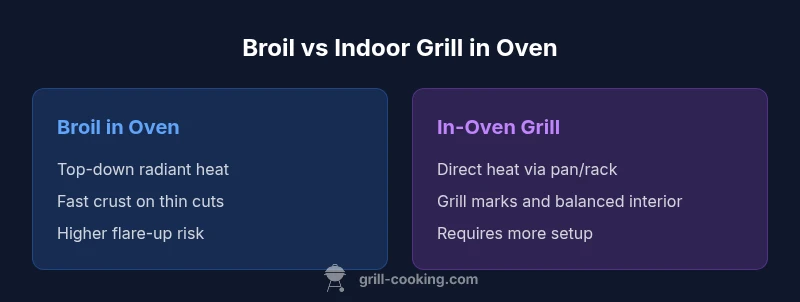
Key differences center on heat delivery, browning patterns, and interior texture. Broiling delivers intense top-down heat with little airflow, creating rapid surface browning and a crispy crust but can dry the interior of thicker cuts. In-oven grilling uses direct contact heat from a pan or grill surface, often with some airflow, producing distinct grill marks and a seared exterior while aiming for more even interior doneness. Heat control is different: broilers can surge hot and require careful timing, whereas indoor grill setups can offer more gradual heat exposure depending on pan choice and rack position. Ventilation and smoke management also differ: broiling can generate flare-ups, while grill pans can spread smoke more widely if ventilation is insufficient.
Foods best suited to broiling vs indoor grilling
Broiling excels with thin steaks, fish fillets, chicken cutlets, and vegetables that cook quickly and benefit from a rapid crust. Indoor grilling shines with thicker steaks, chicken thighs, burgers, pork chops, and sturdier vegetables that benefit from grill marks and a strong exterior sear. When using a grill pan, preheat to a high temperature to ensure proper sear; for broiling, keep the food relatively close to the heat but watch closely to avoid charring. Understanding this helps you select the right method for your dish and prevents under- or overcooking.
Preheating, placement, and timing guidelines
Preheat is essential for both methods but differs in degree. Broiling generally requires a shorter preheat period, while indoor grilling may benefit from a longer warm-up to ensure an even surface temperature. Place food on a sturdy pan or a grill grate with a light coating of oil to minimize sticking. For thin cuts, position the food close to the heat source; for thicker cuts, allow a bit of distance or finish with a brief oven bake to complete internal doneness. Timing depends on thickness and desired doneness, so monitor closely and flip as needed to achieve even searing on both sides.
Equipment you’ll want: pans, racks, and safety
Key tools include a sturdy broiler pan with a drip tray, a cast-iron or stainless steel grill pan, and a heat-safe rack to lift food off direct contact. Light oil on the pan reduces sticking, and parchment can help with cleanup for delicate items. Safety matters: keep oven doors closed during broiling, use heat-resistant mitts, and watch for flare-ups with fatty foods. Adequate ventilation is important to manage smoke and odors in indoor settings.
Common mistakes and how to fix them
Common errors include placing food too far from the heat, using a crowded pan, or skipping preheating. Overcrowding traps moisture and reduces browning. Not preheating can lead to uneven searing and longer cooking times. Flare-ups during broiling can scorch edges; keep a close eye and have a baking sheet ready to shield if needed. For indoor grilling, laying food directly on a cold pan delays searing, so ensure the pan is hot before cooking and adjust heat as you go.
Smoke, odors, and ventilation considerations
Cooking indoors with high heat generates smoke and strong odors. Use range hood ventilation or open windows to improve air flow. Thicker cuts may produce more smoke, so consider searing briefly then finishing in the oven at a lower temperature to minimize smoke production. Use tray liners or foil to simplify cleanup and reduce lingering smells in your kitchen.
Cleaning and maintenance after broiling vs grilling
Cleaning after broiling involves clearing the drip tray, cleaning the pan, and removing burnt residue from the top element housing. For grill pans, scrub thoroughly to remove char and oil buildup, and re-season cast iron as needed. Regular maintenance extends the life of oven components and reduces lingering odors. Use warm soapy water, non-abrasive brushes, and avoid harsh scouring on coated surfaces.
Hybrid techniques: char and sear indoors without outdoor grill
A practical hybrid approach combines a hot grill pan with a brief finish under the broiler. Start with a strong sear on the grill pan to develop marks, then finish under the broiler to intensify browning without overcooking the interior. You can also finish by briefly broiling after searing to mimic outdoor char. This method offers flexibility for diverse dishes while controlling moisture and doneness.
Decision framework: when to choose broil, when to use an indoor grill
Your decision should hinge on thickness, desired texture, and tolerance for smoke. Use broil for fast crusts on thin cuts and when you want maximum top browning with minimal interior change. Use an indoor grill pan or built-in grill function when you need grill marks, a more even interior sear, and a thickness that benefits from longer heat exposure. Consider room layout, ventilation, and cleanup effort when deciding which path to take.
Comparison
| Feature | Broil in Oven | In-Oven Grill (Grill Pan/Grill Function) |
|---|---|---|
| Heat Source | Top-down radiant heat from the broiler element | Direct contact heat from pan or focused grill element; possible top heat with rack |
| Typical Use | Crisps and browns quickly on thin cuts | Seared exterior with grill marks and balanced interior |
| Best For | Steaks, thin fillets, fish, and quick-crisp vegetables | Thicker proteins, burgers, vegetables, and foods needing grill-mark appearance |
| Preheat Time | Short preheat (often 5–10 minutes) | Moderate to long preheat depending on pan and rack setup |
| Equipment | Broiler pan with drip tray | Grill pan or grill rack with heat-safe pan |
| Cleanup | Drip tray needs cleaning; top element care | Pan and rack require oiling and cleaning; potential more surface area to scrub |
Strengths
- Indoor versatility: switch between top heat and grill-like setups
- Year-round cooking: no outdoor equipment needed
- Better control over placement and browning with pans
- Char-like sear achievable with the right technique
Negatives
- May not replicate true outdoor grill flavor or smoke
- Higher risk of smoke or splatter in a kitchen without ventilation
- Requires extra equipment and cleanup compared to outdoor grilling
In-oven broiling and indoor grilling are distinct but complementary methods
Choose broiling for fast crusts on thin cuts and when you want maximum top browning. Use an indoor grill pan or grill function for authentic grill marks and thicker items that benefit from direct contact heat.
FAQ
What is the main difference between broiling and grilling in an oven?
Broiling uses intense radiant heat from the top element with limited air movement, mainly browning the surface quickly. Indoor grilling uses direct contact heat from a pan or grill surface to create sear marks and a more even interior. Both rely on high heat, but the heat delivery and texture differ.
Broiling is top-down heat with quick surface browning, while indoor grilling uses a pan or rack to create sear marks and a more even interior.
Can I substitute broiling for grilling in an oven?
You can substitute by using the broiler with a grill pan and rising the food higher or lower to approximate grill heat, but you may miss the classic grill marks and the interior texture. For true grill marks, aim for an indoor grill setup whenever possible.
You can imitate grilling with a broiler and grill pan, but it won’t perfectly match outdoor grill marks.
What foods are best suited for broiling vs. indoor grilling?
Broiling is great for thin cuts like fillets and cutlets that benefit from rapid crusting. Indoor grilling works well for thicker steaks, burgers, bone-in cuts, and sturdy vegetables that benefit from grill marks.
Thin cuts do well broiled; thicker items shine with indoor grilling marks.
Do I need special equipment to grill in the oven?
A heavy-duty grill pan or a grill rack with a heat-safe tray is often enough. Some ovens have a built-in grill function. If not, a broiler with careful distance and tray setup can mimic some effects.
A grill pan or grill rack is usually enough, or use a broiler with a tray if you don’t have a grill function.
How can I reduce smoke when broiling?
Use a pan with a drip tray, keep the oven door ajar if safe, and ensure good kitchen ventilation. Trim excess fat from meat to minimize flare-ups, and place the food on a rack to promote airflow away from the hot element.
Trim fat, use a drip tray, ventilate well, and keep an eye on the broiler to reduce smoke.
How do I get grill marks indoors?
Preheat a grill pan until very hot, oil lightly, and press the food onto the ridges. Flip once to create marks on both sides. For more distinct marks, sear first and finish with oven heat if needed.
Get hot grill ridges, oil the pan, and press the food to the ridges for clear marks.
Quick Summary
- Understand the heat source differences before cooking
- Choose broil for quick crusts; use grill for marks and texture
- Preheat properly and use appropriate cookware
- Ventilate well to manage smoke and odors
- Practice with both methods to perfect your interior doneness