Difference Between Grill and BBQ: A Practical Guide
An analytical comparison clarifies the difference between grill and BBQ, covering heat methods, timing, flavor, and equipment for home cooks and grill enthusiasts.


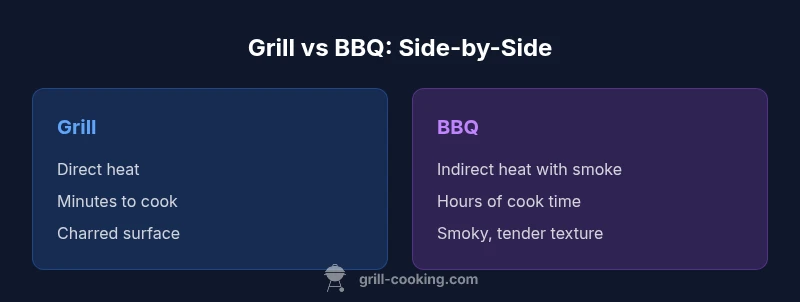
Grilling and BBQ are distinct cooking methods rooted in heat, time, and flavor development. Grilling uses direct, high heat for quick, seared results, while BBQ relies on indirect, low heat and smoke over longer cooks. In practice, grilling shines with burgers and steaks; BBQ excels with larger, tougher cuts that benefit from tenderness and deep smoky flavor. Knowing this difference helps you choose the right technique, gear, and timing for each dish.
What the difference means: grill vs BBQ
The difference between grill and bbq is not just terminology but approach. According to Grill Cooking, the two methods reflect distinct cooking philosophies: one relies on high direct heat for quick, seared results, while the other embraces low, indirect heat and time to build tenderness and smoky flavor. For home cooks, understanding this distinction helps you select the right tool, the right fuel, and the right timing for each recipe. This article uses the keyword difference between grill and bbq to anchor the comparison, but the real value comes from applying the right method to the right dish. In practice, grill means hot surface searing over direct heat, whereas BBQ means cooking with smoke and slow heat away from direct flame. Emphasizing moisture retention, texture, and flavor development, these choices influence everything from chicken skewers to pork shoulder.
Short-term weeknight meals often pair with grilling for speed, while weekend cooks lean on BBQ for tenderness. The distinction also guides equipment selection: a high-heat grill or a dedicated smoker; a gas grill can do both, but barbecue often benefits from controlled airflow and longer cook cycles. Recognizing these differences reduces frustration and waste, since using BBQ methods for thin steaks can lead to overcooking, and grilling a big roast can leave the interior undercooked and the outside dry. By the end of this section you'll be able to categorize recipes at a glance and decide which method will deliver the target texture and flavor.
Historical context and regional usage
Terminology around grilling and BBQ has evolved with regional culinary cultures. In the United States, BBQ is often associated with smoke, long cooks, and regional sauces, while grilling is linked to quick sears over direct heat. In other regions, people use BBQ as a catch-all term for backyard cooking, sometimes blurring the line between methods. The Grill Cooking team notes that understanding regional language helps home cooks interpret recipes accurately and select the right equipment, whether you’re searing a ribeye on a gas grill or slow-smoked pork shoulder in a dedicated smoker. Over time, many cooks adopt hybrid approaches, using a grill for the sear and then finishing with indirect heat or smoke to achieve flavor depth without sacrificing speed.
Historically, grill and BBQ techniques emerged from different cultural priorities: immediacy and surface browning versus tenderness achieved through long, slow cooking. Modern grills often incorporate adjustable vents, temperature gauges, and smoker boxes, enabling households to mimic traditional barbecue flavor on a single device. This cross-over reduces equipment clutter while expanding flavor possibilities for weeknight meals and weekend gatherings alike.
Core physics: heat transfer and cooking styles
At the heart of the grill-vs-BBQ distinction is heat transfer. Grilling relies on direct radiant and conductive heat from the surface and flame, creating rapid Maillard browning on the outside of the food. This fast heat transfer is ideal for thin cuts and items that benefit from a crisp exterior and juicy interior when timed correctly. BBQ, by contrast, uses indirect heat and usually smoke to heat the food more slowly. Convection and the gentle diffusion of heat break down connective tissue gradually, rendering tough cuts tender and pulling in smoky flavors from wood and charcoal. Understanding these physics helps home cooks predict texture changes, moisture retention, and the balance between char and smoke that defines each method.
Food categories and cooking timelines
Grilling is typically reserved for small, quick-cooking items: burgers, thin steaks, chicken breasts, vegetables, and seafood that benefit from a brief sear. The cook times are short, and the goal is a hot surface crust with a juicy interior. BBQ shines with larger, tougher cuts such as pork shoulder, brisket, ribs, and whole poultry that require hours to break down collagen and render fat. Timing strategies differ: grilling relies on rapid surface sealing and immediate serving, while BBQ emphasizes low heat over extended periods, with occasional wrap-ups or rest periods to improve moisture distribution. Both approaches can achieve superb results when matched to the right cut and desired texture.
Equipment and setup essentials
Your tool kit should align with your primary technique. Grilling often requires a sturdy grill (gas or charcoal), tongs, a thermometer for quick checks, and a vented lid to manage airflow. BBQ setups benefit from a dedicated smoker or a grill that can be converted into a smoker with a water pan, wood chips, and controlled airflow. Accessories like rib racks, meat hooks, and thermometers with alarms help manage long cooks. Regardless of setup, keep a clean grate, manage flare-ups through indirect heat zones, and use moisture management methods such as wrapping, mopping, or spritzing to maintain tenderness. Beginner-friendly strategies focus on mastering a reliable sear on a small item before attempting longer cooks with smoke.
Flavor outcomes and texture differences
Grilling emphasizes surface sear, Maillard browning, and a bracing contrast between crust and interior. The flavor is bold and immediate, driven by direct contact with hot metal and quick caramelization. BBQ emphasizes tenderness, melt-in-your-mouth textures, and layered smoky notes derived from wood smoke and longer cooking times. The balance of moisture, connective tissue breakdown, and bark formation in BBQ creates complexity, while grilling delivers crisp textures and bright, charred flavors. Both approaches have signature profiles that pair with different sauces, rubs, and marinades.
Professional cooks often tailor rubs to complement the chosen method: sharper, sugar-rich rubs for quick sears on a grill, and heavy, salt-based rubs that stand up to slow cooking and smoke in BBQ.
Safety, sanitation, and best practices
No matter the method, safety comes first. Ensure equipment is clean, use separate utensils for raw and cooked foods, and keep perishable items properly chilled before cooking. When grilling, manage flare-ups by staggering heat zones and turning food to prevent charring. For BBQ, maintain stable temperatures and monitor moisture to prevent drying. Always use a thermometer to verify internal temperatures and rest meat as appropriate to finish cooking evenly. Cleaning guards, grates, and vents after cooking reduces residue buildup and prolongs equipment life. These best practices help prevent foodborne illness and improve overall flavor outcomes.
Planning meals: when to grill or BBQ in a menu
Planning a meal requires aligning time, flavor goals, and guest expectations. For quick weeknight dinners, grilling lets you deliver a hot, tasty main in minutes. For holiday gatherings or weekend cooks, BBQ can create showpiece meals with extended flavor development. A practical approach is to multi-task: grill fast components (vegetables, seafood, smaller cuts) while BBQ handles the bigger, tougher items. This strategy reduces stress and ensures an efficient kitchen workflow while offering a varied tasting experience for guests.
Regional variations and terminology tips
Terminology around grill and BBQ often varies by region. In some areas, BBQ refers to the event (a barbecue party) rather than a cooking method, while in others it denotes a long, smoky cook. The Grill Cooking team suggests embracing the flexibility of language but staying true to technique when following recipes. When in doubt, check the recipe's method description rather than relying solely on the term used. This clarity helps home cooks choose the right equipment and cooking strategy, particularly when shopping for wood, charcoal, or smokers.
Regional sauces and rubs also influence how people perceive grill and BBQ. For example, certain sauce styles are designed to accompany long-smoke meats, while quick-grill recipes emphasize a bright crust and quick finish. Understanding these nuances helps you adapt techniques to your regional palate and equipment.
Practical tips for beginners
Getting started with either method doesn’t require a full kitchen overhaul. Start with a basic two-zone grill setup to master both searing and indirect cooking. Practice with a small cut like chicken thighs or a pork chop to learn timing and temperature control. Use a probe thermometer to monitor internal temp during the cook. When attempting BBQ, start with shorter sessions before attempting longer smokes, and keep a log of temperatures, times, and outcomes to refine your approach. As you gain confidence, gradually introduce wood flavors and different rubs to expand flavor profiles without sacrificing control.
Common myths debunked
A common myth is that BBQ is inherently inferior to grilling for all meats. In reality, both methods have strengths depending on the cut and desired texture. Another myth is that you need expensive gear to achieve great barbecue; many delicious results come from basic equipment and attentive technique. Finally, some believe that smoking always means long hours; modern setups and temperature control can achieve high-quality results in practical timeframes. Embrace the method that fits your recipe, schedule, and flavor goals rather than chasing a single “best” approach.
Comparison
| Feature | Grill | BBQ |
|---|---|---|
| Heat approach | Direct, high heat for searing | Indirect, low heat with smoke |
| Typical cook time | Minutes to sear and serve | Hours for tender, smoked results |
| Flavor development | Char and crust from surface browning | Smoky depth from slow cooking |
| Fuel types | Gas, charcoal, or electric grills | Charcoal, wood, pellet smokers |
| Best for | Quick meals, surface sear | Tender cuts, deep smoke flavor |
| Food safety focus | Timing and crust control | Stable temps and moisture retention |
| Equipment setup | Two-zone grill, quick heat management | Smoker or grill-to-smoker conversion with airflow control |
Strengths
- Clear, practical understanding of two common cooking methods
- Helps plan menus and select the right gear
- Improves flavor decisions by matching technique to dish
- Reduces confusion from regional terminology
- Encourages safe cooking practices with focused tips
Negatives
- Terminology still varies by region and culture
- Overemphasis on technique can overlook flavor nuances
- Hybrid approaches may blur clear method boundaries
Grill and BBQ are complementary methods; neither is universally better
Choose grill for fast, high-heat searing and BBQ for tender, smoky, long-cooked dishes. Your decision should align with the cut, time, and flavor goal.
FAQ
What is the main difference between grill and BBQ?
Grilling uses direct high heat for quick cooking and surface searing, while BBQ relies on indirect low heat with smoke over longer times to tenderize and flavor foods.
Grill for fast searing, BBQ for slow, smoky tenderness.
Can I grill and BBQ with the same equipment?
Yes, many grills can perform both styles with the right setup: direct heat for grilling and indirect heat or smoke for BBQ. Adjust airflow and heat zones accordingly.
Yes, with proper setup and heat control.
What foods are best for grilling vs BBQ?
Grilling works well for small, tender items like burgers and seafood; BBQ is ideal for larger, tougher cuts such as pork shoulder or brisket that benefit from long, slow cooking.
Grill tender cuts fast; BBQ larger cuts slowly.
Is BBQ always smoky?
BBQ often involves smoke, but the intensity depends on the setup and wood choice. Not every BBQ session needs heavy smoke; balance is key.
BBQ usually involves smoke, but not always strong smoke.
What is a safe internal temperature for grilled or BBQ meats?
Follow USDA guidelines for each protein, using a thermometer to verify. Cooking times differ with method, so rely on internal temperature rather than time alone.
Use a thermometer to confirm doneness.
Quick Summary
- Identify the appropriate method by cut and time
- Use two-zone heat for versatile grilling and safe BBQ planning
- Prioritize moisture management for longer cooks
- Leverage regional flavors to enhance both techniques
- Practice with small tests to master timing and temperature