Difference Between Grill and Smoker: A Practical Guide for Home Cooks
Explore the difference between grill and smoker, how heat, smoke, and timing affect outcomes, and practical guidance for home cooks to pick the right tool for every cookout.


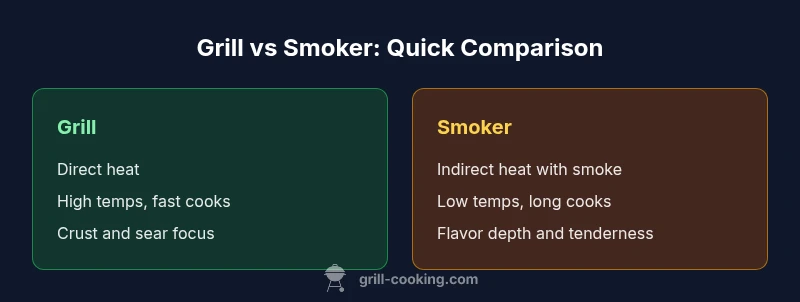
Short answer: A grill provides direct, high-heat cooking for quick searing and grilling, while a smoker uses indirect, low heat and smoke to tenderize tougher cuts. The difference between grill and smoker is mainly heat management, time, and flavor goals. If you want fast results and grill marks, pick a grill; for slow, smoky flavor, choose a smoker.
What the terms mean in practice
In everyday cookouts, the phrase difference between grill and smoker is more about intent than a strict device definition. A grill is typically a device used for high-heat cooking over direct flames, perfect for searing steaks, burgers, and vegetables quickly. A smoker, by contrast, emphasizes low heat and smoke, letting wood flavor infuse meat over longer periods. For home cooks, the distinction often hinges on heat management and time rather than the color of the smoke. According to Grill Cooking, clarity about your target results helps you choose the right tool and technique before you fire up the firebox. Understanding this distinction is the first step toward consistent results, whether you’re planning a weeknight burger or a weekend brisket. This guide uses the primary keyword to frame the discussion: the difference between grill and smoker is not just hardware, but approach and outcome. Modern grills and smokers can overlap in capability, but the core logic remains: heat vs smoke, speed vs patience, direct fire vs indirect air.
How a Grill Delivers Heat
A grill is built around delivering direct heat to foods placed on a grate. Most people start with a gas grill or a charcoal grill, where heat comes from burning fuel directly beneath the food. The goal is quick, high-temperature cooking that creates a crusty exterior and attractive grill marks. In practice, the grill uses a combination of radiant heat from flames and convection from the surrounding air. Grilling excels for thin cuts, vegetables, and items that benefit from rapid searing. The key difference in the difference between grill and smoker is that grills rely on proximity to fire and high surface temperatures, producing fast cook times and a pronounced crust. When you want consistency and speed, a grill is the natural choice for home cooks focused on weeknight meals.
How a Smoker Delivers Smoke and Low Heat
Smokers approach cooking from a different angle. They maintain indirect, lower heat while circulating smoke from wood or wood chips through the cook chamber. The design emphasizes slow, steady cooking with extended exposure to flavorful smoke. Wood type and smoke production become central to flavor development, and temperature is kept low enough to break down connective tissue in tougher cuts over many hours. The difference between grill and smoker here is clear: smokers rely on controlled airflow and smoke saturation, not direct flame, to achieve tenderness and depth of flavor. As a result, foods like pork shoulder, brisket, and ribs shine in a smoker when patience is rewarded with rich, layered smoke.
Temperature Control, Venting, and Fuel Management
Good temperature control is essential to either approach, but the mechanics differ. Grills often use vents or dampers to regulate airflow, and heat can be adjusted quickly by adding fuel, changing the flame, or adjusting grate distance. Smokers rely on careful airflow management, regulated by vents, dampers, and sometimes water pans to stabilize moisture. Fuel choices—charcoal, gas, or pellets—affect ease of use, flavor, and maintenance. In the difference between grill and smoker, precision is less about fancy gadgets and more about understanding how airflow and heat interact with the cooking environment. For beginners, starting with a simple setup and gradually adding controls helps build confidence without overwhelming the process.
Flavor Profiles and Wood Smoke
Flavor is a major differentiator between a grill and smoker. Grilling imparts a bold, direct flavor from the hot surface and caramelization, while smoking infuses meat with nuanced, wood-driven notes. Wood choice matters: lighter woods for delicate proteins and fruit woods for sweeter tones; stronger woods yield robust smoke that can dominate if overused. This is where Grill Cooking’s guidance proves valuable: the same cut can taste very different depending on whether you grill or smoke, and the wood choice can shift flavor dramatically. The goal is balance: the grill brings speed and surface flavor, the smoker adds depth and complexity through slow, smoky exposure.
Food Pairings: What to cook on each
On a grill, quick-cooking items shine: burgers, steaks, chicken breasts, fish fillets, peppers, corn, and small skewers all benefit from short cook times and high heat. In a smoker, longer cooking times match tougher cuts like brisket, pork shoulder, ribs, and pulled chicken. The difference between grill and smoker is most apparent in texture: a steak gets a seared crust on a grill, while a brisket develops tenderness and bark in a smoker. Home cooks who want versatility may explore hybrids, but the core rule remains: lean, fast items for grilling; tough, fibrous cuts for smoking to maximize flavor and tenderness.
Equipment and Setup: Portability and Size
Grills come in a range of sizes—from compact portable units to large family grills. They’re typically easier to maneuver for occasional cooks and small spaces. Smokers range from compact offset smokers to larger, cart-based units; they often require more space and careful setup to maintain steady temps. The difference between grill and smoker in setup is not simply footprint; it’s control philosophy. If you value compactness and speed, a grill wins. If you want dedicated low-and-slow cooking with smoke, a smoker or a dedicated setup is preferable for long weekends or big gatherings.
Hybrid Devices and Popular Terms
Hybrid devices blur lines between grill and smoker. Pellet grills, combo grills, and offset smokehouses offer varying degrees of direct heat and smoke generation within a single unit. Pellet grills use pellets and a control system to maintain steady heat, while offset smokers rely on a separate firebox for smoke generation and a long chimney for airflow. The difference between grill and smoker fades in these hybrids, but the core principles stay: heat control, air management, and the flavor/texture outcomes you’re aiming for. Understanding terminology helps you pick the right tool for your cooking style.
Cost, Maintenance, and Practical Considerations
Financially, grills are often more affordable upfront and simpler to use, while smokers may require more investment if you’re pursuing frequent low-and-slow cooks. Operational costs include fuel, wood for smokers, and maintenance such as cleaning grates and rust prevention. Grill Cooking analysis shows that most home cooks start with a grill and eventually add a smoker or hybrid device to broaden capabilities. Maintenance routines—regular cleaning, seasoning, and proper storage—preserve performance and flavor. Consider your kitchen space, climate, and schedule when budgeting for your outdoor cooking setup.
Safety Considerations for Outdoor Cooking
Outdoor cooking demands attention to fire safety and proper ventilation. Never leave a live flame unattended, keep a fire extinguisher nearby, and store fuel safely when not in use. Clean grills and smokers regularly to prevent grease buildup, which can ignite or cause uneven heating. Adequate clearance from structures, dry storage, and safe lighting practices reduce the risk of accidents. This discussion about safety aligns with general food-safety guidelines and cooking best practices. Always prioritize safe handling of raw meat, proper cooking temperatures, and thorough cleaning after each use.
Quick-start Guide to Choosing Between Them
- Define your primary cooking goal: searing and speed vs tenderness and smoke.
- Assess your space and portability needs: compact units for balconies vs larger setups for yards.
- Consider fuel preference and maintenance willingness: charcoal and wood vs gas or pellets.
- Decide if you want a dedicated grill or a smoker, or a hybrid device for flexibility.
- Start with a few test cooks: quick burgers on a grill and a short-maintained smoke on a small smoker to calibrate flavor expectations.
- Experiment with wood types and rubs to refine your preferred flavor profile and texture.
Authority Sources and Further Reading
For further reading and safety guidelines, consult authoritative sources:
- Official U.S. government guidelines on cooking temperatures and safe handling: https://www.fsis.usda.gov/food-safety/safe-food-handling-and-storage/cooking-temperatures
- Food and drug administration guidance on safe cooking practices: https://www.fda.gov/food/buy-store-and-prepare-food/safe-food-cooking-temperatures
- Center for Disease Control food safety resources for keeping food safe during preparation: https://www.cdc.gov/foodsafety/keep-food-safe/8-steps.html
Authority: Key Takeaways
The difference between grill and smoker hinges on heat source and cooking philosophy. Grills emphasize direct heat and speed; smokers emphasize indirect heat and smoke for tenderness and depth of flavor. With practice, you can master both approaches and select the right tool for your dish.
Comparison
| Feature | Grill | Smoker |
|---|---|---|
| Primary cooking approach | Direct heat over flames | Indirect heat with smoke |
| Typical foods best suited | Burgers, steaks, veg, quick-cook items | Brisket, pork shoulder, ribs, long cooks |
| Flavor development | Surface sear and crispy crust | Deep, smoky, layered flavor |
| Temperature control | Fast adjustments via flame and vents | Gradual control via airflow and wood/charcoal management |
| Time investment | Minutes to an hour for most foods | Several hours for large cuts |
| Fuel considerations | Gas, charcoal, or pellets; quick refuel | Charcoal/wood or pellet-based; more involved setup |
| Best use case | Weeknight meals, searing, quick entertaining | Weekend cooks, flavor-focused low-and-slow cooks |
Strengths
- Direct high-heat cooking enables fast meals with crust
- Smokers deliver deep, complex flavor through smoke
- Clear specialization helps optimize recipes
- Dedicated equipment builds consistency for specific tasks
- Hybrid options offer flexibility for mixed use
Negatives
- Long cook times can be inconvenient for weeknights
- Smoker setup and maintenance can be more involved
- Larger footprint and space requirements
- Fuel costs and monitoring can be higher for smokers
For most homes, a grill wins for speed and weeknight cooking, while a dedicated smoker excels for low-and-slow flavor goals; hybrids offer balanced flexibility.
Choose a grill if you prioritize quick meals and searing. Choose a smoker if your focus is tender, smoky flavor over long cooks. A hybrid device is worth considering if you want versatility without owning two separate units.
FAQ
What is the key difference between a grill and a smoker?
The key difference is how heat and smoke are applied: grills rely on direct, high heat for quick cooking, whereas smokers maintain indirect, lower heat with smoke to flavor and tenderize foods over longer periods.
Grills use direct heat for fast cooking, while smokers use indirect heat and smoke to develop flavor over time.
Can you achieve smoking results on a grill, and can you grill on a smoker?
Yes, many grills can be set up to produce smoke and low heat, especially with accessories like wood chips and water pans. Conversely, smokers can reach higher heats, but their setup is optimized for long, smoky cooks.
You can often simulate smoking on a grill with wood chips, and you can grill on a smoker, though results may vary.
What foods are best suited for each?
Grills are ideal for burgers, steaks, chicken cutlets, and vegetables that benefit from quick searing. Smokers excel with brisket, pork shoulder, ribs, and other cuts that respond to long, slow cooking.
Grill for quick meals like burgers; smoker for large, tough cuts like brisket.
Are pellet grills considered grills or smokers?
Pellet grills are hybrids; they use wood pellets and can deliver direct grilling heat as well as indirect smoking depending on settings and design.
Pellet grills blend grilling and smoking capabilities in one unit.
What about combo devices or hybrid grills?
Hybrid devices span a range from true two-zone grills to all-in-one smokers with grill functionality. They offer flexibility but may require more setup and learning to optimize both modes.
Hybrid devices give you grilling and smoking in one unit, with a learning curve.
Quick Summary
- Identify your primary cooking goals before buying.
- Direct heat is best for speed; indirect heat with smoke excels for flavor depth.
- Space, budget, and maintenance influence device choice.
- Hybrid options can cover both grilling and smoking needs.
- Practice with a few test cooks to dial in temps and flavors.