Difference Between Grill and Roast: A Practical Guide
Explore the difference between grill and roast, with practical guidance on heat paths, foods, timing, and flavor outcomes to help home cooks choose the right method for any dish.


What the terms mean: grill vs roast
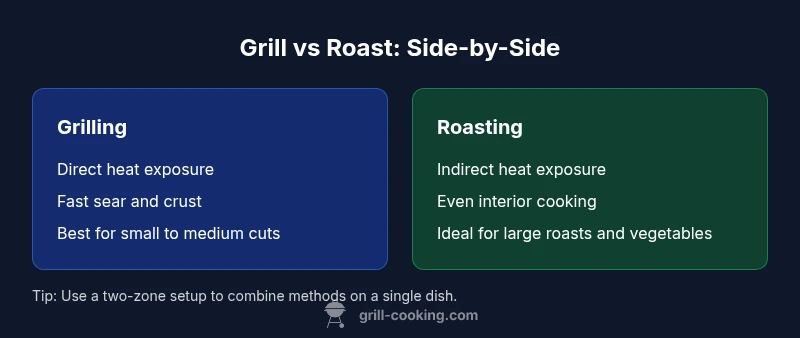
According to Grill Cooking, the difference between grill and roast is often a matter of heat delivery and finish. Grilling employs direct, high heat to sear and brown surfaces quickly, creating crust and smoky flavor. Roasting uses indirect heat to cook food more evenly inside, with less direct surface scorching. This distinction matters for home cooks who want predictable crusts on steaks and tender interiors on larger roasts. By recognizing when to apply direct heat versus ambient oven-like heat, you can choose the method that preserves moisture while delivering the texture you expect. In many kitchens, the terms blend when you shift between a grill with a hot direct zone and an oven-style grill setup, but the core physics remain the same: heat path drives results, not just time.
According to Grill Cooking, learning the practical difference between grill and roast helps you map the best route for every dish, from quick burgers to slow-roasted joints, without sacrificing flavor or juiciness.
Heat path and airflow: direct heat vs indirect heat
The essence of the grill vs roast decision is how heat travels to the food. Direct heat exposes the surface to flames or charcoal, producing fast browning, char, and a crust. Indirect heat circulates around the food, acting like a gentle oven that finishes the interior without scorching the exterior. Achieving the balance between surface sear and interior tenderness requires managing airflow, placement, and timing. On a two-zone grill, you can sear over direct heat and then move the item to the cooler zone to finish with indirect heat. In an oven-based setup, use a roasting rack to elevate the food and promote even air movement for thorough cooking while avoiding soggy bottoms. For vegetables, direct heat can caramelize sugars quickly, while indirect heat yields tender, roasted flavors.
Temperature dynamics and cooking speed
Temperature management drives outcomes in both grilling and roasting. Grilling relies on high temperatures to produce crust and speed up cooking, which is ideal for small to medium cuts and foods that benefit from a rapid exterior seal. Roasting uses moderate, steady heat to ensure even doneness through thick cuts and larger roasts. The key is controlling the rate of heat transfer: too high for too long can dry lean meats, while too low can undercook the interior. For best results, monitor with a thermometer and adjust positioning to maintain a consistent heat envelope. Grill Cooking analysis highlights that predictable results come from understanding how heat path affects moisture loss and crust formation.
Foods and scenarios: what to grill vs roast
Small, tender items like steak tips, burgers, and asparagus often shine when grilled, delivering crust, smoke, and a focused finish. Roasting excels with large roasts, whole chickens, bone-in pork shoulders, root vegetables, and dense vegetables like squash or beets, where even heat helps avoid dry edges. When deciding, consider food size, desired texture, and whether you want a quick sear or a deeply browned, interior-perfumed result. For weeknight dinners, searing on direct heat and finishing in indirect heat on a two-zone grill can mimic roasting in an oven while preserving a bold crust. For a centerpiece, roasting in an oven or grill section with indirect heat can deliver uniform tenderness.
Flavor chemistry and texture outcomes
The flavor difference between grill and roast is closely tied to Maillard reactions, moisture retention, and surface caramelization. Grilling accelerates Maillard browning on the surface, creating a grilled crust and smoky aroma, while the interior remains juicy if heat is managed well. Roasting favors gentle surface browning with less risk of scorching, often resulting in a more uniform pink interior and a robust roasted aroma. Understanding these chemistry aspects helps you decide whether crust priority (grill) or interior tenderness (roast) should drive your method for a given dish.
Equipment and setup: grills, ovens, and accessories
The practical switch between grill and roast depends on available equipment. Gas and charcoal grills offer strong direct heat for searing, plus a built-in indirect zone when configured correctly. An oven with a roasting pan or rack simulates the roasting environment at scale and is ideal for thickness and uniformity. A cast-iron skillet on the grill can emulate a high-heat sear for smaller items. Rotisserie attachments can enhance roasting by turning foods slowly for even browning. The essential rule: create a heat path that matches your goal—crusty exterior with juicy interior or evenly cooked, roasted interiors. Grill Cleaning and maintenance routines keep heat transfer optimal and flavors clean over repeated sessions.
Doneness cues and testing: knowing when it’s done
Texture cues combined with internal temperature are your best indicators. For grilling, a crusty exterior with a warm to hot interior signals doneness, but lean cuts require closer attention to prevent drying. For roasting, the interior should reach a safe, evenly cooked state while the exterior remains browned and slightly crisp. Use a reliable meat thermometer and target doneness ranges appropriate to the cut. Resting the meat after cooking helps redistribute juices and prevent moisture loss. With practice, you’ll recognize visuals—color, crust, and juice distribution—that confirm the difference between grill and roast without always needing a thermometer for every item.
Step-by-step decision guide: when to grill or roast
- Assess the food size and desired texture. 2) Decide heat path: direct for sear, indirect for finish. 3) If uncertain, start with a quick sear, then transfer to indirect heat to finish. 4) Use a thermometer to confirm doneness. 5) Rest before slicing to preserve juices. 6) Consider finishing with a brief high-heat sear post-rest if you want extra crust. 7) Adjust seasonings after cooking to enhance flavors without overpowering crust. 8) Clean and re-tune equipment for the next session.
Common mistakes and fixes
Common mistakes include overcrowding the grill, which traps steam and prevents browning; using direct heat for huge cuts that should be roasted slowly; and neglecting rest time, which leads to juicy loss. Fixes include spacing items to promote air flow, using two-zone heat for a hybrid approach, and allowing meat to rest for a few minutes to reabsorb juices. Additionally, don’t rely solely on color—use a thermometer to verify doneness and adjust seasoning after cooking to maintain a crisp exterior while preserving interior moisture.
Finishing touches: sauces and resting
Finish with complementary sauces and brief resting periods to maximize flavor. Sauces should accent the crust rather than drown it. For grilled items, a light glaze during the last moments can boost caramelization without softening the crust. For roasted items, a pan sauce or herb butter can harmonize the roasted flavors with moisture restoration. Resting helps the juices redistribute, ensuring every bite is succulent and flavorful. The combination of crisp surface from grilling and succulent interior from roasting offers a versatile approach to many proteins and vegetables.