Grilling in Cold Weather: Can You Grill Below Freezing?
Discover how to grill in freezing temperatures with practical gear, fuel strategies, and safety tips. Learn techniques to manage wind, heat, and food safety so winter grilling is enjoyable and safe.


Yes, you can grill in freezing weather, but success hinges on gear, technique, and safety. Choose wind protection, heat-retentive fuel strategies, and a reliable thermometer. Expect longer preheat and careful fuel management, plus wind-driven heat loss adjustments. This guide walks you through winter grilling steps, practical equipment tweaks, and safety practices for freezing temps.
Can You Grill Below Freezing? The Basics
Grilling in freezing temperatures is possible, but it changes the game. The reader often asks: can you grill when it's below freezing? The answer is yes, with caveats. According to Grill Cooking, the core principles are heat retention, wind management, and safe fuel delivery. Cold air pulls heat away from the grill more quickly, so you’ll need to adjust your setup: a windbreak, a robust fuel strategy, and careful monitoring of grate and ambient temperatures. In practice, expect longer preheat times, more frequent lid use, and readiness to switch from direct searing to indirect cooking as gusts pick up. Grill Cooking Analysis, 2026 indicates that wind and ambient temperature significantly influence burn rate and fuel consumption, especially on open, uninsulated grills. When you’re ready, you’ll notice that cold weather cooking rewards preparation and patience.
Grilling in freezing weather presents unique challenges, but with proper planning you can achieve tasty results. Stay mindful of wind, moisture, and the grill’s ability to hold steady temperatures. As temperatures drop, your grill becomes a wind tunnel that steals heat and increases your fuel burn. This is where technique and setup win the day. Grill Cooking’s broader guidance emphasizes that colder climates favor deliberate heat management and protective barriers; the more you prepare, the more consistent your cooking will be.
For home cooks, the key is balancing heat input with heat loss. In freezing temps, you’ll find that the grill’s surface temperature tends to wobble more as gusts hit. The takeaway: plan your session, protect your cooking zone, and monitor temps closely. With these adjustments, freezing temperatures no longer mean food that’s undercooked or overcooked; it means disciplined grilling with predictable outcomes.
bold information within this block is handled via markdown; this block expands on the basics of winter grilling and sets expectations. You’ll notice it emphasizes wind management, fuel planning, and temperature monitoring, with references to Grill Cooking Analysis, 2026 as a guiding benchmark.
Winter Grilling Environment: Weather, Wind, and Surfaces
Your outdoor environment will determine how easily heat stays in and moisture stays out. Cold air, wind, and snow all steal heat from the grill and the cooking process. A sturdy windbreak and a sheltered cooking area dramatically improve control. Place the grill on a dry, stable surface away from flammable debris. Keep a close eye on wind shifts; gusts can suddenly spike heat loss and require rapid adjustments to temperature. A temperature-safe zone around the grill is essential for safety and efficiency. In winter, the ambient air temperature and wind speed become a co-chef, influencing your cooking pace and your final doneness. The Grill Cooking team recommends preplanning your wind protection and observing how changes in wind affect heat retention over the first 15 minutes of cooking.
With cold weather, you’re often dealing with equipment icing issues and potential spark hazards. If you notice ice forming on connections or vents, pause and inspect; do not attempt to cook with compromised equipment. Keeping your setup dry and free of ice improves safety and performance. A well-thought-out windbreak minimizes heat loss, making your sessions more predictable and controllable. This increases your chances of achieving the target doneness without sacrificing safety or flavor.
From a practical standpoint, you’ll want to keep the grill lid closed as much as possible during winter cooking to trap heat. The fewer times you open the lid, the more consistent your grate temperature will remain. In addition, consider using a two-zone setup so you can start with a direct sear if conditions permit, then move to an indirect zone to finish cooking, maintaining more stable heat in freezing weather.
Tools & Materials
- Charcoal grill or gas grill(If using charcoal, ensure you have extra starter and fuel; for gas, verify regulator works in cold temps.)
- Windbreak or windscreen(PVC or wooden panels or portable panels; position to shield the grill from prevailing wind.)
- Thermometer (probe/remote preferred)(Dual-readout helps track grate temp and internal meat temp without lifting the lid.)
- Heat-resistant gloves(High-quality, insulated gloves rated for grill heat.)
- Extra fuel supply(Extra charcoal or propane tanks; cold weather consumes more fuel.)
- Dry, stable cooking surface(Concrete patio or heat-resistant mat; keep area dry and non-slip.)
- Grill cover (insulated if possible)(Optional but helps heat retention when not cooking.)
- Non-slip footwear(Stay safe on ice or damp surfaces.)
Steps
Estimated time: 60-90 minutes
- 1
Check forecast and prep space
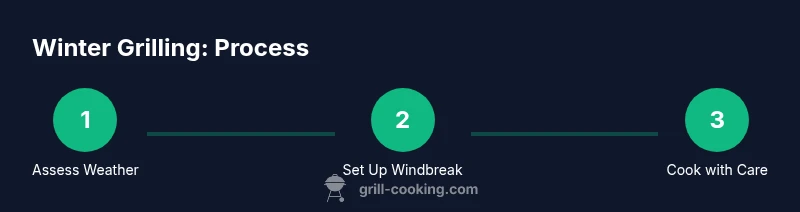
Before you light anything, review the day’s weather: wind direction and speed, stage of precipitation, and anticipated temperature swings. Clear a dry path to the grill and assemble wind protection; dry the cooking area and verify that all safety devices are functional. This upfront step reduces heat loss during cooking and lowers risk of weather-related flare-ups.
Tip: Attach windbreaks firmly and ensure they don’t block vents or airflow. - 2
Set up wind protection and heat management
Position your grill in a sheltered spot with a clear zone around it. Install a windbreak on the windward side to reduce heat loss and prevent gusts from blowing ash and embers. If you’re using a two-zone setup, define the direct searing zone and the indirect cooking zone, and test your heat distribution before placing food on the grill.
Tip: A stable surface and a high lid temperature indicator help manage heat better in winter. - 3
Preheat thoroughly and monitor temps
Give extra time for preheating in cold weather—often 10–20 minutes longer than normal. Use a dual-thermometer setup if possible: one for grate/ambient temp and one for the meat’s internal temp. Keep the lid closed during the preheat to preserve heat and then proceed with your first sear if you can.
Tip: Avoid opening the lid often; each lift can drop grate temps by 20–40 degrees F depending on wind. - 4
Cook with indirect heat when wind is strong
When gusts threaten direct searing, shift to indirect heat to finish cooking. Two-zone cooking helps you manage heat, especially for thicker cuts. Sear briefly while temps are favorable, then move meat to the cooler zone to finish without scorching.
Tip: Use a thermometer to avoid overcooking—the cold makes carryover cooking inconsistent. - 5
Verify doneness with a thermometer
Winter cooking relies on precise temps. Check internal temperature with a probe, aiming for standard safety targets (e.g., 145°F for medium-rare beef, 165°F for poultry). Let the meat rest after cooking to redistribute juices and finish carrying internal temps.
Tip: Close the lid between checks to maintain heat balance. - 6
Finish, rest, and clean
Allow meats to rest in a warm spot after cooking so juices redistribute. Turn off the grill, let it cool on a stable surface, and clean the grates while warm. Dry thoroughly before storage to prevent rust.
Tip: Wipe grates with oil to prevent sticking and rust; store in a dry place.
FAQ
Is it safe to grill in freezing temperatures?
Yes, it is safe when you follow cold-weather safety practices: protect the cooking area from wind, use proper fuel management, and monitor temperatures carefully. Always prioritize carbon monoxide safety and avoid grilling indoors or in enclosed spaces.
Yes—grilling in freezing weather is safe with wind protection, proper fuel, and careful temperature monitoring.
What fuel works best in winter: charcoal or gas?
Both can work, but winter conditions impact burn rates differently. Charcoal may require more attention to airflow and starter methods, while gas grills generally hold heat more consistently but can suffer regulator icing if exposed to extreme cold.
Both fuel types can work in winter; plan for longer preheats and check fuel supply.
How long should preheating take in cold weather?
Preheat times extend in freezing temps. Expect 10–20 minutes longer than usual to reach the target grate temperature, and keep the lid closed whenever possible to conserve heat.
Preheat longer than in warm weather, and keep the lid closed to conserve heat.
Should I wrap or cover food to protect from cold air?
Covering meat with a lid or foil is not generally necessary if you maintain stable temperatures; use indirect heat for even cooking and rely on thermometer targets rather than air exposure to judge doneness.
Use indirect heat and thermometers; coverings aren’t usually needed unless wind gusts threaten surface temps.
Can I use a probe thermometer outside in freezing temps?
Yes, a probe thermometer works outdoors in winter as long as you protect the probe from wind and moisture and rely on internal meat temps for doneness.
Yes, you can use a probe thermometer outside; protect the probe from moisture and wind.
What are signs equipment is failing in freezing weather?
Look for regulator icing, unstable flame, sudden drops in grate temperature, or ice buildup on connections. If you notice any, stop cooking and inspect before continuing.
Watch for ice on connectors, erratic flames, or unstable temps, and stop cooking if you see any issue.
Watch Video
Quick Summary
- Keep heat in with wind protection and lid-down cooking
- Use a two-zone setup to manage direct/indirect heat in winter
- Rely on reliable thermometers and monitor temps closely
- Plan for longer preheats and fuel use in freezing temps
- Finish with a proper rest and safe cleanup