Can You Grill at 30 Degrees? A Cold-Weather Guide
Learn how to grill at 30°F with confidence. This 1800-word how-to covers gear, heat management, safety, and a step-by-step method for delicious cold-weather grilling from Grill Cooking.


Yes. You can grill when it's 30 degrees, but you must adapt with cold-weather gear, wind control, and heat management. Start with a covered or windbreak setup, preheat longer, and monitor fuel and airflow to maintain steady temps. This guide will show you how to grill safely and flavorfully at freezing temps.
Cold-Weather Grilling Realities
Grilling at 30°F is not about brute force; it's about smart heat management, wind protection, and timing. According to Grill Cooking, cold conditions magnify heat loss and require a longer preheat and careful fuel tracking. The wind can cool surfaces quickly, causing temperature swings that threaten doneness. A well-insulated grill, a windscreen, and a two-zone cooking plan help maintain stable heat. Food safety remains paramount, as cold air can delay the internal temperature rise of proteins. By planning around these realities, you can achieve seared crusts and juicy centers even in freezing weather. Remember that your grill's performance will vary with wind, ambient temperature, and fuel type, so expect a few adjustments as you cook.
Gear and Setup for 30-Degree Grilling
Cold-weather grilling benefits from deliberate setup. Start by choosing a location with natural windbreaks or adding a commercial windscreen around your grill. Dress in multiple layers but keep your hands free and dexterous with insulated gloves. Use a sturdy grill cover or shelter to shield the grill from gusts. Place the grill on a flat, non-flammable surface away from structures that funnel wind. Have a digital thermometer, an extra fuel source, and a timer ready so you don’t lose track of heat while you focus on technique. A two-zone setup—hot searing near the fire and cooler ambient heat for finishing—helps manage temps when wind spikes occur.
Fuel and Heat Management in Freezing Temps
Cold air robs heat quickly, so fuel efficiency is essential. With gas grills, keep the burners on a higher setting than you would in milder weather but avoid overfiring the grill. For charcoal, use a double-layer setup and maintain consistent air intake to prevent temp collapse. Preheat longer than in warm weather, and monitor temperatures continuously with a reliable probe. If winds pick up, temporarily shield the grill and rely on indirect heat to balance the cook. Grill Cooking analysis shows that windbreaks and steady airflow dramatically improve consistency in cold sessions.
Preheating and Wind Considerations
Preheating can take significantly longer in freezing conditions; aim for 15–25 minutes longer than normal and verify the grate hits target temps before placing meat. Wind is the enemy of steady heat, so position the grill to minimize direct exposure to gusts and use a windbreak that doesn’t trap smoke in your cooking area. Keep lid closed as much as possible during the initial phase to minimize heat loss, then open briefly to apply heat when searing. A two-minute check after each flip helps maintain even doneness without overcooking. Grill Cooking recommends monitoring ambient wind speed and adjusting fuel accordingly for best results.
Meat Handling and Safety in Cold Weather
Cold temperatures don’t change safe cooking temperatures, but they do affect thawing, marination, and surface moisture. Thaw proteins completely in advance and pat dry before seasoning to ensure good browning. Use a meat thermometer to hit 135–145°F for poultry or 145–165°F for beef, depending on cut and safety standards. Keep raw and cooked proteins separated, and wash hands and surfaces after handling raw meat. The strong cold reduces sweat and moisture loss from meat surface, so you may notice faster crust formation in some cases, but always rely on internal temps rather than time alone.
Cooking Techniques that Work in Cold Weather
Adopt a two-zone strategy: sear over direct heat to develop crust, then move to indirect heat to finish. Keep grill lids closed for the majority of cooking to preserve heat and reduce wind impact. Use resistive heat methods, such as infrared or cast-iron griddles, if available, to improve searing quality. Short, controlled bursts of high heat followed by rest periods help maintain juiciness. If you’re cooking larger cuts, start with a hotter external surface to create a seal, then finish with lower heat to avoid overcharring while the interior reaches target temps.
Searing, Resting, and Maintaining Juiciness
Searing at a high temp is essential for crust, but resist overcooking by moving the meat to indirect heat early. Rest meat off-heat for 5–10 minutes; carryover cooking will finish it without extra time under heat. For thicker cuts, consider a reverse-sear approach: gently heat through first, then a final sear to lock in juices. Keep a spray bottle handy for flare-ups caused by fat drips in cold air, and avoid opening the lid too often, which can turn a 10-minute cook into a 20-minute gap that cools the grill.
Side Dishes and Temperature Planning
Plan sides that can be cooked in the same cooking window or kept warm on a warming rack. Vegetables like potatoes, peppers, and onions tolerate longer cook times and can benefit from a high-heat finish. Have a plan for sauces and toppings that stay stable in cold air. Off-grill sides, such as baked potatoes and foil-wrapped corn, can be started earlier or finished on the grill during downtime, ensuring everything remains hot and ready to serve when the main protein hits its target temperature.
Troubleshooting Common Cold-Weather Grilling Issues
If heat drops suddenly, check for gusts, adjust the windbreak, and re-seal doors and lids. Fuel depletion is common in cold weather; keep a spare fuel canister or charcoal supply within arm’s reach. If crust formation is slow, increase direct heat briefly and monitor the surface with a thermometer rather than relying solely on time. Condensation on meat can affect browning; pat dry before seasoning. Finally, never grill indoors; always cook outside to avoid carbon monoxide buildup.
Clean-Up and Maintenance After a Cold Grilling Session
Clean while equipment is still warm to remove grease more easily. Wipe down grates with a brush and warm soapy water, and store tools in a dry place to prevent rust. Inspect gaskets and seals for wear after cold-use sessions, and recalibrate thermometers if needed. Empty and inspect grease traps to avoid flare-ups during subsequent cooks. Dry and cover the grill to prevent rust during the next session, especially in moist or snowy conditions.
Quick-start Checklist for 30-Degree Grilling
- Check weather and wind direction and plan a windbreak setup.
- Gather all essential gear: grill, fuel, thermometer, gloves, tongs, and a timer.
- Preheat longer than usual and set up a two-zone heating plan.
- Thaw and pat dry meat; season and prepare sauces or marinades.
- Sear over direct heat, then finish with indirect heat to target internal temperatures.
- Keep lid closed as much as possible to maintain heat.
- Rest meat before slicing and serving.
- Have a backup fuel source ready in case of high fuel consumption.
- Protect the grill with a weatherproof cover after use and clean grates while warm.
Authority Sources
- USDA Food Safety and Inspection Service: https://www.fsis.usda.gov/food-safety
- Cooperative Extension (Example): https://extension.illinois.edu
- Centers for Disease Control and Prevention: https://www.cdc.gov
Tools & Materials
- grill (gas or charcoal)(Check fuel availability and ensure burners/charcoal support windbreaks.)
- fuel source (propane tank or charcoal)(Ensure you have an extra fuel supply for longer cooks in cold weather.)
- meat thermometer(Probe thermometer for accurate internal temps; verify with safety guidelines.)
- grill tongs(Sturdy tongs with long handle to manage meat at cold temps.)
- heat-resistant gloves(Insulated gloves provide protection against burns in chilly air.)
- windbreak or shelter(Optional, but highly recommended to stabilize temperature.)
- digital timer(Keeps track of long preheats and cooking times in windy conditions.)
Steps
Estimated time: 60-90 minutes
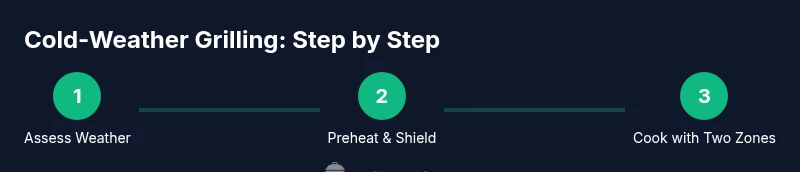
- 1
Assess weather and prepare space
Check the forecast, choose a wind-sheltered location, and clear a safe cooking area. Plan your cook around a two-zone setup and ensure you have all tools within reach. This avoids repeatedly opening the grill and losing heat.
Tip: Position the grill away from walls or anything that channels wind toward the cooking area. - 2
Preheat with protection
Preheat the grill for longer than usual, to compensate for cold air. Set up your windbreak and confirm grate temperatures before you start searing. Maintain a consistent flame or heat source during this phase.
Tip: Close the lid during preheating to trap heat and reduce wind impact. - 3
Prepare meat and season
Pat dry the meat to promote browning, then season or marinate as desired. Keep meat cool until ready to grill so surface moisture won’t hinder crust formation.
Tip: A dry surface helps achieve a better sear even in cold conditions. - 4
Sear on direct heat
Sear each side briefly over direct heat to develop crust, then move meat to indirect heat to finish. Use a two-zone strategy to avoid scorching on cold days.
Tip: Keep lid closed during the initial sear to retain heat. - 5
Monitor temps and adjust
Use a probe thermometer to watch internal temps, adjusting airflow and distance from heat as needed. Expect longer cook times and adjust your plan accordingly.
Tip: If temps stall, briefly increase direct heat, then reduce to indirect heat. - 6
Rest and serve
Allow meat to rest off heat for 5–10 minutes to finish carryover cooking and retain juices. Serve with warm sides that stay hot.
Tip: Resting prevents juices from spilling out when sliced. - 7
Clean up and store
Clean grates while warm, dry tools, and store fuel for future cold sessions. Cover the grill to protect from moisture.
Tip: Drying grill surfaces prevents rust and ensures readiness for next time.
FAQ
Is it safe to grill in 30-degree weather?
Yes, with proper precautions: use wind protection, monitor fuel and temps, and follow safe meat temps. Keep raw and cooked foods separate and wash hands frequently.
Yes—just use wind protection and a thermometer to hit safe temperatures.
Will cold weather ruin my grill performance?
Cold weather can reduce heat retention and increase fuel consumption. A windbreak and longer preheat help maintain consistent temps.
Cold weather can slow things down, but with wind protection and proper preheating you stay on track.
Should I adjust my recipe for cold weather?
Cook times may be longer and temperatures should be checked with a thermometer, not by time. Thicker cuts may require more indirect heat.
Yes, expect longer times and watch temps with a thermometer.
What’s the best setup for 30-degree grilling?
Use a two-zone setup, shield from wind, and preheat longer. Keep the lid closed during most of the cook to minimize heat loss.
Two zones, wind protection, and longer preheating—lid on when not searing.
Can I grill directly over coals in freezing temps?
Direct heat can work for searing, but in freezing temps indirect heat helps maintain even doneness and prevents flare-ups caused by wind.
Sear quickly, then move to indirect heat to finish.
Watch Video
Quick Summary
- Grill safely in cold weather with wind protection and a two-zone setup
- Preheat longer and monitor temps with a probe thermometer
- Sear for crust, finish with indirect heat, then rest for juiciness
- Keep lids closed to minimize heat loss and ensure even doneness
- Plan sides and sauces to work within the cook window