Can You Grill and Smoke at the Same Time? A Practical Guide
Learn how to grill and smoke at the same time with practical steps, temps, and equipment tips. Master direct and indirect heat, wood choices, and safety for flavorful results.


You can grill and smoke at the same time by using a two-zone setup: one hot direct-heat zone for searing and a cooler indirect-heat zone for gentle smoke. The key is careful vent control, steady temps, and choosing wood and meat that suit this method. Start with mild cuts to practice.
Fundamentals: What happens when you grill and smoke at once?
Grilling and smoking at the same time relies on two heat realities inside a single cooker. A hot direct-heat zone creates crust, color, and quick sizzle, while a cooler indirect zone invites smoke to surround the meat without excessive contact with flames. This combination is a cornerstone of backyard barbecue and a technique many cooks use to save time and still deliver flavor-rich results. According to Grill Cooking, success depends on clean heat, stable temperatures, and careful airflow management. Food quality benefits most when you match the method to the cut: larger, well-marbled pieces fare better with longer, gentler smoke; lean cuts benefit from a brief initial sear to set crust before the smoke rounds out the cook. Practically, you’ll think in terms of a crust-building phase followed by a gentle finish in the smoke. The aim is to reach the target internal temperature you’d use for traditional smoking, while also employing short, strategic sears to lock in juices. With a two-zone approach, you can finish a rack of ribs, a pork shoulder, or a whole bird in a single session without swapping equipment. The key is consistency: maintain the right balance of heat, wood, and airflow, and you’ll get a crusty exterior with a smoky interior.
Equipment and setup: creating two heat zones
The core requirement for this method is a grill that can hold two distinct heat zones at once. A charcoal grill is easiest: bank the coals on one side for direct searing and leave the other side cooler for indirect cooking, optionally adding a water pan to stabilize humidity. If you’re using gas, place the burners to create a high-heat zone on one side and a lower-heat, vented zone on the other, or use a dedicated smoker box to introduce smoke without cranking the main heat. An entry-level two-zone plan beats a single-zone setup for this task because you can sear aggressively, then slide the meat into the smoke without moving between different devices. Wood choice matters: chips offer quick smoke but burn fast, while chunks provide longer, steadier flavor. If your grill lacks a built-in smoke drawer, foil packets with holes or a dedicated wood tray will do the trick. The setup guide below gives you a practical blueprint: place a pan of water on the indirect side to stabilize temperature, open vents for airflow, and keep a thermometer in the grill so you can track both ambient and meat temps.
Temperature strategies: direct heat, indirect heat, and smoke control
When grilling and smoking together, temperature management is the deciding factor. The hot zone should behave like a blast furnace for a quick crust at the start, typically in the range you’d use for a sear. The cooler zone should hold a steady low-to-mid smoke temperature, allowing wood smoke to permeate the meat without drying it out. The exact numbers will depend on your grill and the cut, but a common approach is to target a higher surface temperature for searing—then drop the grill to a smokier, indirect range for the remainder of the cook. Wood smoke is most effective when introduced early and maintained in a consistent pace; too much smoke early on can overwhelm the meat, while too little smoke leaves the crustless surfaces bland. A water pan helps keep humidity steady so the meat doesn’t seize under dry air. Vent control matters: open vents to rise temperatures for a quick sear, then partially close them to settle into the indirect, smoky phase. Remember to monitor both grill ambient temperature and internal meat temperature with a reliable thermometer.
Step-by-step playbook: a practical approach
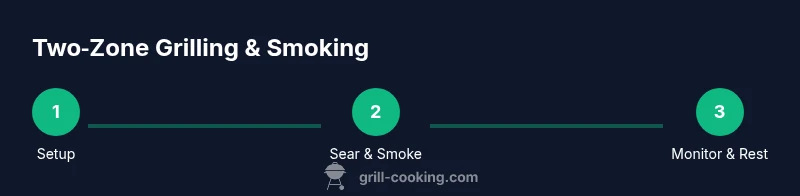
- Set up two heat zones on your grill and verify you can maintain distinct temps. 2) Prepare the meat with a light rub or marinade that won’t overpower smoke. 3) Light the coals and establish a bright direct zone for searing; bring the indirect zone up to a gentle, smoky heat. 4) Sear the meat briefly to develop a crust, about 1–2 minutes per side, then move it to the indirect zone. 5) Begin adding wood smoke in moderate amounts and monitor internal temp; adjust vents to stabilize around your target range. 6) When the meat nears the finish, reduce heat and allow indirect cooking to finish; rest before slicing. This sequence minimizes flare-ups and maximizes flavor. Pro tip: keep a spray bottle handy to dampen any flare-ups rather than dousing with lighter fluid, which can ruin flavor.
Wood, smoke flavors, and timing: choosing woods and timing for bite
Wood choice shapes aroma and intensity. Fruitwoods (apple, cherry) bring gentle sweetness, while hardwoods like hickory or oak offer stronger smoke without overpowering lean proteins. Start with a medium smoke level and taste as you go; you can always add more wood later, but you can’t take smoke away as quickly. Chips burn faster; use chunks for longer cooks to ensure a steady flow of flavor without constant replenishment. Layer flavor by combining woods—for instance, a mild apple base with a touch of hickory near the end of cooking can yield a balanced profile. Remember that timing matters: most proteins benefit from a longer, steady smoke at a modest temperature rather than a brief burst of heavy smoke.
Safety, troubleshooting, and common mistakes
Safety comes first when dealing with hot coals, open flames, and wood smoke. Always work with heat-resistant gloves and long tools, keep a water source nearby, and never add accelerants to hot coals. Avoid opening vents completely during cooking, which can cause temperature swings and flare-ups. Common mistakes include over-stacking wood early on, using grills that cannot maintain two distinct zones, and removing meat too soon, which can cause moisture loss. If you notice excessive wrinkling or a rapid temp rise, pull the meat to the indirect zone and adjust vents to bring back stability. Practicing with inexpensive cuts first allows you to dial in timing and heat management without risking more expensive proteins. For safe and informed cooking, consult authoritative sources such as USDA and CDC guidelines.
Authority sources and recommended reading
For safety and best practices, refer to credible resources: USDA Food Safety and Inspection Service provides guidelines on cooking temperatures and meat safety, while the CDC offers general food safety tips. Additionally, many universities and extension programs provide practical grilling insights that align with home-cook needs. See: https://www.fsis.usda.gov/food-safety, https://www.cdc.gov/foodsafety/ and https://www.nifa.usda.gov/ for trustworthy guidance.
How to adapt to your gear and space
No two grills are identical, so adapt this approach to your equipment. If you only have a single-zone grill, you can still create smoke by using foil packets and moving the meat to a cooler portion of the grill. If you’re using a gas grill with multiple burners, you can run one side hot and the other side on low or off to create a makeshift indirect zone, then add a smoker box or wood tray to introduce smoke without raising heat. The overarching principle remains: create effective separation between searing heat and the smoke environment, maintain stable temps, and respect the meat’s target internal temperature.
Final note
With patience and practice, grilling and smoking at the same time becomes a repeatable, scalable technique. Start with favorable cuts, track results, and build your confidence before attempting longer cooks or bolder flavors. The Grill Cooking team emphasizes method and consistency for best flavor outcomes.
Tools & Materials
- Charcoal grill with two-zone capability(Ensure you can maintain two distinct heat zones (direct and indirect))
- Charcoal chimney starter(For quick, even lighting without lighter fluid)
- Wood chips or chunks (apple, hickory, oak, and/or fruitwoods)(Use chunks for longer cooks; chips work for shorter sessions)
- Smoker box or foil packets with holes(Optional if your grill lacks a dedicated wood drawer)
- Meat thermometer (instant-read or probe)(Monitor internal temp for precise doneness)
- Heat-safe gloves and long-handled tongs(Protection when handling hot grates and coals)
- Water pan or shallow pan with water(Helps stabilize temperature and humidity)
- Probe or grill thermometer (for ambient temp)(Useful when maintaining a steady indirect zone)
Steps
Estimated time: 90-180 minutes
- 1
Set up two heat zones
Arrange your grill so the coals or burners create a hot direct zone and a cooler indirect zone. Place a water pan in the indirect side to stabilize temp and humidity. Verify you can hold two distinct temps with your thermometer.
Tip: Preheat both zones before adding meat; a clean start reduces sticking and helps crust formation. - 2
Prepare the meat
Pat dry, apply a light rub or marinade that won’t overpower the smoke. Let the meat rest to approach room temperature for even cooking.
Tip: Lightly oil the surface to improve crust without creating flare-ups. - 3
Light coals and establish the direct zone
Ignite the coals in the direct zone and bring the surface temperature up for a quick sear. Keep the indirect zone ready but cooler for the long finish.
Tip: Control airflow with vents to avoid overshoot in temperature. - 4
Sear briefly, then move to indirect
Sear meat 1–2 minutes per side to develop a crust, then relocate to the indirect zone to finish with smoke.
Tip: Use a thermometer to confirm crust formation without overcooking the interior. - 5
Introduce smoke and monitor
Add wood smoke in moderate amounts and monitor both ambient and meat temps. Adjust vents to maintain a steady indirect temperature around your target range.
Tip: Avoid a constant smoke dump; steady, balanced smoke yields better flavor. - 6
Finish, rest, and serve
When near the target internal temp, remove from heat, rest the meat to reabsorb juices, then slice and serve hot.
Tip: Resting is essential for juiciness; tent loosely with foil to keep warm without steaming.
FAQ
Can you grill and smoke at the same time on any grill?
Most two-zone grills can handle this method, but compact or single-zone grills may require improvisation such as foil packets or a small wood tray. A grill that allows separate heat zones makes the process smoother. Always audit your grill’s capability before attempting a long cook.
Most two-zone grills work well, but single-zone grills need improvisation. Check your setup before starting.
What meats work best for this technique?
Cuts with forgiving fats and bone-in sections—like ribs, pork shoulder, brisket, and whole birds—tend to perform best, since the indirect heat keeps moisture and the direct heat adds crust. Lean cuts can overcook quickly if not monitored closely.
Ribs, pork shoulder, brisket, and whole birds work well; lean cuts require careful timing.
What wood types are ideal for this approach?
Fruitwoods (apple, cherry) give gentle sweetness, while hickory or oak add more robust smoke. Start with milder woods and balance with a touch of stronger wood later in the cook to avoid overpowering flavors.
Use milder woods first, then a touch of stronger wood later if needed.
How do I avoid overpowering smoke?
Introduce smoke gradually and monitor the aroma closely. If the smoke tastes too strong, pull back by reducing wood or increasing ventilation to temper the intensity.
Add smoke gradually and tweak vents to keep flavor balanced.
Are there safety considerations I should follow?
Always wear heat-safe gloves, keep a water source nearby, and never use accelerants on hot coals. Stay attentive to flare-ups and maintain proper ventilation to avoid smoke buildup indoors.
Wear gloves, keep water handy, and avoid accelerants.
Can I adapt this method to a gas grill with indirect heat?
Yes. Use one side burners on high for the direct zone and the other side on low or off for indirect cooking; attach a smoker box or use foil packets to introduce smoke without adding heat. Manage airflow via vents and monitor internal temps closely.
Gas grills can work with a separate indirect zone and smoke source.
Watch Video
Quick Summary
- Plan two heat zones before cooking began
- Sear first, then finish with controlled smoke
- Choose wood and meat combos that suit the cook time
- Monitor temps and rest meat after cooking