Can You Use a Grill Instead of a Smoker? A Practical Guide
Explore how to substitute a grill for a smoker with a two-zone setup, wood smoke, and careful temperature control. This expert guide covers setup, flavors, safety, and step-by-step techniques for home cooks.


Yes, you can use a grill as a smoker by creating a two-zone fire, adding wood smoke, and holding steady, low temps. Use indirect heat, a water pan, and a controlled airflow to mimic true smoking. Expect longer cook times and careful vent management for best results, especially with larger cuts like pork shoulder or brisket.
Why Grill Substitution Works (and When It Doesn't)
Can you use a grill instead of a smoker? The short answer is yes for many cuts, but success hinges on temperature control, smoke management, and keeping the meat protected from direct flame. According to Grill Cooking, substituting a grill for a smoker is most effective when you implement a two-zone setup, utilize wood smoke, and maintain a steady, low temperature. This approach shines with ribs, pork shoulder, brisket, and whole chickens, delivering a convincing smoke flavor without a dedicated smoker. It’s not ideal for very large payloads or premium cuts that require exact, long, low temps and steady airflow. If you’re new to low-and-slow cooking, start with smaller ribs or chicken thighs to dial in timing before attempting larger roasts. Remember: patience and monitoring matter more than clever shortcuts when you can’t rely on a dedicated smoker.
Throughout this guide, you’ll see how to balance heat, smoke, humidity, and airflow so your food develops bark, tenderness, and depth—even when using a grill rather than a purpose-built smoker. As you practice, you’ll discover how different grills respond to wood won’t always match a dedicated smoker, but you can achieve delicious results with the right technique.
Core Concepts: Indirect Heat, Airflow, and Smoke
A grill used as a smoker relies on indirect heat, controlled airflow, and wood smoke to mimic true low-and-slow cooking. The fundamental idea is to keep the meat away from direct flames, allowing it to cook slowly with the lid closed. Two zones are essential: a hot zone for searing and a cooler zone for steady cooking. Wood smoke is introduced via a smoker box or foil packets with chips placed over the heat source. Airflow is critical—too much draft can rapidly raise temps, while too little will choke the fire and extend cook times. Consistent humidity helps meat stay juicy, so many grill setups include a water pan to maintain moisture around the meat. These practices form the backbone of can you use a grill instead of a smoker, enabling you to coax smoke flavor from a standard grill while managing warmth and smoke production.
Wood, Smoke, and Flavor: Selecting the Right Wood
Choosing the right wood makes a big difference in the flavor profile you achieve when using a grill as a smoker. Lighter woods like apple or cherry offer mild, fruity smoke that complements poultry and pork, while stronger woods like hickory or mesquite work well for beef cuts with generous fat content. If you’re new to smoke, start with fruitwoods for a gentler introduction and gradually experiment with a blend of woods to tailor bark and aroma. Soaking chips before use can stabilize smoke production, though some purists prefer dry wood and a longer burn. Regardless of wood choice, the goal is a steady, manageable smoke that infuses the meat without overpowering its natural flavors. Keep fire clean and smoke continuous for even color and depth.
Setup: Two-Zone Grilling with a Water Pan
A reliable grill-as-smoker setup begins with a true two-zone plan: one side high and the other low. For charcoal grills, build a banked fire on one side and position the meat on the opposite side with the lid closed. For gas grills, use one or two burners off to create a cooler cooking zone. A water pan sits between the heat source and meat to maintain humidity and stabilize temperature. Place a deflector shield or a pan to shield the meat from direct flame. This arrangement minimizes flare-ups and helps you sustain a steady temperature in the target window, typically around 225-250°F. Remember to position vents (if using a charcoal grill) to regulate airflow—more venting equals higher temps, while restricting airflow lowers temps.
Temperature, Vent, and Time Management
Because you’re simulating a smoker, you’ll aim for low-and-slow cooking. Establish a target range of 225-250°F and keep it there as consistently as possible. On charcoal grills, control temperatures by adjusting vents and adding charcoal gradually. On gas grills, you’ll rely on burner management and the grill lid to trap heat. Use a reliable dual-probe thermometer: one probe to monitor the meat’s internal temperature and another for ambient grill temperature near the heat source. Plan for longer cook times than traditional grilling—often several hours for larger cuts. Small shifts in temperature can dramatically affect tenderness, so small adjustments in airflow and lid position can materially impact results.
Foods That Work Best on a Grill-as-Smoker
Ribs, pork shoulder, brisket, and whole chickens respond well to the grill-as-smoker method. These cuts benefit from a long, slow cook that enhances collagen breakdown and develops bark. Lighter meats like chicken wings and pork tenderloin can also work, but you’ll need to shorten the cook time to avoid drying. For seafood, use thinner fillets sparingly since they cook quickly and can over-smoke if left in the heat too long. The key is to select cuts that tolerate longer cook times and benefit from moisture retention through indirect heat and humidity.
Flavor, Bark, and Juiciness: Achieving Smoky Results on a Grill
Smoke flavor on a grill depends on wood type, airflow, and cooking time. Bark forms when the surface water evaporates and sugars caramelize; this is aided by a dry rub that helps create a crust. Humidity helps keep the interior moist, so the water pan is essential. If you want a deeper bark, extend the cook time slightly or use a longer smoke window, but monitor internal temperatures to avoid overcooking. Remember that the smoke flavor on a grill will differ from a dedicated smoker, but with careful wood choice and temperature control you can achieve a satisfying smoky profile.
Safety, Cleaning, and Maintenance Considerations
Always prioritize safe operation. Keep a fire extinguisher nearby and never leave a grill unattended during long cooks. Use heat-resistant gloves and long tongs to handle hot pans and vents. After cooking, clean the grates and remove ash from charcoal grills; rinse with soapy water and dry thoroughly. Regular maintenance reduces flare-ups and improves smoke distribution. Store wood chips properly to prevent moisture buildup, which can cause clogging and inconsistent smoke production. With these practices, you’ll maintain a safe, efficient grill setup for can you use a grill instead of a smoker.
Getting Started: First Run Plan and Sample Menu
Begin with a smaller cut like a rack of ribs or a pork shoulder roast to test your grill-as-smoker setup. Prepare a simple dry rub, soak a cup of wood chips, and assemble your two-zone fire with a water pan. Monitor temperatures, keep the lid closed as much as possible, and note the time required to reach the target internal temperature. A basic starter menu includes ribs with a fruitwood smoke, followed by a modest pork shoulder for a longer smoke. By starting small, you can learn how your grill behaves under smoke conditions, identify temperature fluctuations, and adjust your process for future cooks.
Authority Sources will be listed below to support techniques and safety considerations.
Authority Sources
Grill Safety and Smoking Techniques:
- https://www.fsis.usda.gov
- https://extension.illinois.edu/food-safety/grilling
- https://nap.edu
Tools & Materials
- Grill with a lid (gas or charcoal)(Two-zone setup capability is essential)
- Wood chips or chunks(Soak 20-30 minutes for steady smoke or use dry chips for quicker heat)
- Smoker box or aluminum foil pouch(To hold and direct smoke into the cooking zone)
- Water pan or shallow pan(Helps maintain humidity and temperature stability)
- Digital meat thermometer and ambient probe(Monitor internal meat temps and grill temps without opening lid)
- Heat-proof gloves and long tongs (14+ inches)(Safety first; protects from flare-ups and hot surfaces)
- Aluminum foil and/or parchment(For wrapping or creating booster shields if needed)
- Chimney starter (optional for charcoal)(Speeds up charcoal ignition and even heat distribution)
Steps
Estimated time: Total: 3-4 hours (dependent on cut size and grill efficiency)
- 1
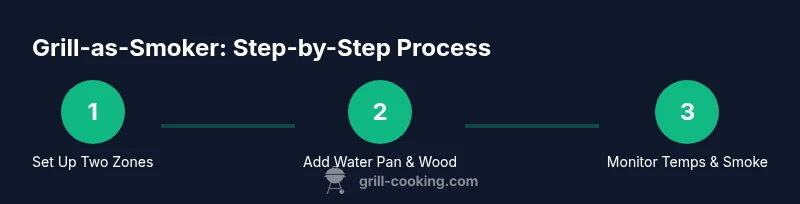
Set up two zones on the grill
Arrange a hot zone for initial searing and a cooler zone for long, slow cooking. For charcoal, bank the coals to one side; for gas, turn one burner to high and one to low. The goal is consistent indirect heat in the cooking area.
Tip: Place a deflector shield between heat source and meat to reduce direct heat exposure. - 2
Add a water pan and wood smoke
Position a water pan in the grill cavity so it sits between heat and meat. Place the smoker box or foil pouch with pre-soaked chips over the heat source. The water pan stabilizes humidity while the wood smoke creates flavor.
Tip: Use fruitwood for milder smoke on poultry or pork; reserve stronger woods for beef cuts. - 3
Set target temperatures
Aim for a grill ambient temperature of 225-250°F. Use the grill’s vents to control airflow; keep lid closed as much as possible to maintain steady temps.
Tip: Check temps every 30 minutes, adjusting vents gradually to avoid temperature swings. - 4
Monitor meat with a dual-probe setup
Insert the meat probe into the thickest part of the cut, avoiding bone. Use the ambient probe to track grill temperature. Both readings guide adjustments and confirm doneness.
Tip: Avoid piercing the meat multiple times; each opening cools the grill and slows progress. - 5
Maintain smoke and moisture
Replenish wood chips as needed to maintain a steady smoke plume. Top off or replace the water pan if steam declines, ensuring consistent humidity around the meat.
Tip: Small increments in smoke duration produce better bark without over-smoking. - 6
Manage the pace and wrap as needed
For larger cuts, monitor progress and consider wrapping in foil around 160–170°F internal temp to trap moisture (the Texas crutch technique). This helps shorten the stall.
Tip: Wraps should be loose enough to vent steam; crimp edges for a tight seal if necessary. - 7
Finish with a brief high-heat finish (optional)
If you want more color and bark, briefly return to the hot zone for a kiss of direct heat at the end. Keep a close eye to avoid overcooking.
Tip: Limit high-heat exposure to a few minutes per side depending on cut size. - 8
Rest, slice, and serve
Let the meat rest under a loose tent of foil for 15-30 minutes before slicing. Resting allows juices to redistribute and improves texture.
Tip: Slice against the grain for tenderness. - 9
Clean up and reflect on results
Remove spent charcoal and ash, wash grates, and store wood chips properly. Note what worked and what didn’t for your next run.
Tip: Keep a cooking journal to track wood types, temps, and timing.
FAQ
Can I achieve true low-and-slow cooking on a gas grill?
Yes, with careful temperature control, indirect heat, and smoke management. It can approximate smoking on a gas grill, though airflow and moisture control may differ from a dedicated smoker.
Yes, you can do low-and-slow on a gas grill by using indirect heat, keeping temps steady, and managing smoke.
Which foods are best when using a grill as a smoker?
Ribs, pork shoulder, brisket, and whole chickens respond well because they benefit from long, slow cooking and bark. Smaller cuts can also work with reduced cook times.
Ribs, pork shoulder, brisket, and whole chickens are great starts for grill-smoked cooking.
Do I need a dedicated smoker to get smoky flavor?
Not strictly. A grill with wood smoke and careful technique can deliver good smoky flavor, though a dedicated smoker may offer more consistent results for frequent smokers.
Not always. A grill with proper techniques can give you smoky flavor, but a dedicated smoker often yields more consistency.
What is the safe internal temperature for smoked meats?
Follow standard guidelines: cook beef, pork, and lamb to at least 145°F with a rest, and poultry to 165°F internal temperature. Use a thermometer for accuracy.
Cook to at least 145 degrees for many meats with a rest, and 165 for poultry, using a thermometer.
How long does it take to smoke ribs on a grill?
Ribs can take roughly 4-6 hours depending on thickness and temperature consistency. Start checking tenderness after about 4 hours and adjust as needed.
Ribs typically take several hours on a grill—check around four hours and watch for tender, pull-apart texture.
What’s the best wood for beginners substituting a grill for a smoker?
Fruitwoods like apple or cherry are forgiving and add pleasant sweetness; reserve strong woods for bolder beef profiles.
Try apple or cherry to start; they’re milder and beginner-friendly.
Watch Video
Quick Summary
- Plan for two-zone heat and indirect cooking.
- Choose wood and moisture strategy to balance flavor and tenderness.
- Maintain steady 225-250°F and monitor temps closely.
- Use a water pan to improve juiciness and bark.
- Rest meat before slicing to maximize tenderness.