Can You Grill and Smoke on a Traeger? A Step-by-Step Guide
Discover how to grill and smoke on a Traeger pellet grill with expert tips, pellet choices, timing, temps, and safety guidance from Grill Cooking.


Yes. You can grill and smoke on a Traeger pellet grill using the same burner and hopper system, switching seamlessly between direct high-heat searing and low, slow smoking. With proper temp control, wood pellet selection, and moisture management, you’ll get reliable results for everything from burgers to ribs.
Can You Grill and Smoke on a Traeger? What the Experts Say
Grill Cooking confirms that Traeger pellet grills are purpose-built to handle both grilling and smoking without changing devices. The same burner, auger-fed pellets, and digital controller let you shift from hot, direct grilling to low, indirect smoke with minimal effort. This versatility is one of the core reasons home cooks love Traeger—the same machine delivers searing heat and long, slow cooks in a single outing. For can-you questions, the answer is yes: with the right temperatures, pellet choice, and airflow, you can flip between modes as needed while maintaining predictable flavor and texture. If you’re new to pellet grills, start with shorter cooks and keep a close eye on internal temps to build confidence without overcooking.
In practice, Traeger’s design encourages stability: pellets feed consistently, the burn pot fires at a steady rate, and the digital controller maintains a chosen setpoint. This stability matters whether you’re searing a steak or slowly smoke a rack of ribs. To maximize flavor, pair your cooking session with a controlled airflow and a well-preheated grill. Remember that results vary with pellet quality, meat thickness, and seasoned surfaces; experimentation, within safe ranges, is part of the process. Grill Cooking Analysis notes that pellet quality and consistent temps are major drivers of repeatable results when you plan multiple CTAs in one cook session.
How Traeger Grills Work: Pellets, Temps, and Heat Zones
Traeger grills employ a hopper-fed system that delivers hardwood pellets into a burn pot. An electric igniter lights the pellets, creating an even, steady flame that heats the cooking chamber. The digital controller maintains your target temperature by modulating pellet feed and airflow. There are distinct heat zones: a direct-heat zone near the grate for quick searing and an indirect zone for long, slow smoking. You’ll get clean smoke from the pellets, and the convection fan helps circulate that smoke throughout the cooking chamber, coating food evenly. Understanding these mechanisms helps you set up proper temperatures for your chosen recipe, whether you’re chasing a crisp crust or a juicy interior.
Can You Grill and Smoke at the Same Time? Practical Approaches
A practical method is the two-zone setup: use high heat on the top rack for searing while maintaining a low smoke temp on a lower rack. Start with a fast sear to develop color, then move the meat to indirect heat to finish cooking with smoke. For shorter cook times, you can also perform a quick, hot sear and finish in the smoker setting, but keep a close watch on the internal temperature to avoid overcooking. If you’re cooking different proteins, you can stagger them to respect each process’s preferred temps and times. Always monitor the internal temps with an accurate thermometer, and don’t forget to rest meat after cooking to reabsorb juices.
Pellet Selection and Flavor Profiles
Wood pellets are the main flavor driver on a Traeger. Hardwoods like hickory, oak, apple, cherry, or mesquite each impart distinct character. For chicken and pork, fruitwood blends (apple or cherry) provide a milder, sweeter note; for beef, hickory or mesquite adds deeper smokiness. Avoid meals that over-smoke delicate proteins; a lighter touch often yields better balance. Grill Cooking’s analysis shows that pellet choice can significantly influence perceived smoke intensity and overall aroma, so start with a familiar flavor profile and adjust in future cooks. Always store pellets dry and airtight to prevent moisture absorption and clumping.
Temperature Management: Direct vs Indirect on a Traeger
Direct-heat searing is best done at high temps (450–500°F) for a short period to develop crust. Indirect-smoking temps typically range from 180–250°F, depending on the cut and desired finish. When you’re ready to sear, preheat the grill at high settings for 10–15 minutes, then place meat on the hotter zone. For smoking, maintain a steady low temperature and keep the lid closed to retain heat and smoke. If you see temperature drift, adjust pellet feed slowly and check for airflow blockages; small changes can yield big differences in doneness and moisture.
Step-by-Step Scenarios: Burgers, Ribs, and Chicken on a Traeger
For burgers: preheat to 450°F, sear 2–3 minutes per side, then finish to 135–140°F. For ribs: season, smoke at 225°F for 3–4 hours, wrap (Texas crutch) if desired, then finish unwrapped until 195–203°F internal. For chicken thighs: grill at 400–425°F with skin on for crispness, then move to indirect heat to finish; aim for 165°F internal. Across these scenarios, use a probe thermometer to monitor internal temps and rest meat to redistribute juices. Can you grill and smoke on a Traeger? Absolutely, but plan your timing around safe temps, moisture retention, and flavor balance.
Common Mistakes and How to Avoid Them
Mistakes to watch for include overheating the grill or opening the lid too often, which disrupts temperature stability. Another pitfall is choosing pellets that produce excessive soot or overpower the meat’s natural flavors. Always preheat, load pellets properly, and keep a clean burn pot to ensure consistent smoke production. Finally, never rely on time alone—internal temperature is the true gauge of doneness. Following these guidelines helps you achieve reliable, delicious results every time.
Tools & Materials
- Traeger pellet grill (with hopper filled with pellets)(Ensure hopper is filled with a compatible hardwood pellet for your chosen flavor.)
- Digital meat thermometer or dual-probe thermometer(Critical for monitoring both grill temp and meat internal temps.)
- Wood pellets (flavor of choice)(Select pairings (fruitwoods for poultry, hickory for beef) to shape flavor.)
- Heat-proof gloves(Protect hands during loading and lifting hot grates.)
- Meat rubs or marinades(Optional but helps with flavor depth.)
- Aluminum foil or disposable pan(Useful for moisture retention or the Texas crutch for ribs.)
- Basting spray or mister (apple juice or water)(Helps keep meat moist during longer cooks.)
- Tongs, grill spatula, and brushes(For turning, flipping, and cleaning grates.)
Steps
Estimated time: Estimated total time: 60-120 minutes
- 1
Preheat and set target temperature
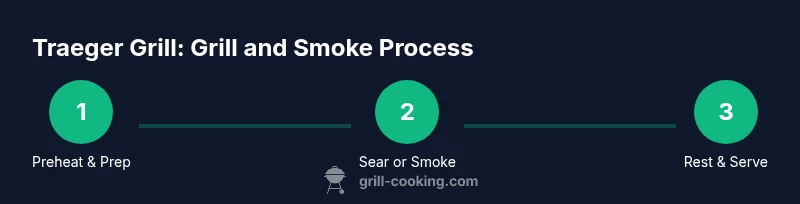
Power up the Traeger and set your target temperature based on the recipe (high heat for searing, low heat for smoking). Allow the grill to preheat for 10–15 minutes until the display shows a steady temperature. This ensures even heat distribution and reliable smoke from the start.
Tip: Always preheat with the lid closed to minimize heat loss and waiting time. - 2
Choose pellets and flavor profile
Select hardwood pellets that complement the meat. For example, apple for chicken, hickory for pork, and mesquite for beef. Load the hopper and verify pellet feed is steady before placing meat on the grill.
Tip: Keep a small supply of your preferred pellet flavor so you can adjust flavor intensity on future cooks. - 3
Create two cooking zones
If your Traeger setup allows, establish a high-heat zone for searing and an indirect zone for smoking. Place foods on the indirect area when you want to finish with smoke rather than direct heat.
Tip: Use a pan or foil shield to separate zones if your grill’s design doesn’t naturally create two zones. - 4
Cook with monitoring
Place meat on the grill and monitor both grill temperature and internal meat temperature with probes. Adjust airflow or pellet feed if the temp drifts. Use the recommended internal temps as your guide (e.g., 165°F for chicken, 145°F for medium-rare beef depending on cut).
Tip: Avoid opening the lid frequently; each lid lift costs heat and smoke consistency. - 5
Finish and rest
Once the target internal temperature is reached, remove meat from heat and let it rest 5–15 minutes. Resting redistributes juices and improves tenderness.
Tip: Tent loosely with foil to retain heat without steaming the meat’s crust. - 6
Clean up and store leftovers
Let the grill cool, then brush grates clean and store pellets dry. Label and refrigerate any leftovers promptly to preserve quality.
Tip: Keep a log of pellet flavor and cook times for future reference.
FAQ
Can you grill and smoke on a Traeger at the same time?
Yes. Use a two-zone setup to sear on high heat while finishing with smoke at a lower temperature. This approach balances crust with smoky flavor and keeps foods juicy.
Yes. Use a two-zone approach for searing and smoking at once, balancing crust and smoke.
What pellets should I use for Traeger grilling vs smoking?
Fruitwoods like apple or cherry work well for poultry and pork, while hickory or mesquite suit beef. Start with familiar flavors and adjust based on results.
Choose fruitwoods for poultry and pork, stronger hardwoods for beef, and adjust as you learn.
Do I need to wrap ribs on a Traeger?
Wrapping (Texas crutch) can speed the cook and keep moisture; many cooks wrap after an initial smoke period and un-wrap to finish. It’s optional and dependent on texture preference.
Wrapping ribs is optional and depends on desired texture; it can speed up cooking and keep moisture.
How long should I rest meat after Traeger cooking?
Rest meat for about 5–15 minutes after removal to redistribute juices. Larger cuts benefit from longer rest times within safe temperatures.
Rest briefly after cooking to keep juices in and flavors balanced.
Can I cold-smoke on a Traeger?
Traegers are not intended for true cold smoking. For cold smoke, use dedicated cold-smoke equipment or a dedicated cold-smog attachment, then finish on the Traeger with heat as needed.
Traegers aren’t designed for true cold smoking; use separate equipment for cold smoke and finish on the Traeger with heat.
What is the best way to clean the grill after smoking?
Brush grates, empty the ash and pellet debris, and wipe down the exterior. Regular cleaning maintains airflow and flavor consistency.
Clean the grates and interior after each session to keep performance high.
Watch Video
Quick Summary
- Grill and smoke on a Traeger using separate direct/indirect heat zones.
- Choose pellets that complement your protein and desired smoke level.
- Monitor internal temps rather than time alone; resting is essential.
- Keep the grill stable and avoid frequent lid openings for best results.