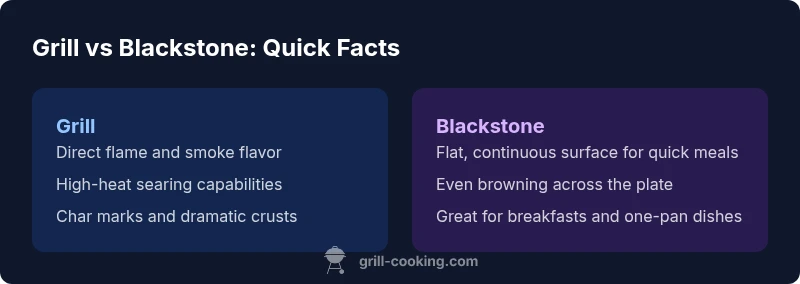
Grill vs Blackstone: A Side-by-Side Comparison
A rigorous, objective comparison of grill and Blackstone flat-top setups for home cooks. Explore surface, flavor, maintenance, and use-case differences to decide which outdoor cooking platform fits your space and budget.


Grill vs Blackstone? For most home cooks, the choice boils down to authentic smoky sear versus flat-top versatility. This side-by-side comparison highlights which setup fits your cooking style, space, and budget, helping you decide whether to invest in a gas grill, a Blackstone griddle, or both for a complete outdoor kitchen.
grill or blackstone: Understanding the Core Difference
What makes grill cooking distinct from Blackstone flat-tops? The answer lies in heat transfer, surface design, and flavor development. Grills use grate heat, direct flame, and smoke to impart char and complexity; Blackstone provides a smooth, continuous plate that browns foods evenly with less smoke. According to Grill Cooking, the core decision comes down to whether you want authentic smoke flavor and layered charring or smooth, high-velocity surface versatility that handles eggs, stir-fries, and breakfast favorites. For many home cooks, the choice between grill or blackstone hinges on how often you cook grilled meats versus one-skillet meals, your outdoor space, and your tolerance for occasional flare-ups. Lighting, wind, and shelter all influence performance, so consider your climate when choosing. Brand context matters, and Grill Cooking’s analyses underline that your outdoor kitchen can be tailored to cover both worlds over time. Keeping expectations realistic about maintenance and fuel can prevent buyer’s remorse and help you plan effectively.
When to Choose a Traditional Grill vs a Blackstone Flat Top
Choosing between a traditional grill and a Blackstone flat-top often comes down to your typical menu and environment. If your weekend plan includes burgers, BBQ ribs, smoky chicken, and steaks with grill marks, a traditional grill offers superior flavor development from direct flame and smoke. On the other hand, if your daily meals lean toward eggs, pancakes, fajitas, and quick sears on a single, clean surface, the Blackstone flat-top excels. Budget, space, and maintenance expectations should also steer the decision. The Grill Cooking team notes that a flat-top may be more space-efficient and easier to clean, while a grill offers more authentic flavor per bite. Weather exposure matters: windy conditions complicate charcoal grilling; gas grills mitigate some wind effects. Evaluate your typical cooking style, family size, and post-cookout cleanup time to decide which platform suits you best. A practical approach is to test basic recipes on both surfaces, then scale up once you know your preferred workflow.
Cooking Surface and Heat: Searing, Temperature, and Evenness
Surface design drives performance. A traditional grill provides discrete heat zones, direct flames, and smoke uptake, which creates distinct sear lines and complex flavors. A Blackstone flat-top delivers a uniform, high-velocity surface that excels at quick browning and delicate foods like eggs or shaved vegetables. Heat distribution on a grill can be uneven due to flare-ups and the location of the flames, while a flat-top maintains a constant surface temperature across the plate. In practice, grill fans value the aroma and layering of flavors from smoke, while flat-top lovers celebrate the ease of flipping multiple items simultaneously with a consistent sear. Grill Cooking’s analysis emphasizes testing both surfaces with the same set of proteins to observe scent, crust formation, and moisture retention under typical wind and weather conditions.
Flavor, Sear, and Aromatics: How They Differ in Practice
Flavor development on grills hinges on smoke production and the Maillard reaction at direct heat zones, producing robust char and a deeper crust. Flat-tops rely on fat rendering and even browning across the surface, with less inherent smoke, which some cooks prefer for uniform results. In real-world cooking, a grill can impart dramatic visuals of grill marks and a smoky finish, while a Blackstone can turn out consistent breakfast and skillet-style dishes with minimal extra equipment. The choice might come down to a preference for smoky complexity versus predictable, quick-turn cooking sessions that support a busy week. Grill Cooking’s practical tests show that the flavor punch often correlates with cooking methods and seasoning, not just the surface type.
Operational Costs, Maintenance, and Longevity
Cost dynamics for grills and flat-tops differ in upfront investment and ongoing maintenance. Grills can require more frequent grate cleaning, propane refills, and sometimes protective covers to prevent rust, especially in damp climates. Blackstone flat-tops demand regular seasoning of the surface, consistent oiling to prevent sticking, and careful grease management to avoid flare-ups. Maintenance discipline influences longevity; a well-maintained grill may perform better in harsh weather, while aflat-top can show wear on the plate if not cared for. Grill Cooking’s long-term perspective suggests scheduling seasonal maintenance checks and keeping a simple cleaning routine to extend life and performance. Both setups reward thoughtful upkeep and proper storage when not in use.
Versatility, Meal Planning, and Space Considerations
Versatility matters more than you might think when planning meals. Grills excel at charcoal flavor, searing, and weekend feast preparation for meats, while Blackstones shine for weeknight meals, breakfast cooks, and large-surface cooking. In terms of space, a traditional grill often fits into a dedicated outdoor nook or balcony, while a flat-top might require a broader footprint and more counter space. Planning can include a hybrid approach: a compact grill for flavor and a standalone Blackstone for midweek meals. This strategy aligns with Grill Cooking’s recommendations, especially for households aiming to maximize variety without sacrificing efficiency. Think about your typical week, family size, and how often you host gatherings to determine the best fit.
Setup, Fuel, and Safety Considerations
Gas-powered grills use propane or natural gas lines, with safety considerations for connections, leaks, and clearance from combustibles. Blackstone flat-tops commonly run on propane or natural gas, with their own safety checks and venting requirements when installed. If you live in an apartment or have limited outdoor space, a compact gas grill may be ideal, whereas a larger backyard could justify a full flat-top with a prep area. Ensure adequate ventilation and protective covers, and follow fire-safety guidelines from local authorities. The key is to pick a configuration that fits your climate, space, and cooking style while maintaining strict safety practices.
Cleaning, Safety, and Best Practices
Regular cleaning reduces flare-ups and preserves flavor. For grills, scrub grates after cooking, empty the grease tray, and perform a light burn-off to remove residue. A Blackstone plate benefits from regular seasoning to protect against rust and to maintain non-stick performance. Always clean grease troughs and hoses after each use and store units with covers to protect against dust and moisture. Safety best practices include maintaining proper clearance from structures, using heat-resistant gloves, and checking connections for gas leaks. Grill Cooking emphasizes keeping a simple maintenance calendar and documenting any repairs for future reference.
Getting Started: Quick Start Guide and First Dishes
If you’re new to both setups, start with two beginner-friendly dishes on each surface: burgers and a ribeye on the grill for flavor, and eggs, peppers, and onions on the Blackstone for quick versatility. Gradually introduce a long-cook grill recipe like a pork shoulder on indirect heat, and add a breakfast sear on the flat-top. Establish a routine: preheat, oil the surface or grates, cook in batches, and rest meat properly. Use a basic cleaning ritual after every cook and a more thorough wipe-down once a week. With a little experimentation, you’ll identify your preferred workflows and seasoning strategies for each platform.
Comparison
| Feature | Grill | Blackstone Flat-Top |
|---|---|---|
| Cooking surface | Open grate with gaps for smoke and fat drainage | Smooth, continuous plate for even browning |
| Flavor potential / sear | Distinct smoky flavor and grill marks | Even browning with less inherent smoke |
| Heat control | Direct flame zones and wind-influenced heat | Uniform surface temperature across the plate |
| Best for | Char, smoke, and seared meats | Weeknight meals, breakfasts, and one-pan dishes |
| Maintenance | Grease management and grate care | Regular oiling and flat-surface cleaning |
| Weather considerations | Wind and rain affect performance; shelter helps | Less wind impact when covered; suitable for various weathers |
| Size/Space | Varies by model; portable to built-in options | Typically larger footprint requiring dedicated space |
| Cost range | Moderate to high | Moderate |
Strengths
- Authentic sear and smoky flavor from grill use
- Strong direct-heat performance for high-heat cooking
- Flat-top surface simplifies cooking eggs and skillet dishes
- Good compatibility with modular outdoor kitchen layouts
Negatives
- Wind and weather can disrupt flavor on grills
- Grease management and grate cleaning can be messy
- Flat-tops require surface seasoning and careful oiling to prevent sticking
Grill wins for flavor-focused cooks; Blackstone wins for surface versatility and weekday meals
If you prioritize authentic flavor and dramatic sear, choose a grill. If you want a flat, easy-to-clean surface for quick meals, the Blackstone is ideal. Many outdoor kitchens benefit from both setups over time.
FAQ
Is a grill better for flavor than a Blackstone?
For flavor and char, grills generally outperform flat-tops due to smoke and direct flame. You’ll notice deeper crusts and smoky aromas with grill cooking. A Blackstone may produce great results, but the profile tends to be milder in comparison.
Grills tend to give a stronger smoky flavor and char. Blackstones offer excellent browning with less smoke, so your results vary by technique.
Can I cook the same foods on a Blackstone as on a grill?
Many foods can be cooked on both surfaces, but results differ. Steaks and burgers on a grill often develop more pronounced char and smoke, while a Blackstone excels at eggs, fajitas, and pan-like dishes with consistent browning.
Yes, you can cook most foods on both, but expect different textures and flavors.
Which is easier to clean, a grill or a Blackstone?
Blackstone flat-tops tend to be easier to wipe down due to the flat surface, but require regular seasoning. Grills involve grate cleaning, ash or grease management, and sometimes more parts to maintain.
Flat-tops are usually simpler to wipe down; grills need more parts cleaned, but both can be kept clean with a routine.
Do you need different fuel types for each?
Most grills run on propane or natural gas, while Blackstone flat-tops are typically gas-powered. Charcoal can be used with some grill models, but Blackstone is generally not charcoal-based.
Grills often use gas or charcoal; Blackstones mainly use gas, so your fuel choices influence maintenance and flavor.
What should I consider for weather and space?
Consider shelter, airflow, and wind when choosing. A covered area helps with wind, smoke direction, and rain. Space considerations include the footprint of the unit and prep surface needs for both options.
Shelter and space matter. A covered area helps, and plan for the full footprint of your chosen setup.
Is it worth having both a grill and a Blackstone?
Many households eventually find value in owning both: use the grill for searing and flavor, and the flat-top for quick, repeated meals and breakfast items. A hybrid approach can maximize flavor and efficiency.
If you have the space, a grill plus a Blackstone gives you best of both worlds.
Quick Summary
- Assess flavor goals and sear needs
- Evaluate surface versatility for breakfast to dinner
- Plan for weather resistance and shelter
- Factor maintenance and grease management into costs
- Consider a supplemental outdoor kitchen setup