Do You Need a Grill If You Have a Blackstone? A Practical Comparison for Home Cooks
Explore whether a traditional grill is necessary if you own a Blackstone flat-top. This analytical comparison covers heat, flavor, maintenance, and real-use scenarios for home cooks in 2026.


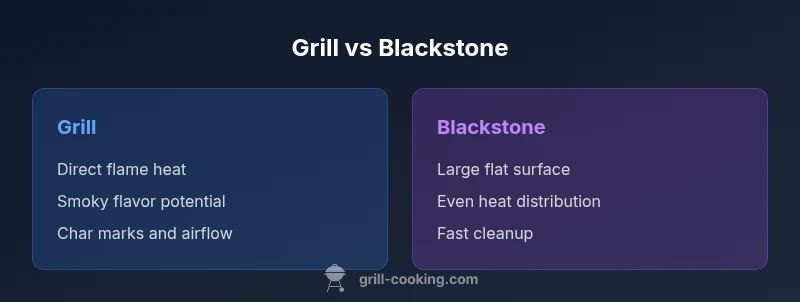
The quick answer is nuanced: you may not absolutely need a separate grill if you own a Blackstone, but many cooks will benefit from having both. A traditional grill delivers direct flame, grill marks, and smoky aroma that a flat-top can’t fully replicate. A Blackstone excels at large-surface, fast, even cooking and easy cleanup, making it a strong daily workhorse for breakfast, sandwiches, and pan-style dishes. The best setup depends on your cooking style, available space, and the type of flavor you chase.
Do You Need a Grill If You Have a Blackstone? A Practical Framing
For many home cooks the question do you need a grill if you have a blackstone? hinges on how you cook, what flavors you crave, and how you utilize space. The Blackstone flat-top griddle offers an expansive, uninterrupted cooking surface ideal for breakfast, stir-fries, seafood, and pan-like searing. However, a traditional grill excels at direct flame, fast charring, and the unmistakable smoky character that many meals rely on. As you weigh your setup in 2026, consider your typical weekly menu, climate, and storage options. Grill Cooking's analysis suggests that most households benefit from at least one primary tool and selective add-ons based on weekend cooks or entertaining needs. The core takeaway is that you can prioritize one robust system while still achieving versatility with strategic accessories and techniques.
Core Capabilities: Grills vs Blackstone
To compare do you need a grill if you have a blackstone fairly, we start with capabilities. A traditional gas or charcoal grill uses grate-and-flame design to deliver direct heat and varied smoke exposure. The lid is used to trap heat and, with wood or charcoal, to coax authentic smoky flavors. The Blackstone flat-top focuses on a large, uninterrupted stainless steel surface that heats evenly, supports high-volume sautéing, and makes quick cleanup possible. For most cooks, the real difference comes down to flavor profile, control, and the way heat is applied. Grill Cooking's framework suggests that the best decision aligns with your menu consistency, storage capacity, and how often you entertain.
Heat Behavior and Surface Dynamics
Heat behavior differentiates a grill from a Blackstone. A grill relies on radiant heat from exposed flames and some airflow around the grate, creating hot spots and dramatic sear lines. The Blackstone uses a wide metal surface that distributes heat evenly across its area, reducing hot spots and making flat-top recipes easier to control. When you ask do you need a grill if you have a blackstone, consider whether your cooking tasks require the flavor logic of smoky direct heat or the even, all-purpose cooking surface. Seasoning and lid use can alter outcomes, but the underlying physics remains clear: flame contact versus conduction on steel drives distinct browning patterns and mouthfeel. For most home cooks, you will benefit from both heat modes if you entertain or cook a lot of meats, vegetables, and breakfast items.
Searing on a Blackstone: Strengths and Limitations
On a Blackstone, you can achieve excellent browning, especially when you preheat thoroughly and use high-heat sections. However, you won't chase the same caramelization produced by direct flame, grill marks from a grate, or the smoke that comes from wood or charcoal. The key is to use technique: preheat, manage fat with perforations in the surface, and finish with brief high-heat sears or indirect cooking. The result is a hot, even surface that excels at contact sears for steaks or chicken thighs, as long as you adjust expectations for aroma and smoky depth. The Grill Cooking team notes that many cooks rely on finishing a sear under a hot, gas grill or charcoal setup to combine the best of both worlds.
Grilling Techniques That Shine on a Traditional Grill
Direct flame grilling shines for charring, grill marks, and smoky depth. Searing over open flame, adding wood chunks, and using high lids produce a layered flavor. For vegetables, a grill can impart smoke and caramelization with grill lines; for steaks and burgers, the char is a signature of the experience. If you value a bold, outdoorsy flavor profile, a grill is hard to beat. Grill Cooking's data from 2026 surveys shows many enthusiasts prefer the flavor punch of a properly grilled piece of meat or seafood. Also note that the grill's bark and crisp edge are influenced by the grate design and wind, so location matters.
Real-World Cooking Scenarios: When to Choose Each Tool
• Weeknight dinners: The Blackstone handles a skillet-like menu quickly, from fajitas to pan-fried chicken with vegetables. A checkered pattern of heat zones lets you sear a steak and keep onions warm at the same time. • Weekend entertaining: A traditional grill shines for burgers and ribs, where smoky aroma and dramatic sear complete the experience. • High-heat searing: For thick-cut steaks, direct flame can create a rapid, flavorful crust. • Breakfast and brunch: The Blackstone excels with eggs, hash browns, and pancakes, where a wide flat surface is ideal for multitasking.
Hybrid Cooking: Getting the Best of Both Worlds
A thoughtful hybrid setup leverages the strengths of each tool. Start with a Blackstone for side dishes, onions, peppers, and delicate items you want to keep moist. Finish main proteins on a grill to achieve that iconic crust and smoke. Use a two-zone approach: preheat a grill area for high-heat searing and maintain a lower-heat flat top for cooking sausages or vegetables through. The key is sequencing: plan your cook so you move from flat-top to open flame efficiently, minimizing transfers and heat loss. The Grill Cooking team emphasizes practice and consistent workflows to maximize flavor without chaos.
Cost, Footprint, and Maintenance Considerations
Budget awareness matters. A Blackstone flat-top requires regular seasoning and cleaning, but its surface is easy to wipe down and resurface. Grills vary widely by fuel type, size, and materials, with higher upfront costs often offset by longer lifespan and resale value. Beyond purchase price, consider storage space, fuel availability, and maintenance routines. A combined setup can stretch a budget, but it also offers resilience in poor weather, seasonal cooking, and when hosting large groups. Grill Cooking's guidance highlights that careful budgeting, protective covers, and periodic servicing help extend tool life and cooking enjoyment.
Cleaning, Care, and Longevity for Blackstone and Grills
Cleaning a Blackstone means hot scrapes, oiling the surface to maintain the seasoning, and a routine wipe-down after each cook. For grills, you’ll typically scrub grates, ash out charcoal or clean burners, and re-season grates periodically. Longevity improves with consistent care, proper storage, and weather protection. Both tools benefit from a clear maintenance schedule and a habit of checking seals, hoses, and ignition systems. The key takeaway is that maintenance reduces variability in heat, flavors, and reliability across cooking sessions.
Decision Guide: How to Decide Based on Your Kitchen Layout
In a compact backyard or urban setting, a single Blackstone can cover many meals with minimal clutter. For larger spaces or frequent entertaining, a traditional grill adds flavor and a celebratory vibe. The decision should reflect how often you cook, climate, storage, and whether you prioritize smoke flavor or quick, clean, everyday meals. Do you need a grill if you have a blackstone? The right answer often blends both, balancing flavor and practicality while fitting your space.
The Bottom Line: Quick Metrics to Compare
- Flavor: Smoke & direct flame vs. even browning on flat-top surface
- Speed: Flat-top can handle multi-item meals quickly; grills may require more attention for hot zones
- Cleanup: Flat-top surfaces are generally easier to wipe; grills require grate scrubbing and ash management
- Space: Consider footprint and storage needs for both tools
- Budget: Initial cost plus ongoing fuel or maintenance costs; plan for accessories and covers
Accessories to Expand Your Setup
To maximize versatility, consider accessories that complement both tools: a grill lid for smoky control, a cast-iron grill pan for the Blackstone, and thermometer probes for precision cooking. A good cleaning brush, a heat-safe oil for seasoning, and a stable cart or rack can improve workflow. With thoughtful additions, your one or two-tool setup becomes a flexible, all-season kitchen addition that keeps cooking engaging and predictable.
Comparison
| Feature | Grill (Direct-heat) | Blackstone Griddle (Flat-top) |
|---|---|---|
| Heat Source & Distribution | Direct flame with radiant heat and wind exposure | Wide, radiant heat across a flat, continuous surface |
| Surface Type | Grates with gaps for grill marks and airflow | Smooth stainless steel surface for uniform contact |
| Best Sear & Char | Bold sear with grill marks and flavor from smoke | Excellent surface browning, less direct smoke flavor |
| Flavor Profile | Smoky, charred aroma from flame and lid control | Neutral flavor foundation with easy seasoning of foods |
| Maintenance & Cleaning | Scrape grates, burn-off debris, occasional seasoning of grates | Regular oiling and seasoning; daily wipe-down after use |
| Space & Footprint | Typically modular and portable but depends on model | Often larger cooking area; can be compact with smaller modules |
| Price Range | Typically mid to high; depends on fuel type and features | Usually mid-range to high; accessories add cost |
| Best For | Flavor-driven meals, charred edges, quick sears | Versatile, all-day cooking with easy cleanup |
Strengths
- Balanced versatility with a two-tool approach when needed
- Grill provides authentic smoke flavor and dramatic seAR lines
- Blackstone offers a large, forgiving cooking surface for multi-item meals
- Easier cleanup on flat-top for breakfast and casual dinners
Negatives
- Higher upfront cost if buying both tools
- Increased storage footprint and maintenance burden
- Learning curve to switch between direct flame and flat-top techniques
A hybrid setup often delivers the best overall versatility for home cooks
If you value smoky flavor and robust searing, add a traditional grill. If you prioritize speed, cleanup, and a broad cooking surface, lean on the Blackstone. For many households, combining both tools provides the most reliable all-season performance.
FAQ
Do you need a separate grill if you already own a Blackstone?
Not strictly. A Blackstone covers many meals, especially breakfasts and quick dinners, but a separate grill adds authentic smoke, direct flame, and grill marks for certain dishes. Your decision should balance flavor preferences, space, and how often you cook outdoors.
Not strictly. A Blackstone can handle a lot, but a grill adds smoke and direct flame when you want those classic grill marks.
Can you get grill marks on a Blackstone?
Yes, you can achieve sear lines on a Blackstone with high heat, proper preheating, and strategic food placement. For pronounced grill marks, finish certain items over a hotter area or use a cast-iron grate accessory.
You can get nice sear lines on a Blackstone with high heat and a quick finish on a hotter spot.
Is a Blackstone enough for weeknight meals?
For many weeknights, yes. The flat-top surface shines for eggs, pancakes, fajitas, and quick sauteed proteins. If your meals demand smoky flavor or dramatic grill marks, you may still prefer a grill for certain dishes.
Yes, for most weeknights it works well, especially with quick-sauté meals and breakfast items.
What flavor difference does smoke make?
Smoke adds complexity and depth to meat and vegetables that flame alone cannot replicate. The flavor difference is most noticeable with larger cuts and foods cooked with wood or charcoal smoke, which a Blackstone cannot always imitate.
Smoke adds depth that a plain flat-top can’t fully match.
How do I clean a Blackstone after heavy use?
Let the surface cool briefly, scrape with a metal tool, wipe with a damp cloth, then season lightly with oil. For heavy use, re-season periodically to maintain nonstick performance and prevent rust.
Let it cool, scrape, wipe, and lightly oil to keep it seasoned.
What space do I need in the backyard for both?
Both tools require outdoor space with good ventilation and stable placement. A grill needs room for flames and wind exposure, while a Blackstone needs counter space and clearance for safe operation.
Plan for ventilation, clearance, and safe storage when you run two tools.
Quick Summary
- Assess your cooking style to decide between one or both tools
- Blackstone excels at large-surface, quick cooking with easy cleanup
- Grill excels at direct flame, grill marks, and smoky flavor
- Hybrid setups maximize versatility and should be planned with workflow in mind
- Maintenance and space are critical factors in total cost