Gimme Par and Grill: The Complete Par-Cook Then Grill Guide
Learn how to par-cook before grilling to lock in moisture, ensure even doneness, and avoid flare-ups with practical steps, safety tips, and gear guidance from Grill Cooking.


This guide teaches you how to par-cook (pre-cook) proteins before finishing on the grill for juicier, more even results. You’ll learn when to par, how long to pre-cook, and how to finish on direct heat safely, plus essential gear and timing. Includes quick safety reminders and a clear plan for burgers, chicken, and pork.
What gimme par and grill really means
In everyday grilling, the phrase gimme par and grill refers to a two-stage approach: you partially cook (par-cook) the protein or vegetables, then finish them on the grill to develop color, flavor, and a proper crust. The goal is juiciness and even doneness, not rushed cooking. This technique is especially useful for thicker cuts and foods prone to drying out on direct heat. By planning a brief par-cook phase, you reduce the risk of a dry finish while still delivering the char and aroma you associate with great grilled meals. The Grill Cooking team emphasizes that this method works best with proteins that benefit from steady internal progression, so you’ll see less uneven cooking and shorter final grilling times when you plan ahead.
Why par-cooking improves grilling results
Par-cooking speeds up the middle of the cook while allowing the surface to sear precisely. When you start with a short, controlled heat, the interior comes up to temperature without overdoing the outside. This reduces flare-ups caused by fat dripping onto fire and minimizes the risk of overcooking the outside while waiting for the inside to reach a safe temp. For burgers, chicken breasts, and pork chops, par-cooking gives you a reliable rhythm: a gentle head start, a confident sear, and a rest to redistribute juices. Grill Cooking analysis shows that home cooks who use a par-step report more consistent doneness and juicier results across a week of family meals.
The science of par cooking: moisture and heat
Par-cooking works by preparing the protein for the rest phase where heat is applied in short, direct bursts. The key science is moisture retention and controlled heat transfer. A quick pre-cook reduces surface moisture loss during the final sear, helping the crust form faster while the interior finishes evenly. Too aggressive a par can begin drying out exterior tissues, so the timing must be precise for each protein. Rest periods after the par phase also matter, because they let juices redistribute and the surface rehydrate slightly before the high-heat finish. Understanding the balance between heat, time, and rest makes the technique repeatable and predictable.
Getting the right equipment and setup
A reliable grill thermometer (preferably dual-probe for meat and ambient grill temp) helps you track both internal and ambient temps. Use a cast-iron skillet or perforated grill pan if you want those famous grill marks during the finish, or simply rely on direct hot grate contact. Have a sharp knife, cutting board, tongs, and a rack for resting. Prep stations with paper towels, a clean tray for the par-cooked pieces, and a timer. If you’re new to par-grilling, start with thinner cuts to dial in your timing before attempting thick steaks or bone-in portions.
Step-by-step plan for par then grill: burger, chicken, pork
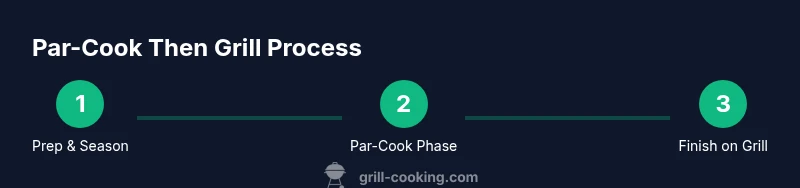
The plan below gives you a consistent approach across common proteins. Start with pre-seasoning or marination as you prefer, then choose a par-cook window based on thickness. For burgers, par-cook to a pale interior, then finish with a quick sear. For chicken breasts, par-cook until the center is light but not fully cooked, then crisp the outside. For pork chops, par-cook to near doneness, ensuring safe temps, and finish with a robust crust. Always use a thermometer to confirm doneness and rest briefly before slicing. Each type benefits from a brief rest after par-cooking to reabsorb juices.
Temperature targets and safety guidelines
Use widely accepted safety temperatures for different proteins: chicken should reach a safe internal temperature before the final sear, ground beef requires a higher temp to ensure pathogens are destroyed, and pork should reach a balanced doneness with a safe internal reading. Keep grill temperatures within a moderate range during the par phase and increase to high heat for the finish. If you’re unsure about temps, err on the side of a longer rest and a longer final sear rather than pushing straight to a high temp. Clean hands, utensils, and surfaces reduce cross-contamination risk during handling of raw meat.
How to monitor doneness without overcooking
Invest in a reliable digital thermometer and learn to read both interior temperature and exterior cues. Visual indicators—color change, juices, and crust development—help, but a probe thermometer gives you precision. Remove protein from heat when the thermometer reads just shy of the target, then rest. Resting is essential for moisture redistribution; cutting too early invites juice loss. If the crust browns too quickly, lower the grill or move the item to cooler indirect heat to finish without scorching.
Common mistakes and how to fix them
Common errors include under-seasoning, too aggressive a par-cook, or neglecting rest time. If the interior isn’t approaching target temps, extend the par stage by a couple of minutes and adjust heat down slightly to avoid drying the exterior. If the crust isn’t forming during the finish, preheat your grill more or use a cast-iron surface to improve searing. Remember to pat surfaces dry before cooking—wet surfaces steam rather than sear, which dulls color and texture.
Flavor ideas and finishing touches after grilling
Finish with a light brush of flavorful oil or a dab of compound butter after resting. Zests, fresh herbs, and a splash of acid (like lemon juice) brighten par-grilled dishes. For burgers, a touch of cheese during the finish adds moisture and flavor. For chicken and pork, a quick glaze in the last minute can lock in moisture and create an appealing gloss. Rest again after any glazing to let flavors settle.
Troubleshooting: what to do when par-grilling goes wrong
If moisture loss seems excessive, shorten the par window and extend the final sear. If the interior remains underdone after the finish, increase the par time slightly or adjust your heat so the center reaches target sooner without burning the exterior. If you experience charred surfaces with undercooked interiors, switch to indirect heat for part of the finish and plan a longer rest period. When in doubt, start with a smaller portion to refine timing before scaling up to the whole cut.
Tools & Materials
- Digital grill thermometer ( dual-probe preferred )(One for ambient grill temp, one for meat interior)
- Sharp chef’s knife(For trimming and portioning after par-cook)
- Cutting board(Non-slip surface for safe handling)
- Tongs (sturdy)(Grip and flip without piercing meat)
- Rest rack or clean tray(Allow juices to redistribute during rest)
- Cast-iron skillet or grill grate(Optional searing surface for crust)
- Timer or smartphone timer(Track par-cook windows and rest times)
- Paper towels and cleaning cloths(Maintain clean surfaces and dry surfaces)
- Grill-safe flavor boosters(Butter, herbs, or glaze for finishing)
- Food-grade thermometer-safe spoons(Stir glaze or sauce safely)
Steps
Estimated time: 60-90 minutes total (including resting and plan variations by protein)
- 1
Prep and pat dry
Pat meat dry and trim excess fat. Patience here prevents steam which can hinder searing later. If seasoning, apply evenly and gently press spices into the surface for better crust.
Tip: Dry surface = better Maillard reaction during finish. - 2
Set up par-cook method
Choose your par-cook method (simmering, baking, or pre-grilling on indirect heat). Keep temps moderate and monitor internal temp closely to avoid overcooking.
Tip: Keep par-cook time short; you’re not finishing here. - 3
Par-cook to target range
Cook until interior is warm but not fully done; this reduces final grilling time. For burgers, pulse to medium-rare to medium. For chicken and pork, aim for a lower intermediate temp.
Tip: Use thermometer for accuracy. - 4
Rest briefly after par
Let the pieces rest 5-10 minutes to redistribute juices and re-hydrate the surface for a better sear.
Tip: Resting is essential for moisture retention. - 5
Preheat grill for finish
Heat the grill to high direct heat or your favorite searing zone. Clean grate to prevent sticking and ensure even crust formation.
Tip: A hot grate equals faster crust formation. - 6
Finish with direct heat
Place par-cooked pieces on direct heat and sear for short bursts until crust forms and internal temp hits safe level.
Tip: Turn as needed to avoid hotspots. - 7
Check doneness
Check internal temp frequently to avoid overcooking. Remove from heat just shy of target if plans include a brief rest.
Tip: Always confirm with a thermometer. - 8
Rest before serving
Let the finished pieces rest 5 minutes before slicing. Resting redistributes juices and enhances tenderness.
Tip: Slice against the grain for tenderness. - 9
Flavor finish
Apply glaze or butter during the last minute if desired, then rest again briefly to meld flavors.
Tip: Light, fast glaze preserves moisture. - 10
Clean up and reflect
Wipe and scrub tools, sanitize prep areas, and note what timing adjustments worked best for future sessions.
Tip: Record adjustments for consistency next time.
FAQ
What is par-cooking and when should I use it?
Par-cooking means partially cooking food before the final grill. It’s useful for thicker cuts, freezing leftovers, or meats prone to drying out, allowing a precise finish on the grill.
Par-cooking partial cooking before finishing on the grill helps keep meat juicy and evenly cooked.
Can I par-cook vegetables too?
Yes. Blanch or par-roast sturdy vegetables to soften them before a quick finish on the grill for color and flavor.
Vegetables can be par-cooked briefly, then finished on the grill for better texture.
What are safe temperatures for different proteins?
Chicken should reach about 165°F, pork around 145°F, and ground beef about 160°F. Final sear should bring the surface to a safe internal temperature without drying the inside.
Keep chicken at 165 degrees, pork at 145, ground beef at 160 for safety.
How long should the par-cook stage last?
Par-cook times vary by thickness but are typically a few minutes per side on gentle heat for burgers and thinner cuts; thicker pieces may need longer but should still be underdone inside.
Par-cook briefly, just until the center starts to warm, then finish on high heat.
What equipment is essential for par-grilling?
A reliable thermometer, a clean grill, tongs, and a resting rack are the essentials. Optional but helpful: a cast-iron searing surface and a timer.
Thermometer, clean grill, tongs, and a resting rack are the basics.
Are there safety concerns with par-grilling?
Always practice safe food handling, keep raw meat away from ready-to-eat foods, and sanitize surfaces. Do not consume undercooked poultry or pork.
Follow basic food safety rules and verify poultry and pork reach safe temperatures.
Watch Video
Quick Summary
- Par-cook to reduce final grill time.
- Monitor temps with a thermometer for safety.
- Rest between phases to preserve juices.
- Finish with a hot sear for crust and flavor.
- Adjust timing by protein and thickness.